


Traditional English Stool
A traditional english stool offers solid domestic utility, spanning robust jointed oak from earlier centuries to simpler nineteenth-century country forms.

Traditional English Stool
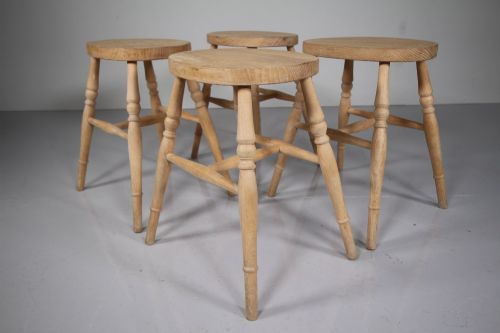
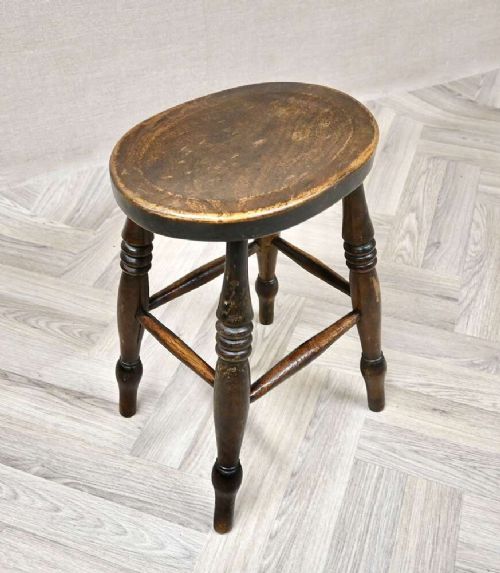
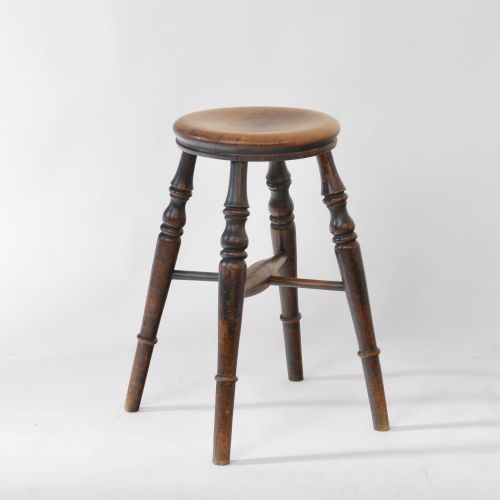
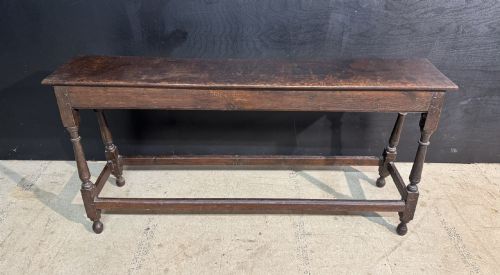
When you search for a traditional english stool, you are looking at utilitarian seating and footrests rooted in domestic history. The pieces gathered here range from early joint stools in oak to nineteenth-century country examples in elm, beech, and yew.
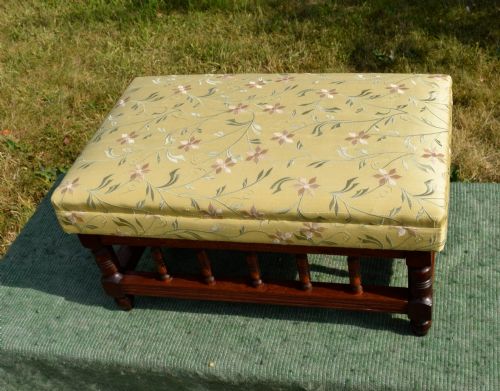
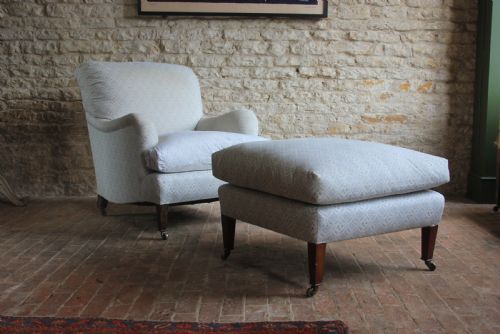
The selection leans heavily toward sturdy vernacular seating and low footstools, alongside larger upholstered ottomans and library steps. These pieces served practical roles beside the hearth, at the dining table, or within the country house library.
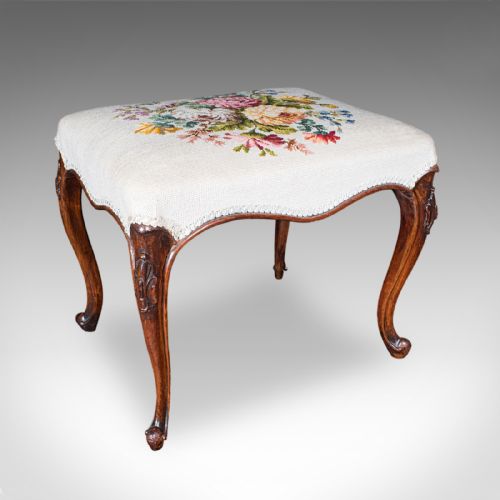
Earlier periods are represented by solid oak joint stools with pegged construction, while later eras bring lighter Windsor formats and needlepoint or leather upholstery. Buyers frequently encounter nineteenth-century country variants and Edwardian interpretations of earlier styles.
Construction and materials in traditional seating
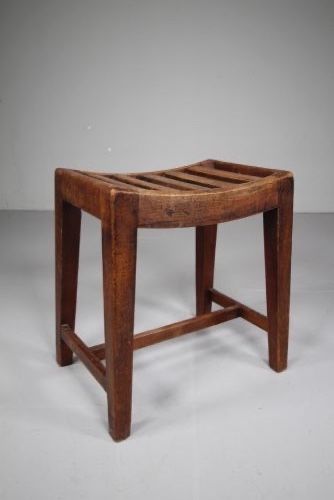
Maker's hands relied on native timber, shaping oak, elm, beech, and yew into functional frames using traditional pegged and jointed construction. Sturdiness governed the workshop, resulting in heavy timbers locked together by wooden pins rather than modern metal fasteners.
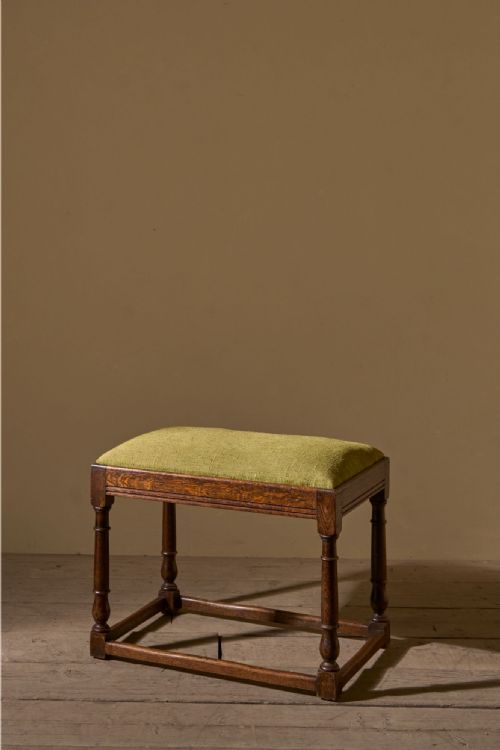
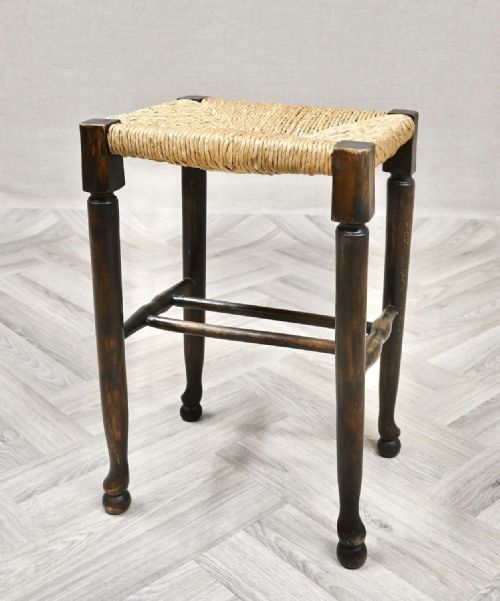
Surface treatments and upholstery introduced comfort and texture to the timber frames. Needlepoint, heavy green linen, buttoned leather, and rush seats were applied to soften the utilitarian forms, while brass castors and brass and steel fittings provided mobility and detail.
Listings feature structural timbers including oak, elm, beech, yew, walnut, and mahogany alongside brass, steel, and leather.
Distinctions in craftsmanship and material grade
Quality rests primarily in the integrity of the timber and the honesty of the construction. Superior examples retain their original pegged joints and uncompromised timber thickness, whereas lesser pieces suffer from excessive later timber replacement or structural fatigue.
The choice of secondary materials further separates standard utilitarian items from finer examples. Heavy grain definition in yew or oak, well-executed carved details, and intact period upholstery schemes distinguish the more accomplished works from simple workshop utility.
Howard and Sons
The Traditional English Stool Glossary
- Joint stool
- A joined or mortise and tenon framed wooden stool built with pegged construction. These sturdy rectangular seats date back to the sixteenth and seventeenth centuries and continued to be replicated in later revival periods.
- Windsor stool
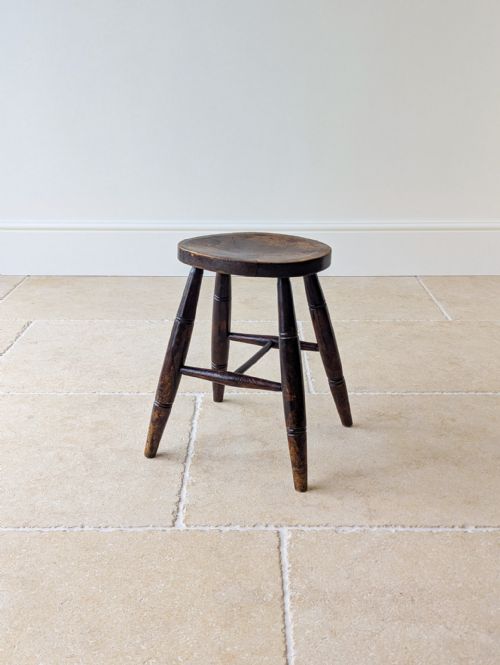
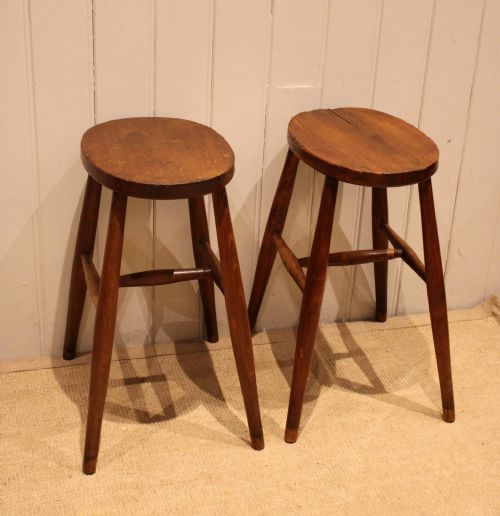
- A seat featuring turned legs and spindles wedged directly into a solid shaped wooden seat. Originating in rural traditions, these items utilise local timbers like elm and yew.
- Footman
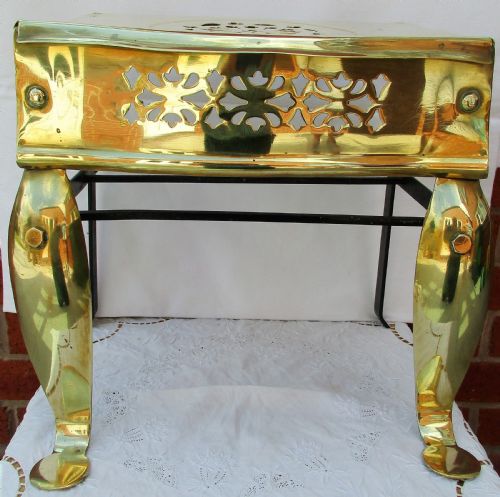
- A metal stand placed before a fireplace to keep items warm. These brass and steel accessories often accompany fireside seating arrangements.
- Needlepoint
- Hand-stitched canvas work utilised for upholstery. This textile decoration frequently appears on Victorian footstools.
Traditional English Stool: Frequently Asked Questions
What is a joint stool?
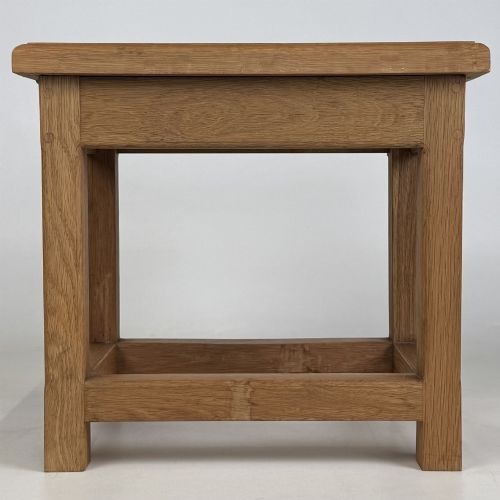
A joint stool is an early form of wooden seating constructed with tight mortise and tenon joints held together by wooden pegs. These heavy pieces were built to last and served multiple household purposes.
Unlike upholstered furniture, their clean wooden surfaces display the straightforward carpentry methods of past centuries.
How do I spot an Edwardian stool?
Edwardian stools often combine earlier historical revival styles, such as Jacobean framing, with the lighter domestic requirements of the early twentieth century. They frequently utilise oak or mahogany.
Examining the underside and the wear on the timber helps distinguish genuine Edwardian craftsmanship from later reproductions.
Where were country stools used?
Country stools were practical items placed around the farmhouse kitchen, by the hearth, or in tavern settings for everyday seating. Their robust construction handled heavy daily use.
Today, these versatile items easily function as small side tables or low footrests in modern living spaces.
What woods were commonly used?
English makers relied on locally sourced hardwoods like oak, elm, beech, and yew for structural frames. Oak provided exceptional strength for joint stools, while elm and yew offered flexible seating surfaces.
Mahogany and walnut appeared more frequently in formal Georgian and Victorian pieces.