



Traditional English Sporting Art
Traditional English sporting art captures the heritage of the countryside through depictions of hounds, horses, and field pursuits.
Traditional English Sporting Art
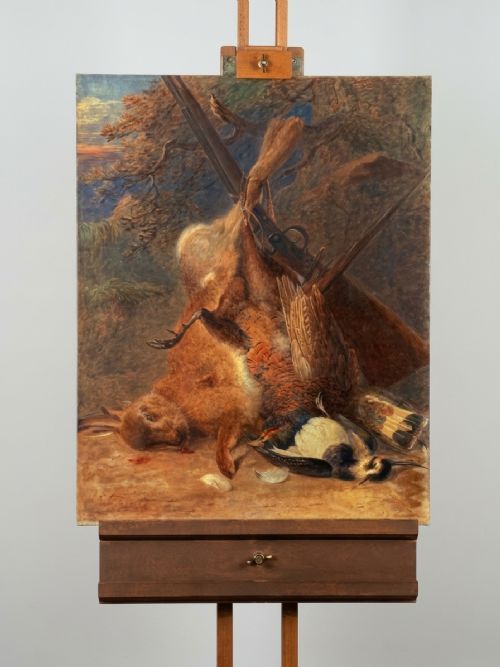
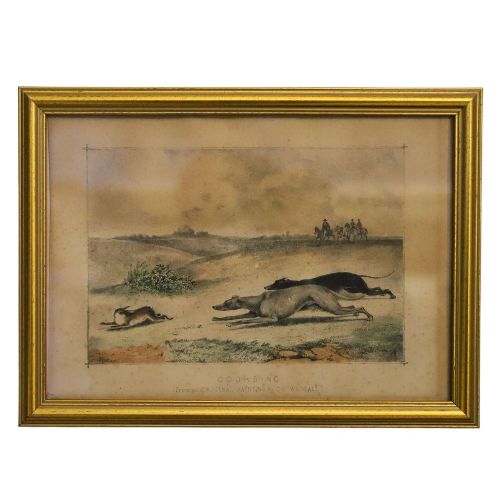
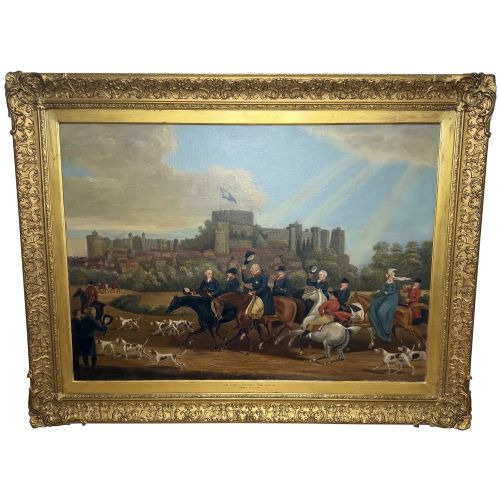
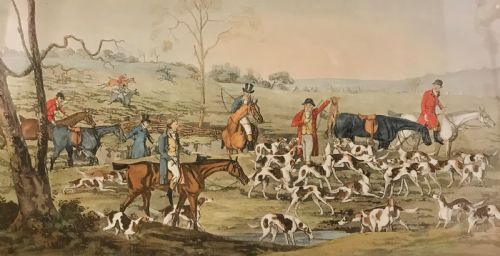
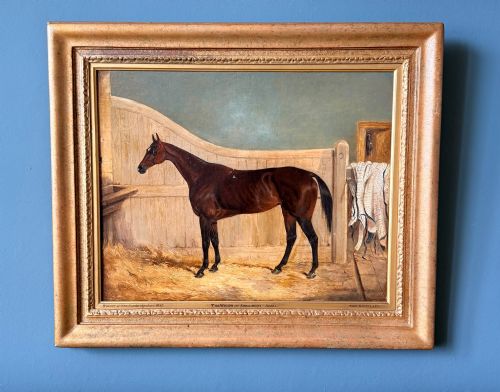
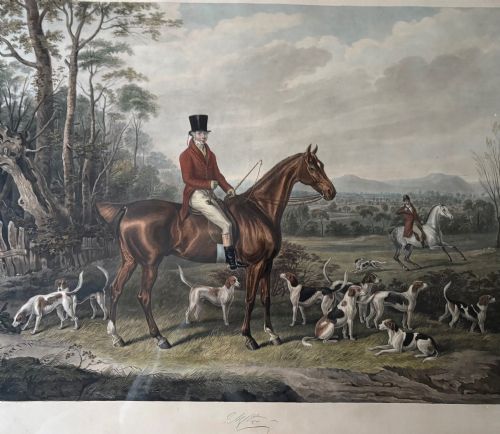
Traditional English sporting art encompasses paintings, watercolours, and prints focusing on field sports, equestrian subjects, and countryside animals. These works record hounds, racehorses, shooting scenes, and hunts across rural landscapes from past centuries.
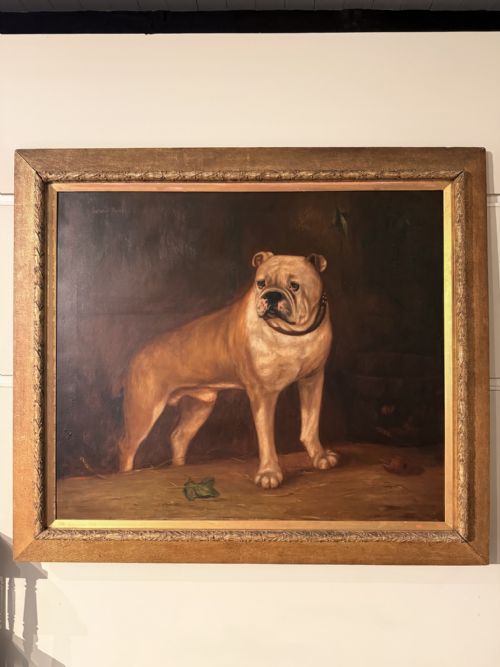
The pieces on this page lean heavily towards nineteenth-century oil paintings on canvas and framed paper prints. Buyers encounter depictions of named racehorses, gun dogs with game, and fox hunting scenes framed in wood or giltwood.
Materials and construction
Artists painted primarily in oil upon canvas or board, applying rich pigments to build depth in animal coats and landscape backgrounds. Watercolours and bodycolour on paper appear frequently alongside lithographs, etchings, and hand-coloured engravings.
Frames employ wood and giltwood, often housing glass to protect delicate paper prints, watercolours, and pencil drawings from environmental damage.
Several dogs portrayed in these oils appear better fed and more comfortably housed than most nineteenth-century farmworkers.
Distinctions in quality
Quality rests upon the artist's ability to render the anatomy and movement of horses and dogs with anatomical precision. Master practitioners capture the tension in a hound or the muscular form of a hunter far more convincingly than lesser hands.
Condition of the canvas, preservation of the original pigment, and the harmony of the period frame contribute heavily to the standing of an individual work.
George Sydney Shepherd·John Sargent Noble·Thomas Walker Bretland·Benjamin Blake·John Sanderson Wells·Edward Lloyd of Ellesmere·Michael Lyne·Charles Faulkner·Colin Graeme Roe·Clifton Tomson·Samuel Henry Alken·John Charles Tunnard·Charles Clifford Turner·James Dobie·Henri Schouten·John Atkinson·John Emms·Tom Carr·Isaac Cullin·Thomas Ivester Lloyd·George Goodwin Kilburne·Thomas Blinks·James Ward·Charles Bilger Spalding
The Traditional English Sporting Art Glossary
- Bodycolour
- Watercolour mixed with white pigment to render it opaque, giving heightened brightness to details such as fur or clothing.
- Lithograph
- A print made from a design drawn on limestone or metal plate, allowing sharp reproduction of original drawings.
- Aquatint
- A printmaking technique that produces tonal areas resembling watercolour washes, common in historical sporting prints.
- Giltwood
- Wood carved and coated with gold leaf or a gold-coloured metallic finish, standard for period picture frames.
- Etching
- A print produced by using acid to cut into the unvarnished parts of a metal printing plate to hold the ink.
Traditional English Sporting Art: Frequently Asked Questions
What subjects appear in traditional English sporting art?
These works depict horses, hounds, game birds, and rural scenes associated with field sports like hunting and racing.
They record famous animals, notable race meetings, and the daily activities of the nineteenth-century countryside.
Are these pieces original works or prints?
The selection includes both original oil paintings and watercolours alongside period prints, lithographs, and engravings.
Listings specify the medium, distinguishing hand-painted canvases from published graphic works.
How should I hang sporting art at home?
Traditional sporting art suits period interiors, studies, or hallways when paired with traditional wooden or gilt frames.
Keep works out of direct sunlight to protect oil paint and paper from fading over time.
How do I identify the date of a sporting painting?
Dates often rely on artist signatures, biographical active years, or accompanying historical records linked to the subjects.
Clothing styles, horse breeds, and framing materials also provide clues to the approximate decade of creation.