

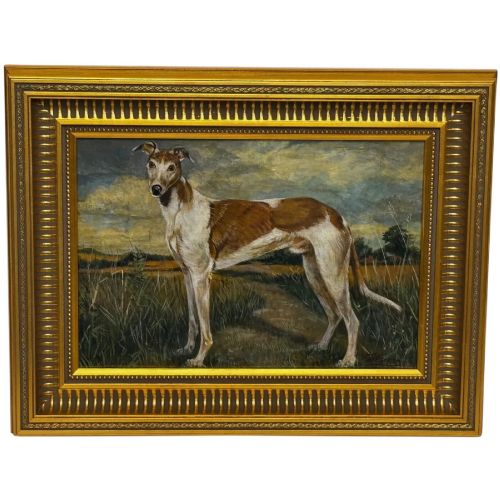
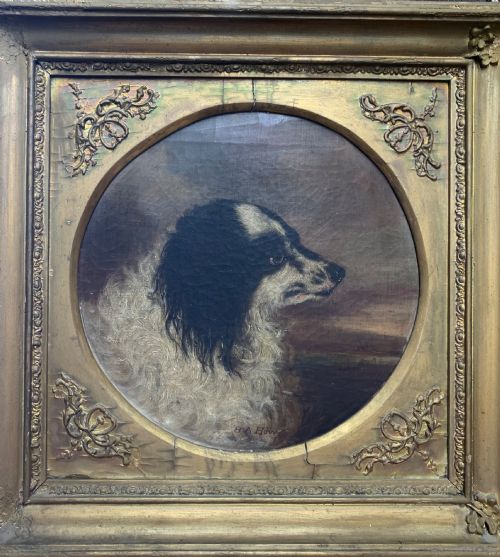
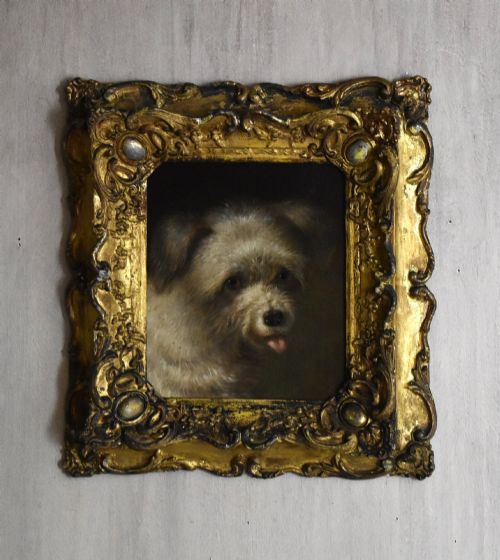
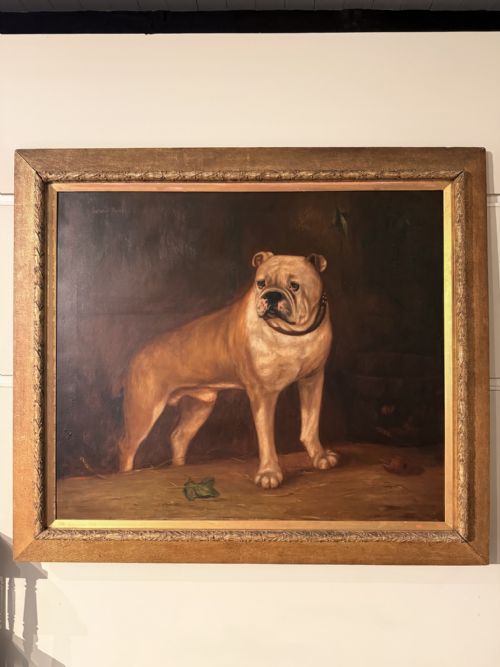


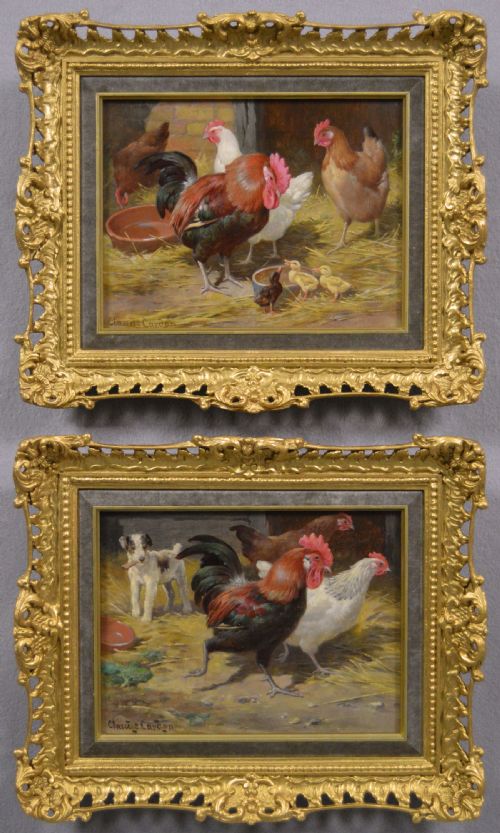
Framed Dog Oil Artwork
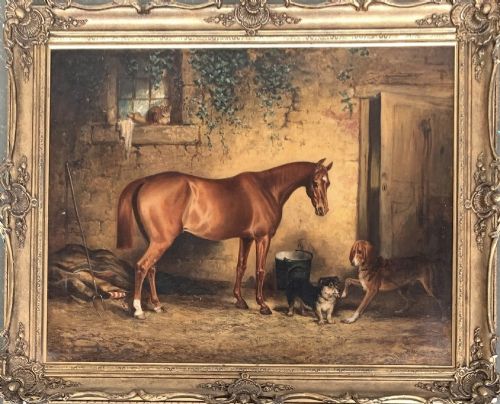
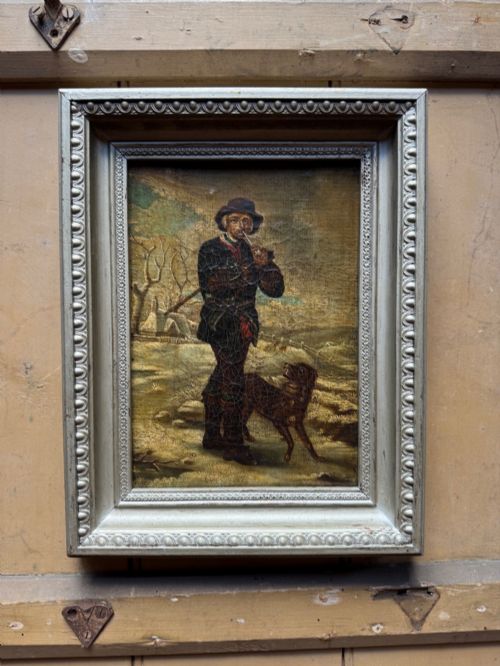
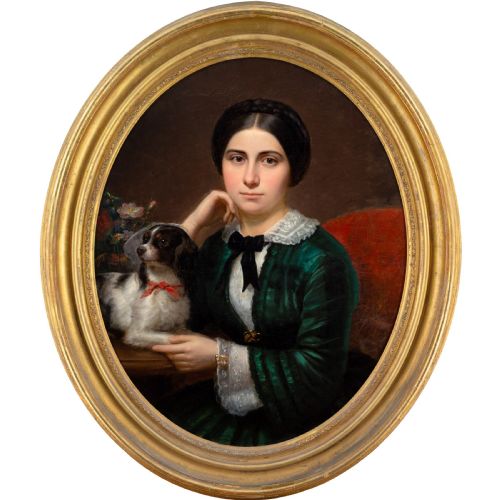
These framed dog oil artwork pieces capture canine subjects in oils, spanning periods from the nineteenth century into the twentieth.
Framed Dog Oil Artwork
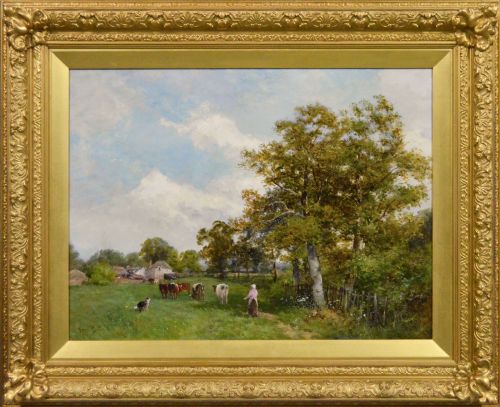
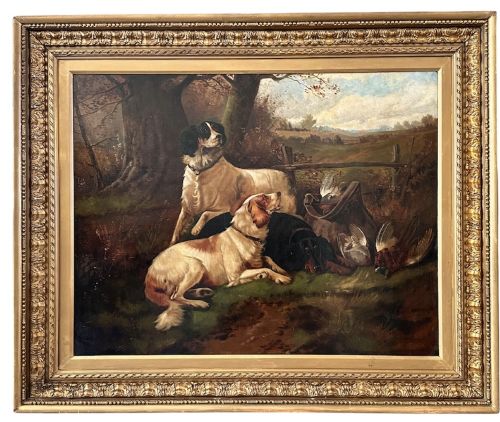
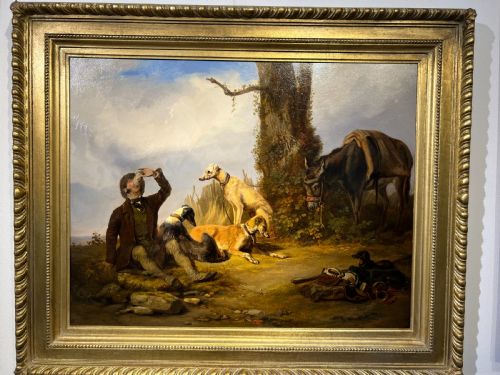
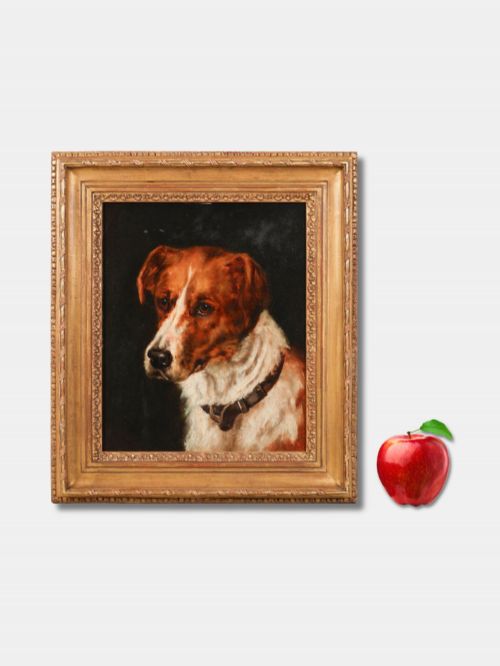
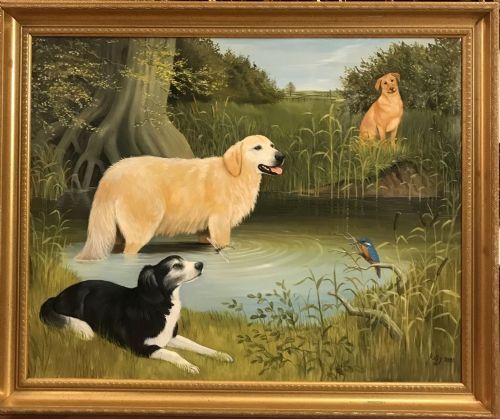
When searching for framed dog oil artwork, buyers encounter painted representations of spaniels, terriers, hounds, and collies captured on canvas or board. These works range from intimate studies of individual pets to larger sporting compositions depicting gun dogs and hunting hounds in pastoral landscapes.
The selections available lean heavily into nineteenth-century British and French academic traditions, alongside Victorian folk art and later twentieth-century interpretations. Canvases appear housed in their original surrounds, frequently utilising giltwood or heavy gilded mouldings appropriate to their period.
How They Were Made
The primary technique relies on oil paint applied to stretched canvas or wooden board, utilising the rich pigment depth and slow drying time to build texture in animal coats. Brushwork varies from the tight, detailed realism favoured by Victorian sporting artists to looser, more expressive strokes found in contemporary studies.
Framing forms an integral part of the construction, employing carved wood finished with gold leaf or gilt. These surrounds provide both structural support for the canvas and the decorative weight characteristic of period presentation.
Listings feature works from the Regency, Victorian, and Edwardian eras, executed primarily in oil paint on canvas or board with giltwood framing.
What Varies In Quality
Quality rests upon the artist's ability to render the anatomy, expression, and distinct coat texture of the specific breed with anatomical conviction. Superior examples demonstrate a careful handling of light across fur and landscape, whereas simpler pieces rely on formulaic compositions.
The preservation of the original painted surface and the matching quality of the period gilt frame significantly influence the standing of an individual piece. Retaining legible signatures, exhibition labels, or documented provenance further elevates the standing of a canvas within the genre.
Henry Barraud·Valentine T. Garland·David Bates·Sir Edwin Henry Landseer·John Emms·Colin Graeme Roe·Fannie Moody
The Framed Dog Oil Artwork Glossary
- Oil on Canvas
- A traditional painting medium where pigment suspended in drying oil is applied to a woven fabric support. This combination allows for rich colour blending and textural buildup over time.
- Giltwood
- Wood that has been decorated with a thin layer of gold leaf or metallic powder. It provides the ornate, reflective borders common on nineteenth-century picture frames.
- Sporting Art
- A genre of painting dedicated to rural pursuits, livestock, and working animals such as hounds and gun dogs. These works often record prized animals owned by notable patrons.
- Naive Art
- A classification for paintings created by artists without formal academic training. These pieces are characterised by a flat perspective and straightforward charm rather than strict adherence to proportion.
Framed Dog Oil Artwork: Frequently Asked Questions
How do I identify the age of a dog oil painting?
Dating relies upon examining the canvas preparation, stretcher frame construction, and the style of the gilt surround. Stylistic markers within the clothing of any human subjects or the specific breed popularity also offer clues.
Furthermore, signatures, inscriptions on the reverse, and remnant dealer labels assist in narrowing down the decade of creation.
What is the difference between canvas and board supports?
Canvas requires stretching over a wooden frame, offering a flexible surface that responds to environmental humidity changes. Board provides a rigid, flat support often utilised for smaller studies and folk art.
Both materials appear frequently across nineteenth and twentieth-century animal portraiture depending on the scale intended by the artist.
How should I care for an antique oil painting?
Protect the surface from direct sunlight and maintain stable indoor humidity to prevent the paint layer from cracking. Dust the canvas and frame gently with a dry, soft brush without applying liquid cleaners.
Professional conservation should be sought if the varnish yellows or if structural damage occurs to the canvas or wooden support.
Are these paintings original period pieces?
The inventory encompasses authentic nineteenth and twentieth-century works alongside historical period copies after well-known animal painters. Each listing specifies the primary materials and estimated era of production.
Reviewing the associated biographical details and stylistic traits helps confirm the historical context of the individual artwork.