

Traditional Drop Flap Table
Traditional drop flap table pieces offer folding leaves for versatile space, spanning centuries of oak and mahogany craftsmanship.

Traditional Drop Flap Table
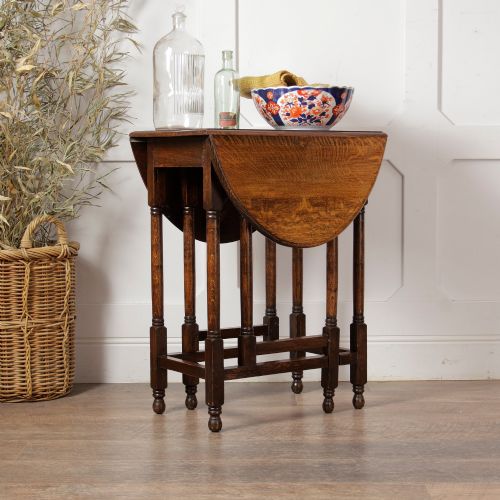
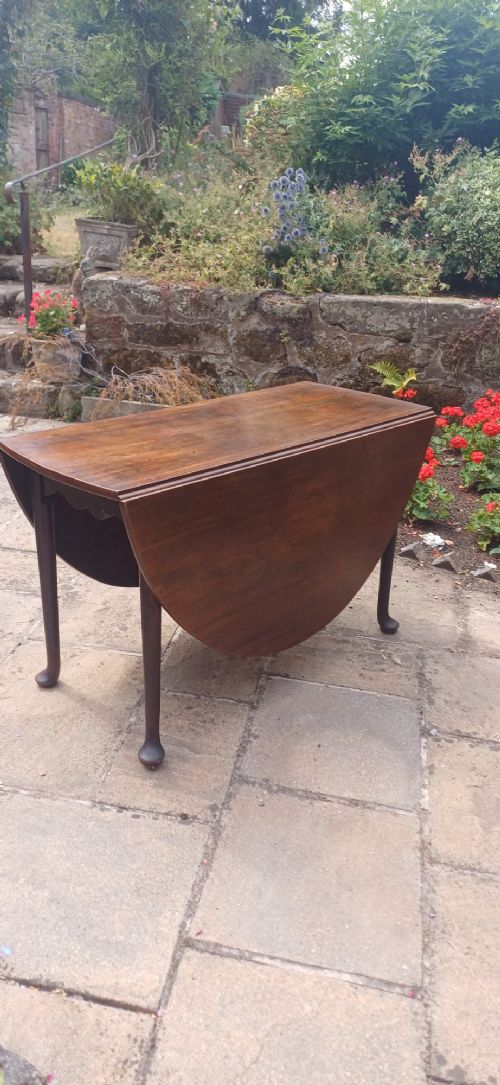
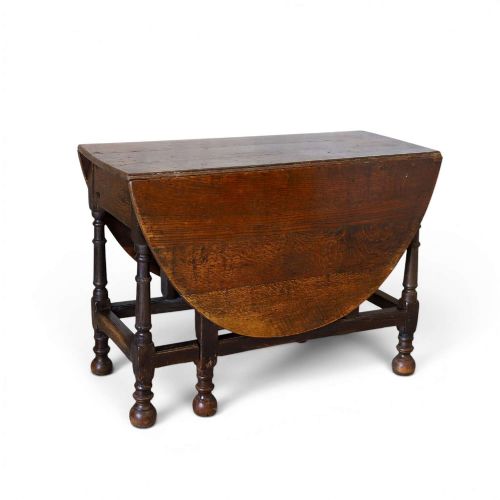
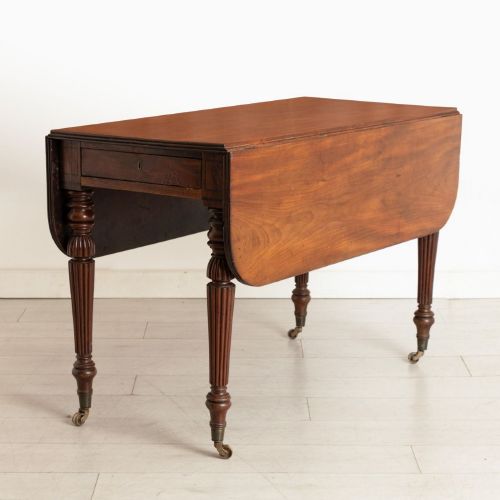
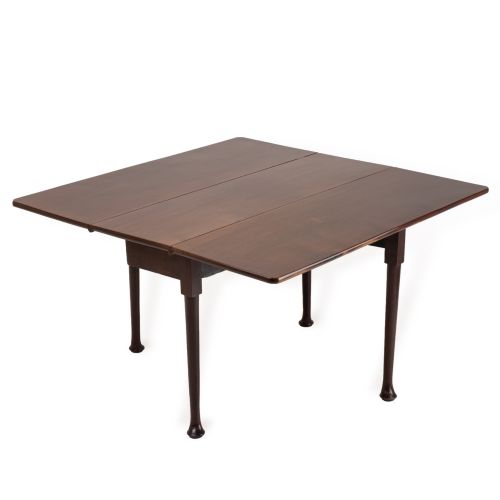
A traditional drop flap table provides a surface with hinged leaves that drop down when not in use. These versatile tables appear in forms such as gateleg dining tables, Pembroke tables, and compact occasional pieces.
The selections span centuries of British furniture history, ranging from seventeenth-century oak examples through Georgian and Victorian periods up to early twentieth-century revivals. Oak and mahogany dominate the forms, supplemented by walnut, pine, and satinwood.
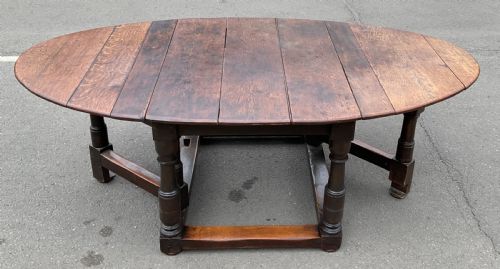
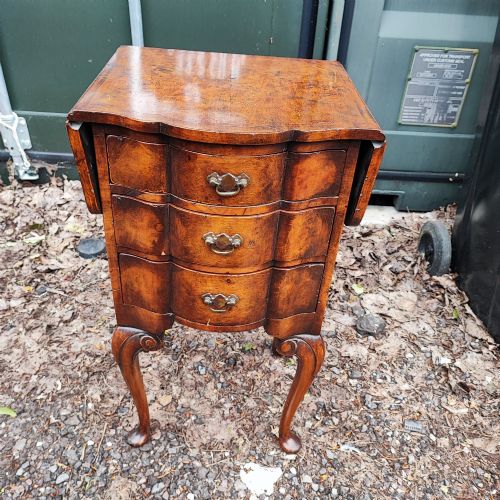
Buyers encounter everything from large six-seater dining tables to small bedside cabinets and coffee tables with drop sides. This page concentrates heavily on gateleg designs and Pembroke variations built across the nineteenth and early twentieth centuries.
How they were made
Timbers like oak and solid mahogany form the primary structure of these tables, joined by hardware such as original brass hinges. Carpenters utilised sturdy gateleg actions and drop-leaf supports to bear the weight of folding flaps.
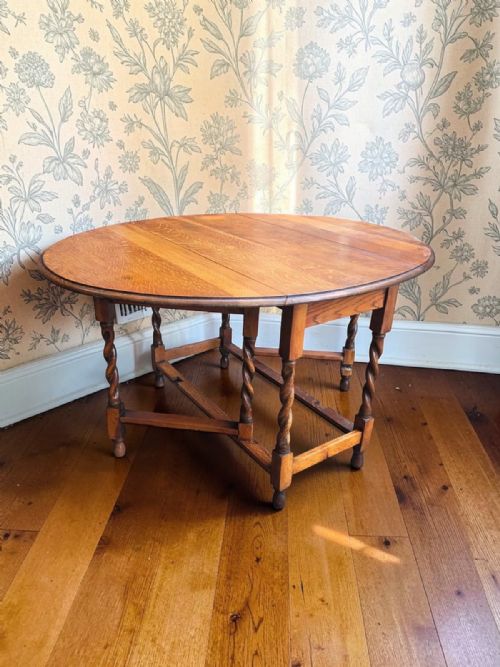
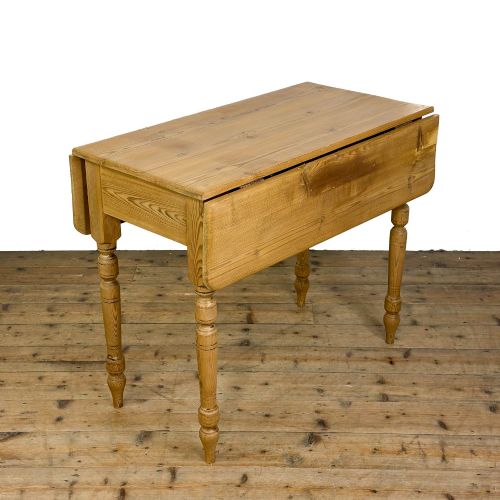
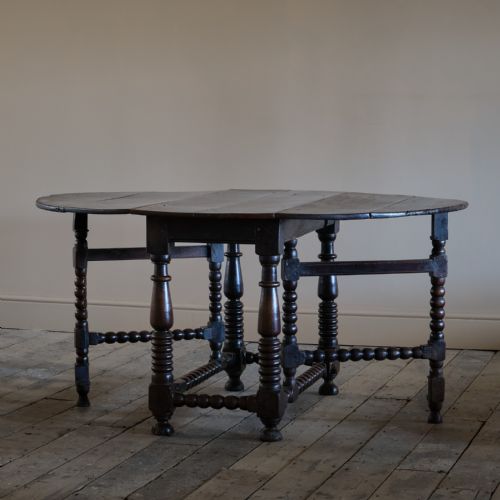
Turned elements appear frequently, featuring styles from bobbin turning and barley twists to simpler tapered legs. Pine and painted woods also serve utilitarian kitchen and cottage tables from later Victorian periods.
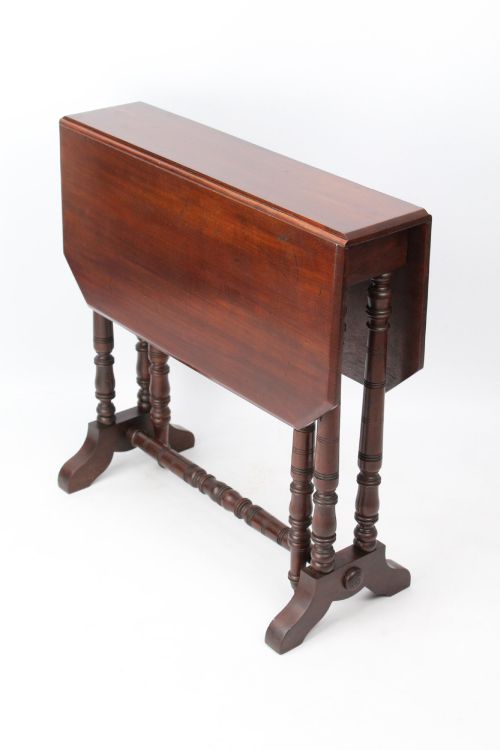
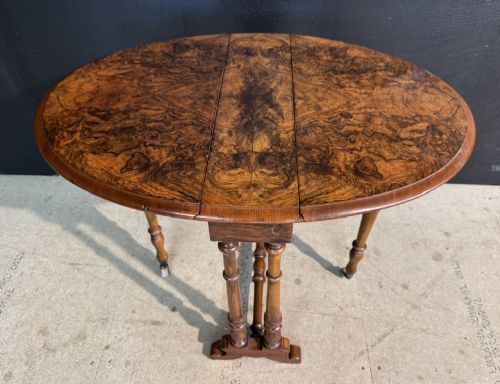
Miniature burr walnut Sutherland tables exist purely to charm collectors, scaling down full-sized dining mechanics into tabletop novelties.
What varies in quality
The distinction between ordinary and superior pieces rests in the selection of timber and the crispness of the turning on the legs. Grain figures in walnut and mahogany elevate certain items, alongside the retention of original hinges and warm patination.
Structural integrity of the gateleg swing action dictates daily utility. Finer examples balance robust construction with elegant proportions, particularly in smaller occasional and spider leg tables.
The Traditional Drop Flap Table Glossary
- Gateleg table
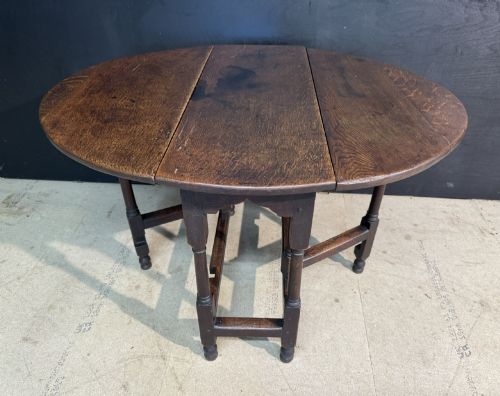
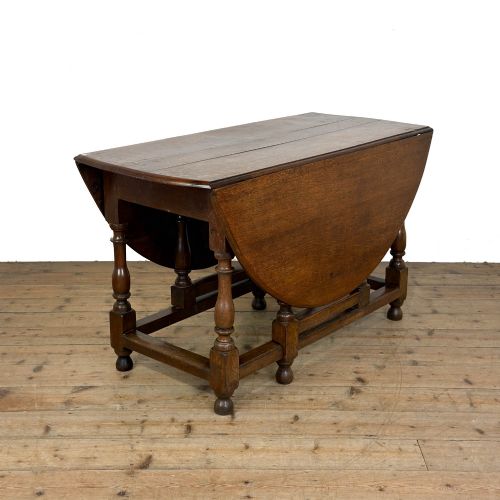
- A table with hinged flaps supported by legs that swing outward like a gate. This design provides a large surface area that folds away compactly.
- Pembroke table
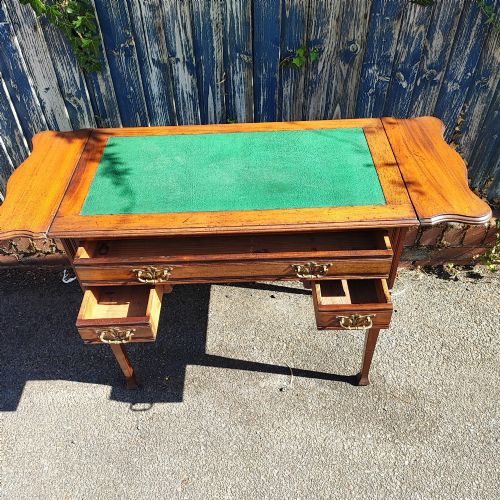
- A small rectangular table featuring two drop leaves on opposing sides and typically a single drawer. It gained popularity during the eighteenth century for versatile domestic use.
- Sutherland table
- A narrow drop-leaf table with exceptionally slim folding flaps supported by swinging gate legs. It stands as a space-saving invention of the Victorian era.
- Barley twist
- A type of woodturning resembling a spiral rope. This decorative column style frequently adorns the legs of seventeenth-century and revival tables.
- Patina
- The surface sheen and mellowing developed by wood over decades of use and polishing. It serves as an indicator of age and careful preservation.
Traditional Drop Flap Table: Frequently Asked Questions
How do I use a drop flap table in a small room?
Keep the side flaps dropped against the centre section to use the piece as a narrow console or side table against a wall. Raise one or both leaves when you need surface area for dining or writing.
Gateleg and Pembroke designs fold down flat, making them practical for tight spaces without sacrificing surface area when entertaining.
How do I date an antique oak table?
Examine the construction methods, wood type, and turning styles used on the legs. Seventeenth and eighteenth-century pieces often display pegged joints, hand-sawn boards, and deep patination on solid oak.
Later pieces from the nineteenth and twentieth centuries frequently incorporate machine-cut elements or revival styles like barley twists and Jacobean details.
Are these tables sturdy enough for daily dining?
Solid timber construction in oak or mahogany provides high durability for everyday meals. The swinging legs on gateleg versions bear considerable weight when properly adjusted.
Inspect the hinges and leg joints to ensure the drop leaves remain level and stable under normal use.