
Traditional Deep Lounge Chair
A traditional deep lounge chair offers serious comfort and generous proportions, built for long hours of sitting.
Traditional Deep Lounge Chair
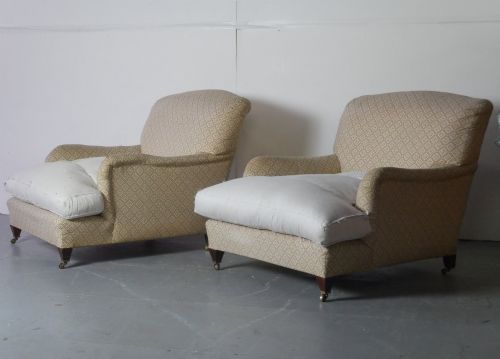
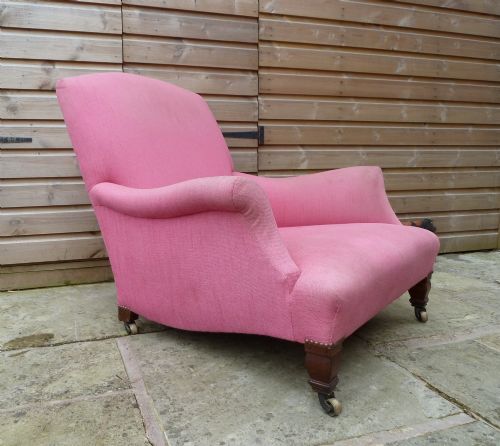
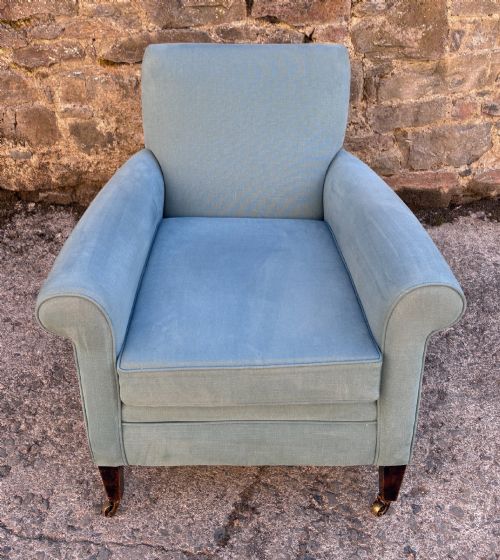
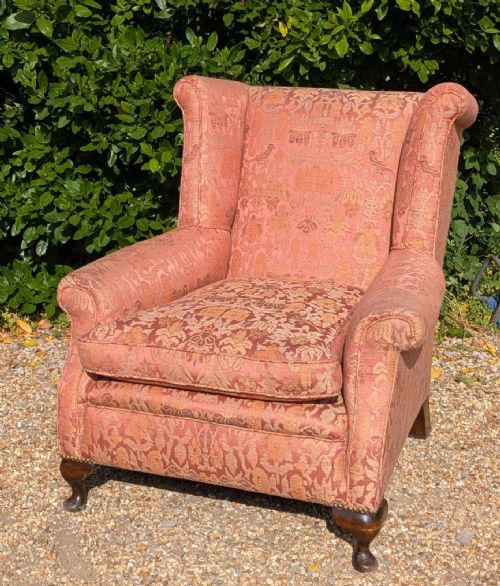
When you search for a traditional deep lounge chair, you encounter sturdy upholstered seating designed primarily for comfort and relaxation, often taking the form of armchairs, club chairs, and low sofas. These pieces draw from nineteenth-century, Edwardian, and 1930s traditions, frequently reflecting country house or Howard style aesthetics.
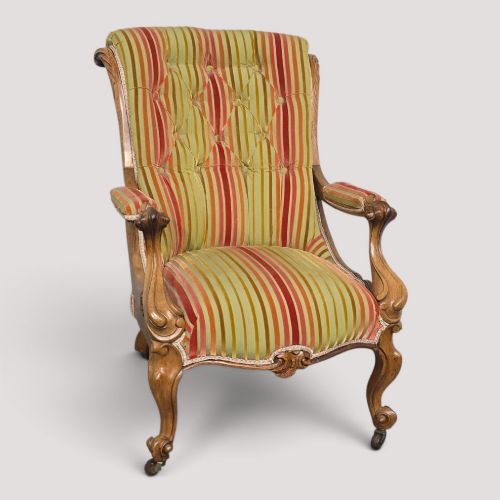
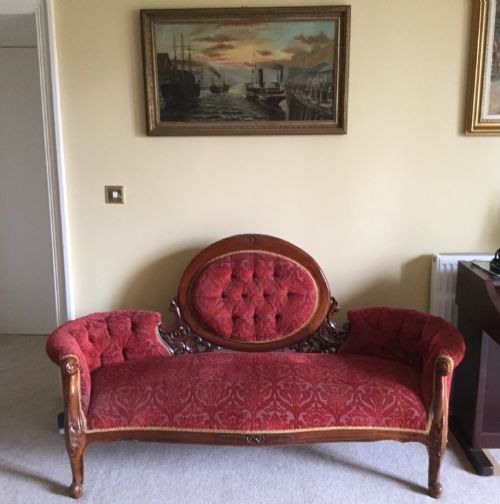
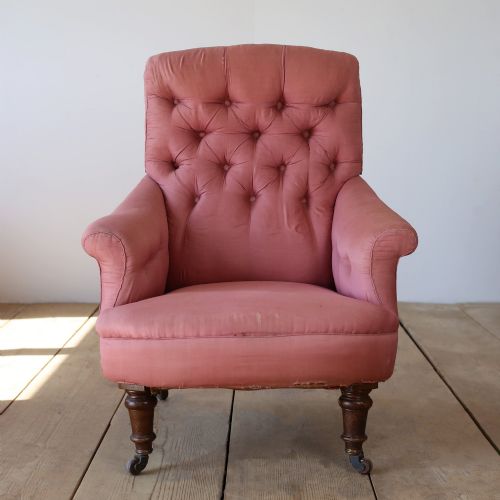
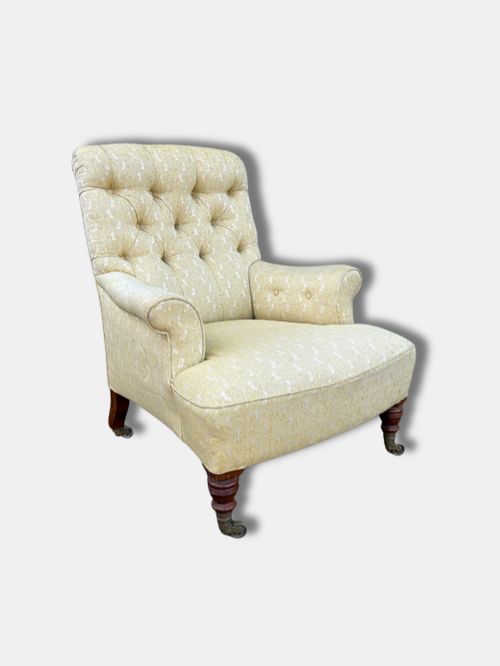
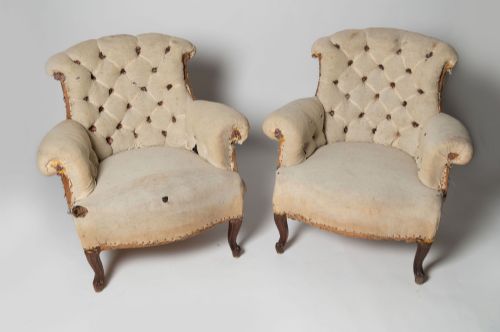
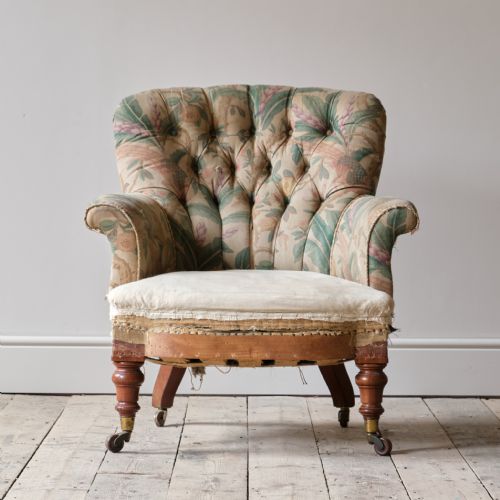
The versions most commonly met on this page span the Victorian and Edwardian eras through to the 1930s, constructed with deep seats and substantial padding. You find button-backed upholstery, low profiles, and generous armrests designed to accommodate long periods of sitting.
How they were made
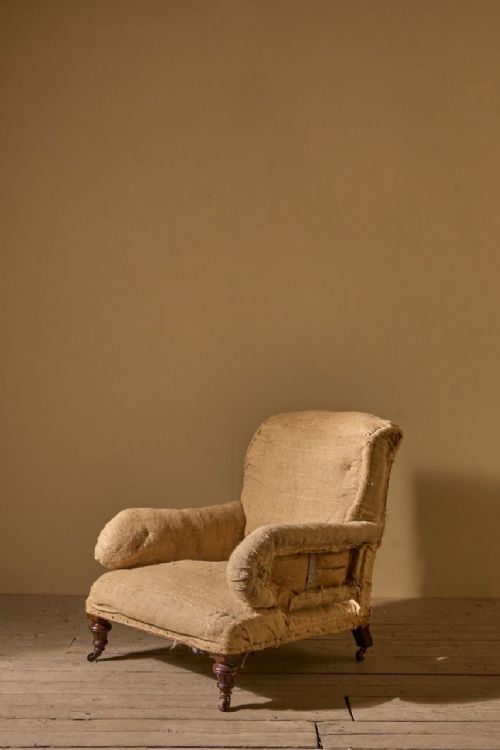
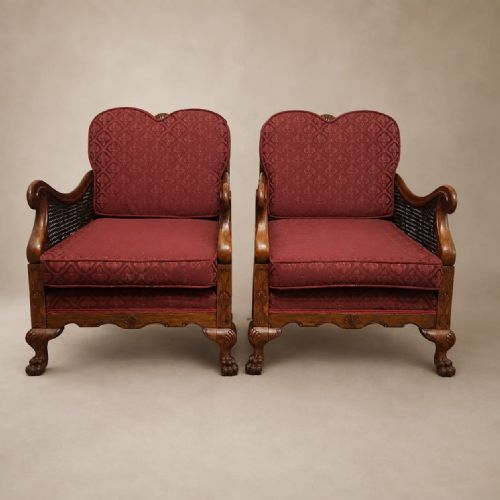
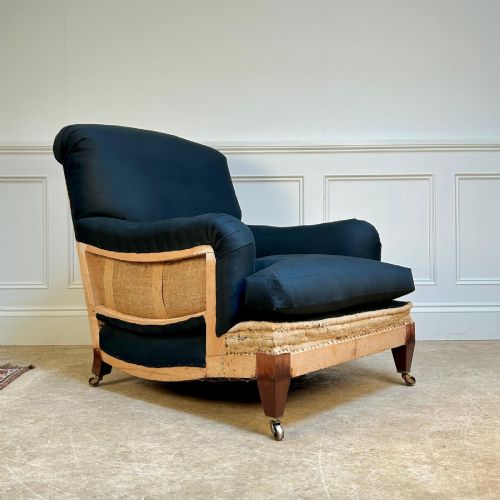
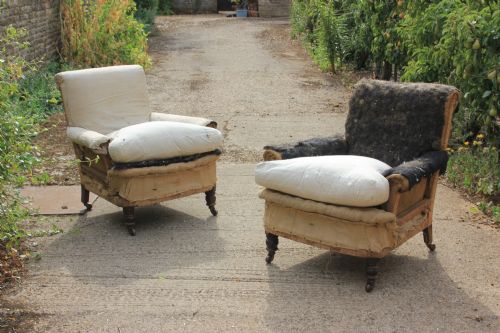
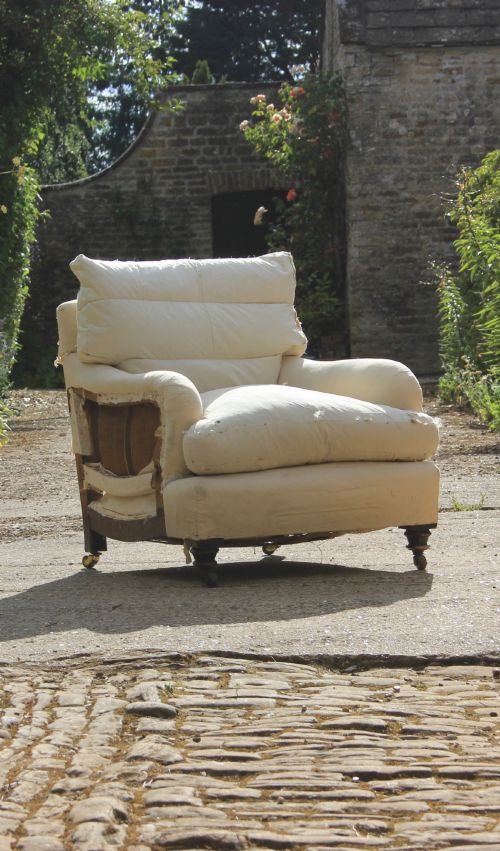
Makers built these frames using hardwoods such as mahogany, walnut, and timber, supplemented by brass castors and structural fittings. Frames often incorporated split cane work or exposed carved mahogany elements alongside concealed sprung foundations.
Upholstery relied on deep pile fabrics, leather, brocade, and feather fillings to achieve the characteristic softness and depth. Traditional joining techniques and robust internal springing supported heavy daily use across English and French workshops.
Listings span the nineteenth century through the 1930s, featuring woods like mahogany and walnut alongside leather and fabric upholstery.
What varies in quality
The distinction between standard examples and superior pieces rests on the integrity of the frame construction and the depth of the internal springing. Finer pieces demonstrate careful joinery in hardwoods like walnut and mahogany, ensuring the structure remains rigid despite deep proportions.
Upholstery execution and material selection further separate the range. High-tier examples utilise quality leather, feather fillings, and substantial brocade or fabric covers that retain their loft and shape over decades of use.
Howard and Sons·Gillows
The Traditional Deep Lounge Chair Glossary
- Bergere
- An upholstered armchair with enclosed cane work sides and back. The wooden frame is typically exposed and polished.
- Button back
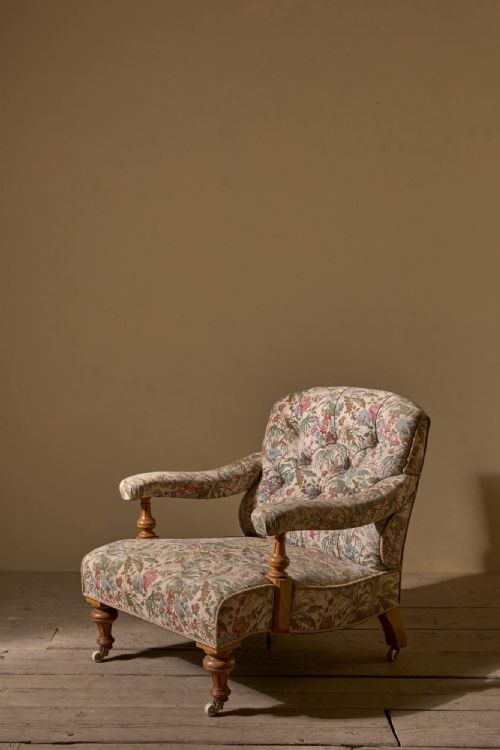
- An upholstery technique where depressions are formed in the padding by pulling buttons deep into the stuffing. This secures the filling evenly across the backrest.
- Chaise longue
- An upholstered sofa shaped like a chair with a long seat for reclining. It combines seating with an extended footrest.
- Club chair
- A deep, comfortable armchair typically upholstered in leather. The style originated in French and English clubs for relaxed seating.
- Library chair
- A sturdy armchair designed for reading rooms and libraries. These pieces often feature durable leather or fabric upholstery and supportive wooden arms.
Traditional Deep Lounge Chair: Frequently Asked Questions
What is a traditional deep lounge chair?
A traditional deep lounge chair is a heavily padded, low-slung seat designed for maximum comfort and relaxation. These pieces typically feature generous seating depths, sprung bases, and upholstered armrests.
Originating largely in the nineteenth and early twentieth centuries, they include styles associated with English country houses and traditional club rooms. Their construction prioritises ergonomic support and longevity through robust wooden frames.
How do I identify a Victorian lounge chair?
Victorian lounge chairs are identified by their substantial wood frames, often carved from mahogany or walnut, and distinctive upholstery details like button backing. They frequently display turned legs fitted with brass castors.
These pieces lean towards formal yet comfortable country house aesthetics, showing heavier proportions and traditional joinery methods characteristic of the nineteenth century.
Are these chairs suitable for daily use?
These chairs are built with sturdy hardwood frames and internal springing designed precisely for continuous, heavy use. Their deep seats and feather or fabric fillings provide enduring physical support.
Living with them involves normal upholstery maintenance and appreciating how well-sprung seating adapts to daily lounging over many decades.
What materials were used in construction?
Frames were constructed from durable timbers including mahogany, walnut, and general hardwood, often accented with brass fittings. Internal construction relied on robust steel or wire springing systems.
Upholstery materials ranged from full grain leather and heavy brocade to feather fillings and woven fabrics, ensuring both structural resilience and tactile comfort.