

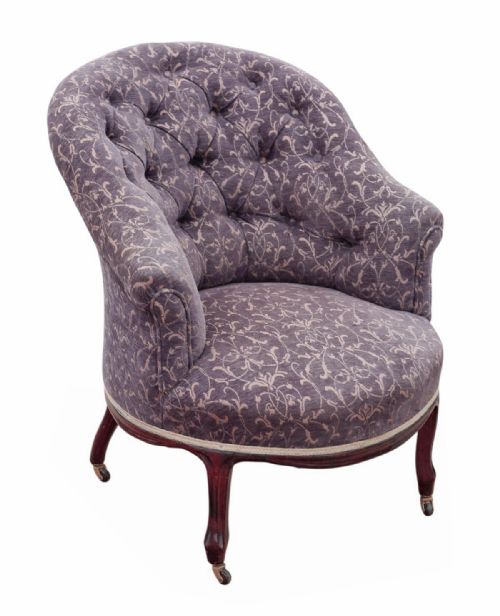


Low Arm Armchair
When you search for low arm armchair, you are tracking down a form built for relaxation, balancing upright posture with deep comfort across the nineteenth and twentieth centuries.
Low Arm Armchair
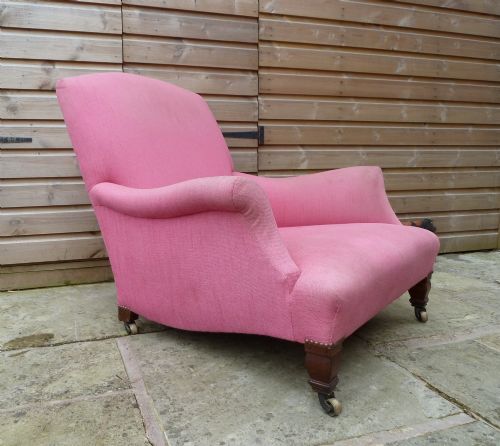
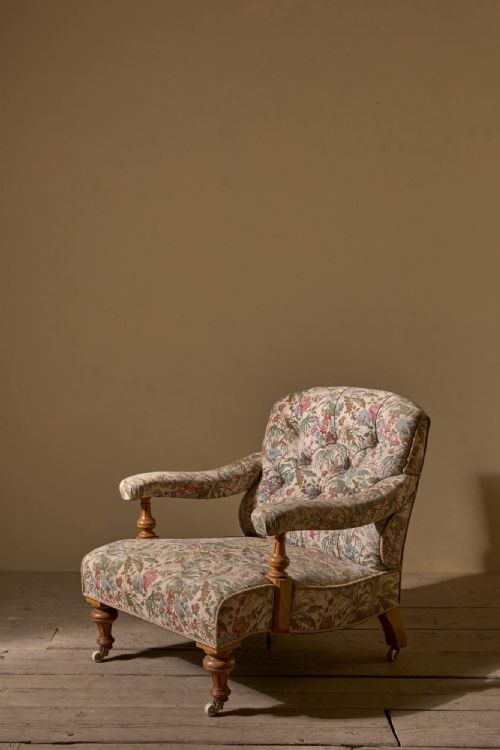
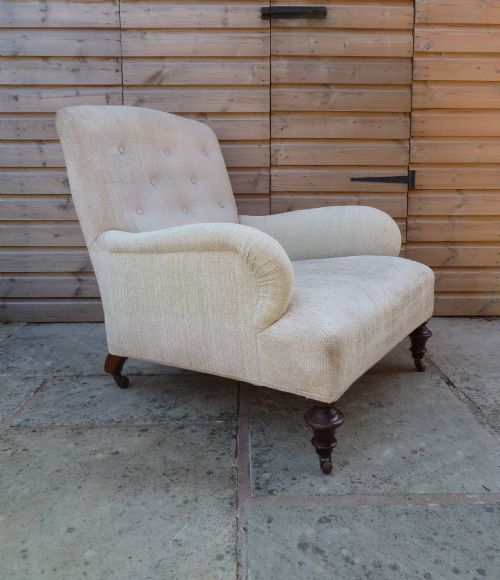
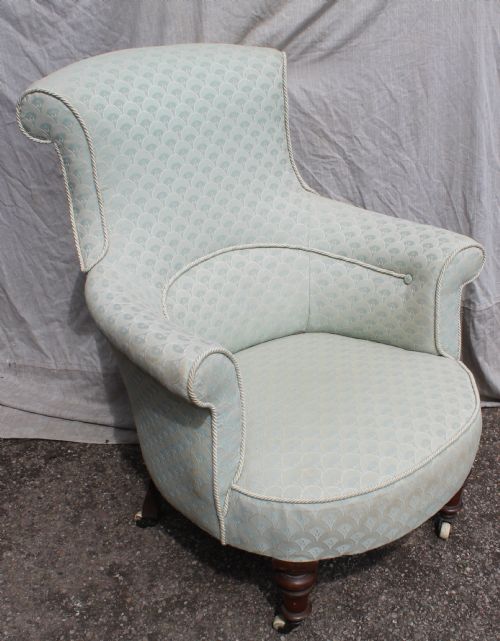
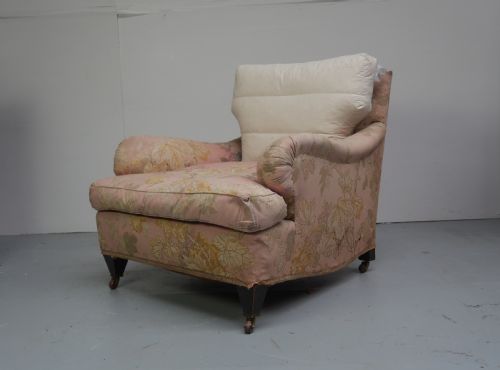
A low arm armchair offers a compact profile designed to sit comfortably beneath standard table heights or beside low firesides, frequently emerging from nineteenth-century English country houses and continental salons. You will commonly encounter nineteenth-century Victorian upholstery, Edwardian salon pieces, and deep-seated styles echoing the maker Howard and Sons.
The selection ranges from vernacular stick-back Windsor forms in elm and yew to button-backed bedroom chairs and robust library seating. Many items reflect distinct regional tastes, spanning English country house comfort, French Napoleon III design, and twentieth-century Art Deco interpretations.
Materials and construction methods
Frames rely upon durable hardwoods such as mahogany, walnut, rosewood, and timber, complemented by turned elements like barley twist supports and spindle backs. Windsor variants combine woods including elm and ash for seats and bows.
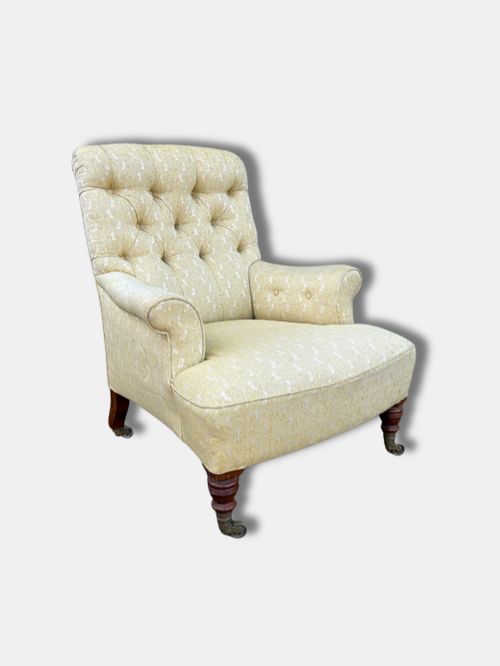
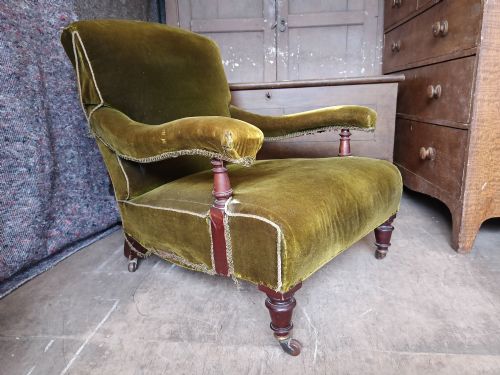
Upholstery relies on traditional stuffing secured beneath fabrics such as velvet, silk, leather, and calico, often finished with decorative brass details or detailed button backs.
Listings feature timbers including mahogany, walnut, rosewood, elm, and yew alongside brass and velvet.
Distinctions in craftsmanship
Quality rests in the structural integrity of the timber frame and the precision of turned components like spindle backs and legs. Superior examples maintain uncompromised joinery and balanced proportions through decades of daily use.
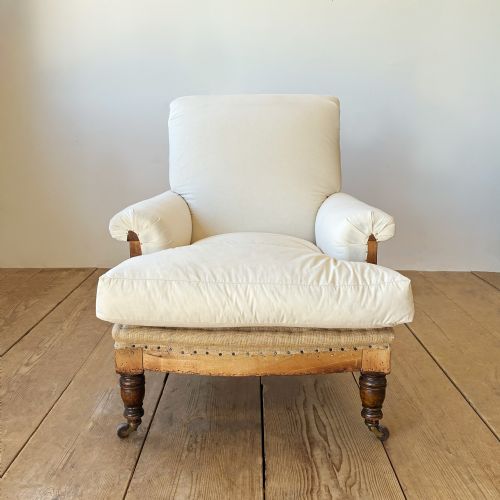
Upholstered versions separate themselves through the depth of the seat construction and the retention of supportive internal webbing and traditional stuffing materials.
Howard and Sons·Gillows·Waring and Gillow·Hampton and Sons
The Low Arm Armchair Glossary
- Windsor chair
- A wooden chair constructed with a solid wooden seat into which the back and legs are dowelled directly. These often feature low backs and vernacular stick construction.
- Tub chair
- A curved upholstered chair where the arms sweep continuously into the backrest to form a rounded enclosure. This shape provides a snug seating position.
- Button back
- An upholstery technique where indentations are formed across the padded surface by pulling ties or buttons through the stuffing. This secures the internal materials and creates a diamond pattern.
- Bergere
- An enclosed armchair with stuffed upholstery resting within a wooden frame, typically featuring cane work on the sides or back. These emerged during the eighteenth and nineteenth centuries.
- Library chair
- A heavy, robust armchair designed for reading rooms, frequently constructed from walnut or mahogany. They often incorporate low arms to allow freedom of movement.
Low Arm Armchair: Frequently Asked Questions
Where were low arm armchairs used?
These chairs typically served in libraries, bedrooms, and drawing rooms where lowered armrests permitted easier movement for sewing, reading, or writing.
Their compact proportions also suited them for placement around low hearths in English country houses.
How do I identify a Howard style armchair?
Howard style pieces are recognised by their deep, sprung seats, low rolled arms, and generous proportions designed for lounging.
They frequently appear upholstered in heavy ticking, velvet, or kilim fabrics.
How do I date a Victorian armchair?
Victorian seating can be dated by examining the transition from solid mahogany and walnut frames in the mid-nineteenth century to lighter Edwardian satinwood and inlaid designs.
Upholstery styles also shift from elaborate buttoned velvet toward simpler lines in the later decades.