

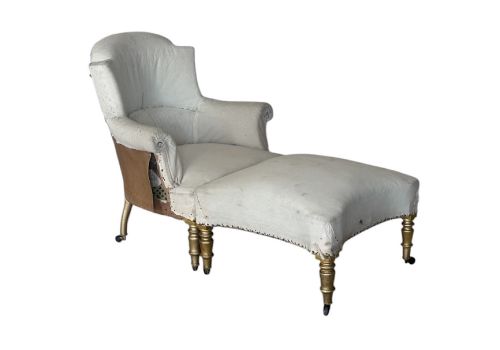
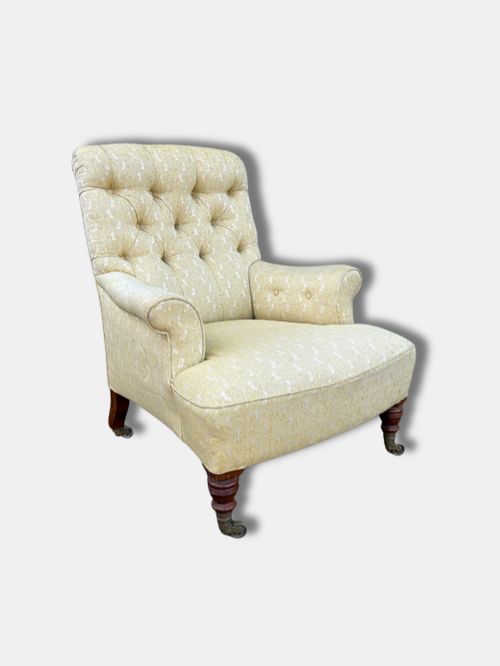
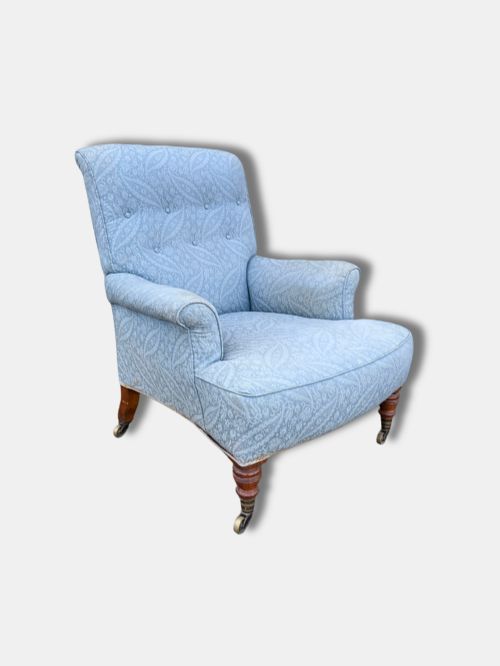
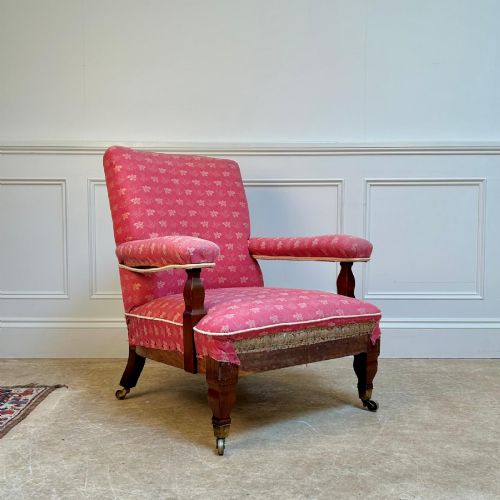
Turned Leg Lounge Chair
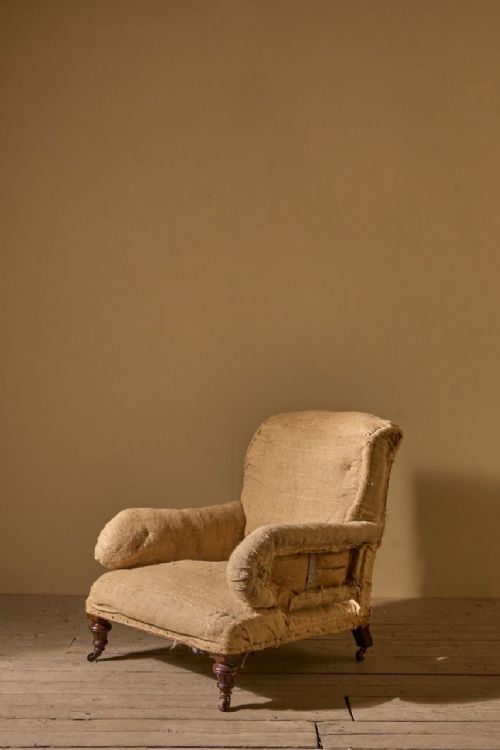
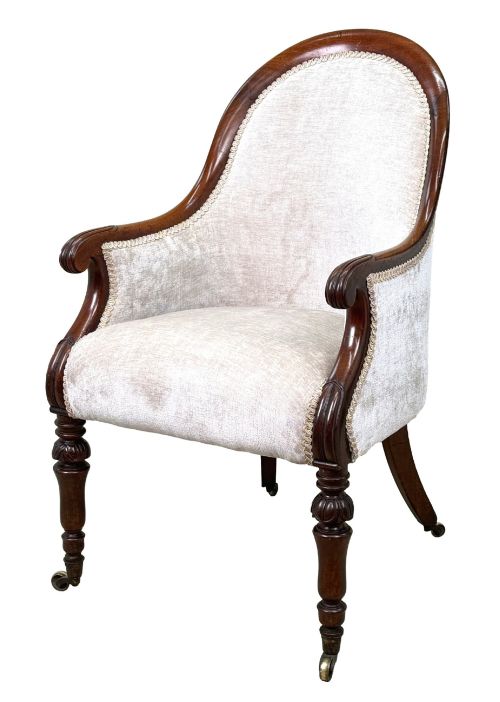
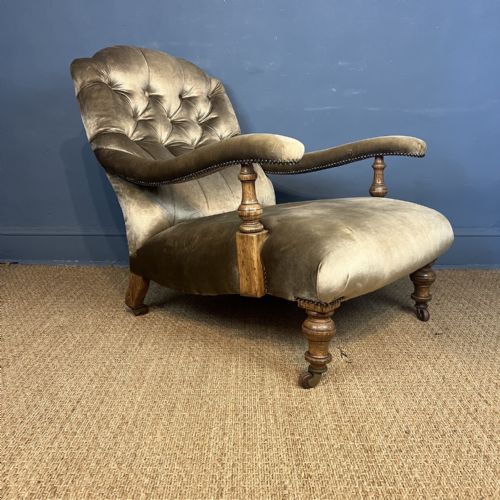
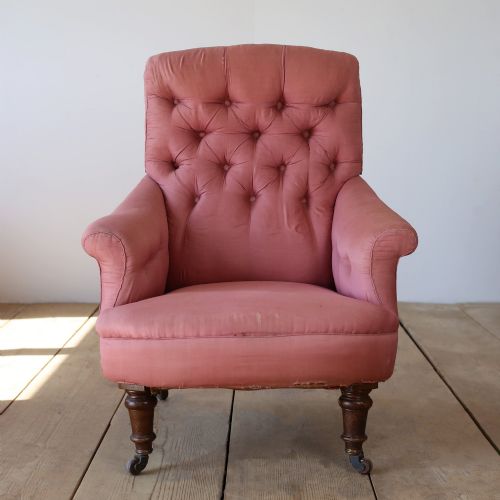
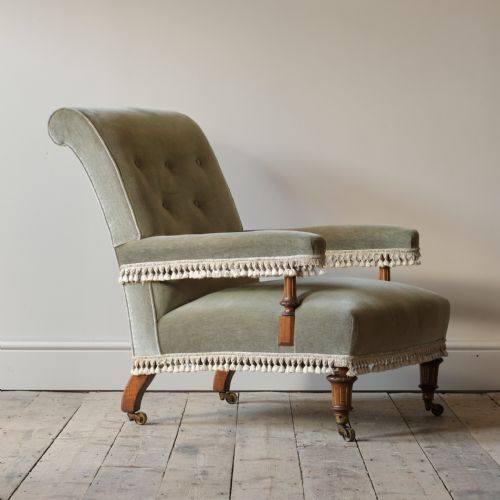
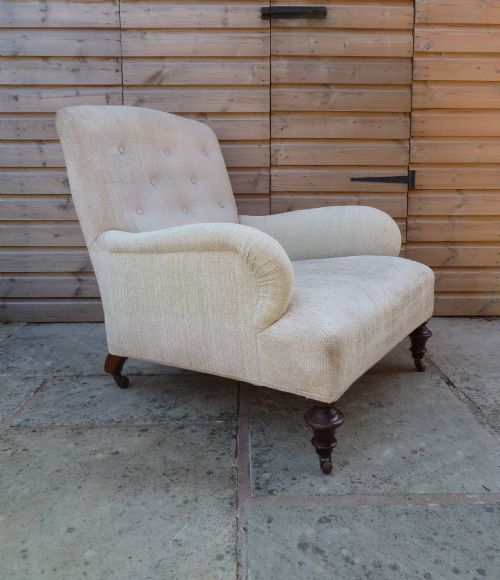
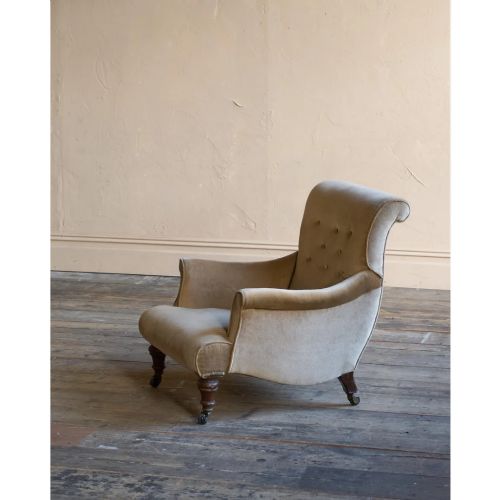
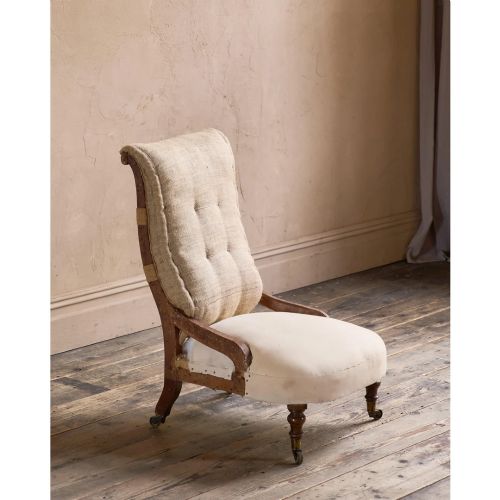
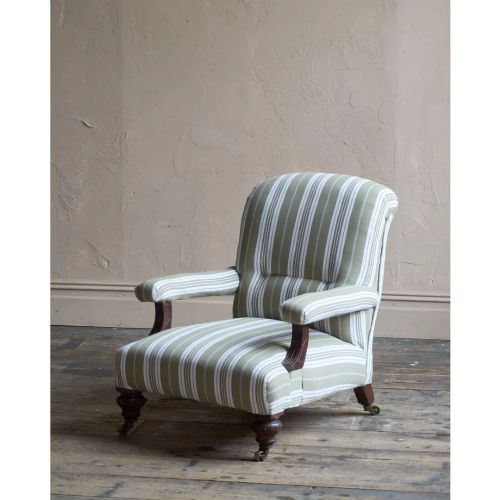
A turned leg lounge chair brings robust nineteenth-century seating into a room with substantial timber framing and deep upholstery.
Turned Leg Lounge Chair
A turned leg lounge chair encompasses nineteenth-century seating types such as armchairs, daybeds, and slipper chairs. These pieces span Victorian, Edwardian, and Regency periods, drawing upon English country house and French styles.
Makers and workshops including Howard and Sons, Morris & Co, Gillows, and Hampton & Sons produced notable variants. The form ranges from button-backed reading chairs to low nursing seats designed for domestic comfort.
How they were made
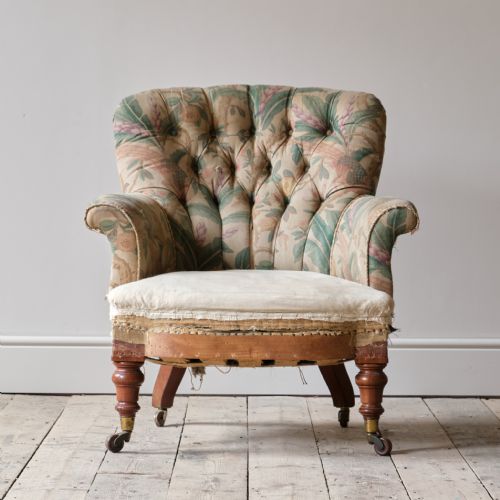
Frames rely on hardwoods such as mahogany, walnut, oak, and general wood construction to support heavy daily use. Turned legs provide structural stability while displaying lathe work typical of the period.
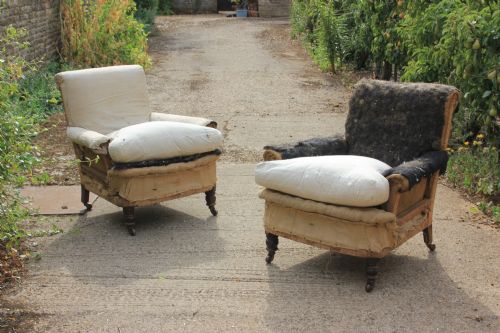
Upholstery incorporates traditional coverings including velvet, calico, hessian, fabric, leather, and crewelwork, often secured over internal stuffing and brass hardware details.
Deep seats designed for Victorian lounging occasionally conceal original maker stamps hidden beneath the hessian webbing.
What varies in quality
Quality rests in the integrity of the timber frame and the precision of the wood turning. Maker attribution to workshops like Howard and Sons or Gillows elevates a piece above standard nineteenth-century production.
The choice of covering and the depth of the original upholstery build dictate the comfort and historical fidelity of the seating. Heavy hardwoods and sound joinery separate fine country house examples from simpler utility chairs.
Howard and Sons·Morris & Co·Gillows·Hampton & Sons
The Turned Leg Lounge Chair Glossary
- Turned leg
- A leg shaped on a lathe to create cylindrical or decorative profiles. This technique appears across many nineteenth-century chair frames.
- Button back
- An upholstery method where depressions are formed by pulling buttons deep into the stuffing. This secures the fabric and creates a distinctive geometric pattern.
- Chaise longue
- An elongated chair or daybed designed for reclining. Examples often feature upholstered backrests and turned wooden supports.
- Slipper chair
- A low-seated upholstered chair originally used in bedrooms. They frequently lack arms to facilitate dressing.
- Wingback armchair
- A high-backed chair with side panels designed to shield the occupant from drafts. Early versions utilise heavy oak frames and leather or fabric upholstery.
Turned Leg Lounge Chair: Frequently Asked Questions
What is a turned leg lounge chair?
A turned leg lounge chair is a nineteenth-century seat featuring distinctive lathe-turned wooden supports. These pieces include Victorian armchairs, Regency library chairs, and deep-seated country house designs.
They combine robust wooden frames with traditional upholstery like velvet or leather. The form prioritises domestic comfort and reading.
How do I identify a Howard and Sons chair?
Howard and Sons chairs often feature stamped markers, specific legacy upholstery techniques, and robust nineteenth-century frames. They are noted for exceptionally deep seating and fine turned legs.
Attribution also relies on historical labels, castors, and characteristic English country house proportions.
What is the difference between a slipper chair and a nursing chair?
A slipper chair sits low to the ground and typically lacks arms for ease of use in bedrooms. Nursing chairs share a similar low profile but often include supportive backs for sitting with infants.
Both types utilise turned wooden legs and period textiles like calico or velvet.
How should I care for antique upholstery?
Antique upholstery requires gentle vacuuming with a soft brush attachment to remove dust from fabrics like velvet and hessian. Avoid direct sunlight to protect coloured textiles from fading.
Leather surfaces benefit from appropriate conservation conditioners, while wooden turned legs should be kept dry and polished occasionally.