



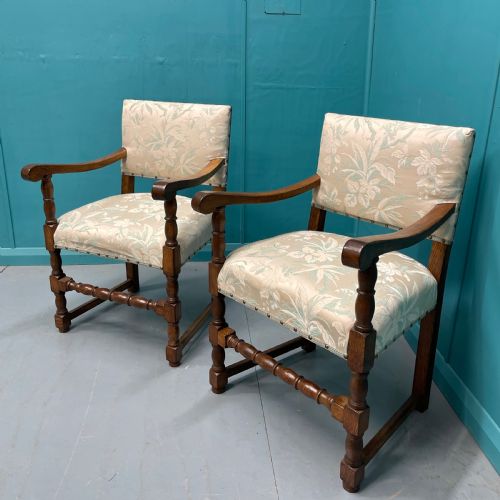

Damask Fabric Armchair
A damask fabric armchair brings texture and heritage to a room, offering a supportive seat wrapped in patterned textile.
Damask Fabric Armchair
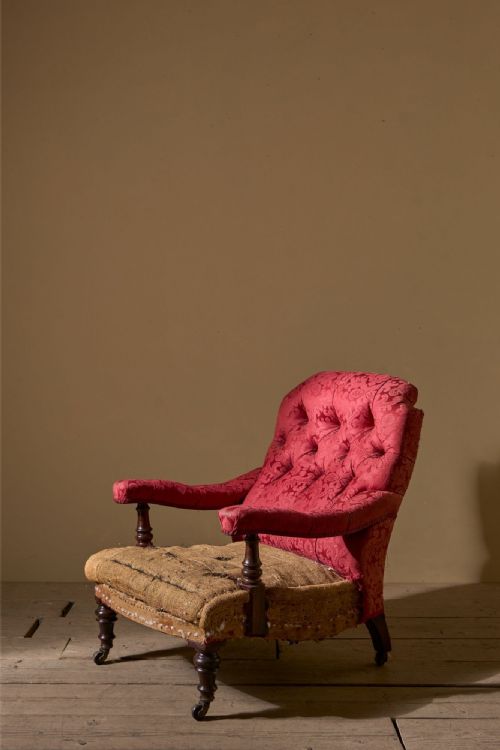
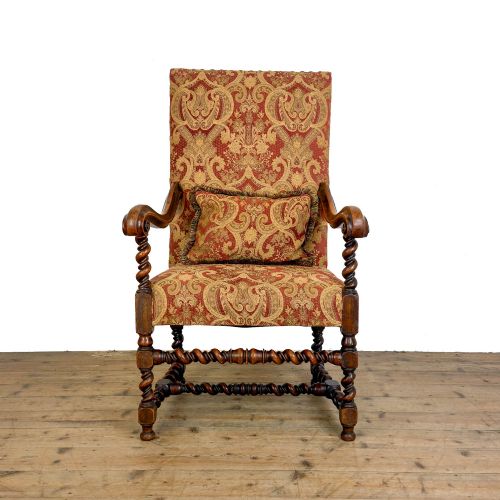
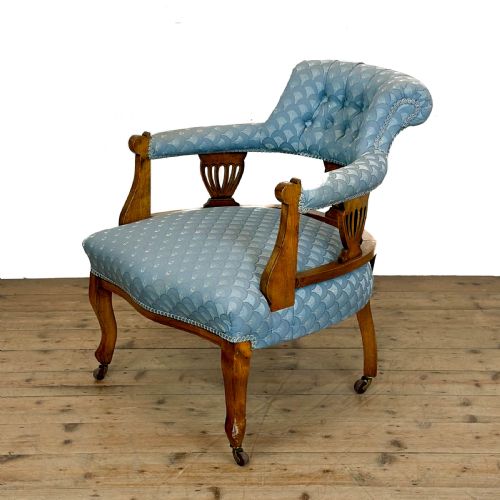
A damask fabric armchair is a seated furniture piece upholstered in patterned textile, spanning periods from the eighteenth century through to the interwar decades. Buyers searching this phrase encounter open armchairs, wingbacks, tub chairs, and library chairs built from timber frameworks.
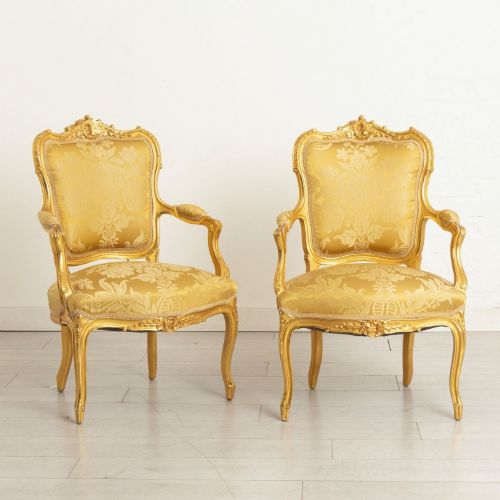
The nineteenth century provides the bulk of the examples, often rendered in Victorian or Edwardian taste with button-backing, carved wooden elements, and barrel-back shapes. Revival designs appear frequently, drawing upon Queen Anne, Carolean, French Rococo, and Jacobean motifs.
Frames rely upon traditional timbers such as mahogany, walnut, and oak, alongside brass details and giltwood finishes. Individual pieces emerge from English country house contexts as well as French workshops, occasionally accompanied by matching footstools or forming part of larger lounge suites.
Quality differences
The distinction between standard examples and finer pieces rests upon the crispness of the timber carving and the integrity of the frame construction. Heavy mahogany and walnut frames with hand-carved details demand greater skill than simpler structural woods.
Upholstery execution dictates visual success, where neatly fitted damask or silk fabric, precise buttoning, and sturdy springs elevate the piece. The historical harmony between the frame style, such as French Rococo or Queen Anne, and its upholstery defines the overall character.
Listings incorporate timber frames made from mahogany, walnut, oak, and brass alongside fabric and damask textiles.
The Damask Fabric Armchair Glossary
- Damask
- A reversible figured fabric with patterns woven into the cloth, traditionally utilised for upholstery and wall hangings. It creates a subtle play of light across the surface as the weave catches illumination.
- Wingback
- An armchair featuring protective side panels designed to shield the occupant from drafts. Early forms date to the eighteenth century, evolving through Victorian and Edwardian revivals.
- Tub armchair
- A fully upholstered seat where the arms curve continuously into a rounded backrest, resembling the shape of a half-barrel. Victorian examples often feature buttoned upholstery inside this curved shell.
- Giltwood
- Timber coated with a thin layer of gold leaf or gilt powder, prevalent in French Rococo and decorative nineteenth-century seating. It gives a bright metallic sheen to carved frames.
Damask Fabric Armchair: Frequently Asked Questions
How do I date a wooden armchair?
Dating relies upon observing the timber species, carving style, and structural proportions relative to known historical periods.
Mahogany and walnut point toward specific centuries, while revival styles borrow motifs from earlier eras like Queen Anne or Jacobean reigns.
Are these chairs comfortable for daily use?
Most pieces offer generous proportions, padded upholstery, and supportive wing or tub forms designed for sitting.
Library chairs and fireside models from the Victorian and Edwardian periods prioritised ergonomic comfort alongside formal appearance.
How do I care for damask upholstery?
Upholstery care involves gentle vacuuming with a soft brush attachment to remove dust from the woven pattern.
Professional cleaning preserves the integrity of delicate silk and damask textile fibres without disturbing the underlying padding.