

Traditional Country Scene Painting
Traditional country scene painting captures rural life, agricultural labour and pastoral landscapes through 19th-century and early 20th-century brushwork.
Traditional Country Scene Painting
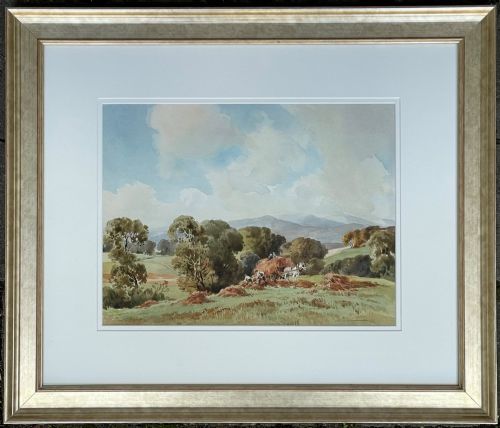
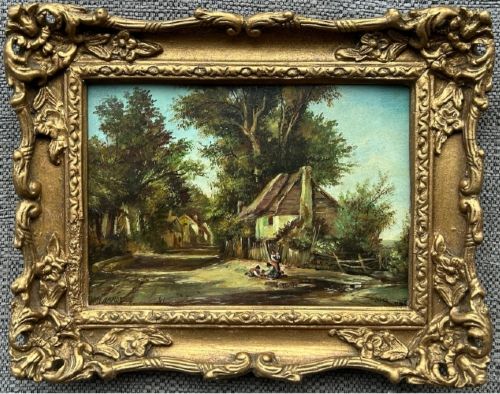
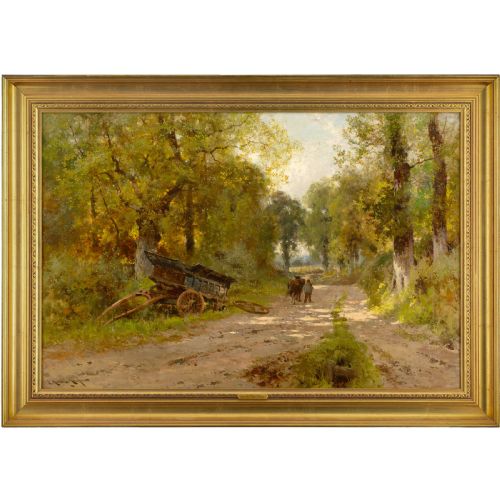
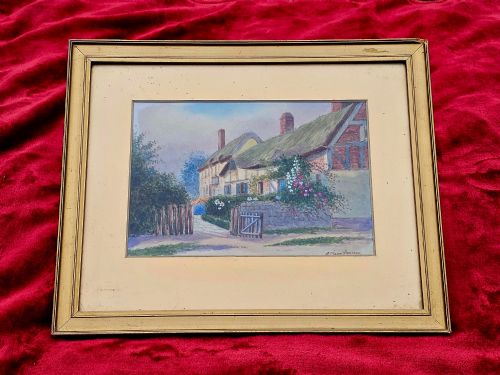
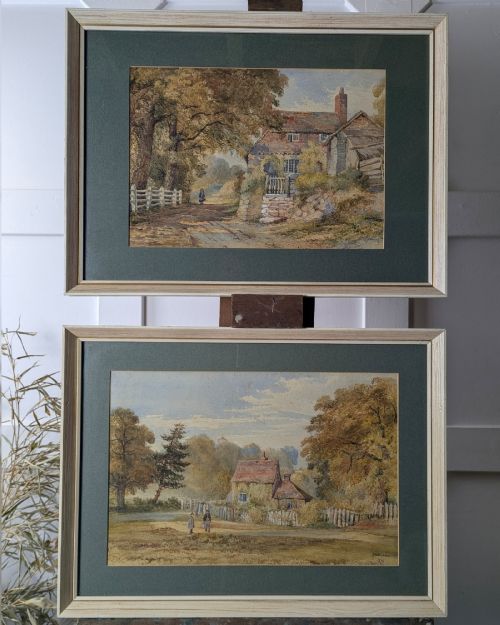
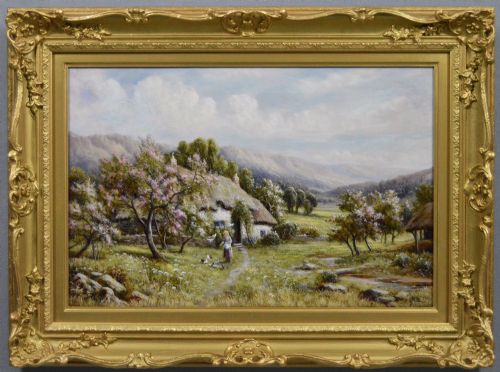
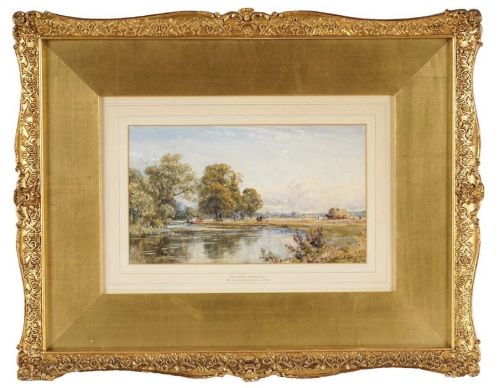
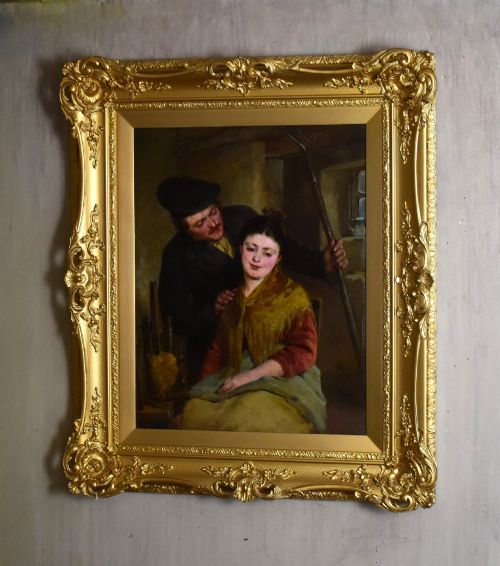
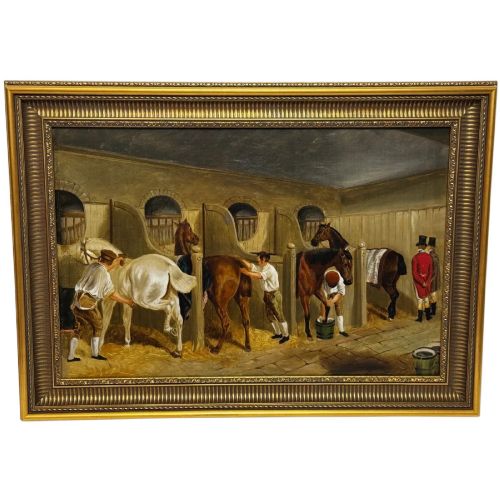
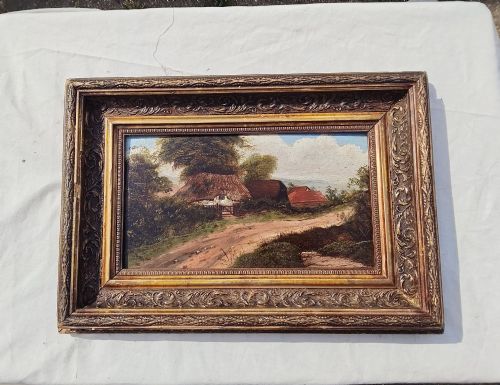
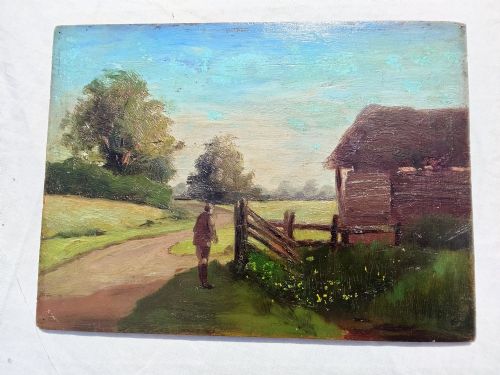
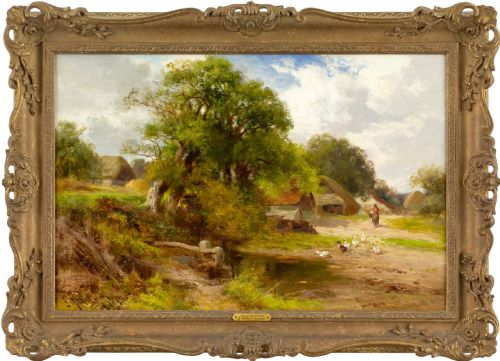
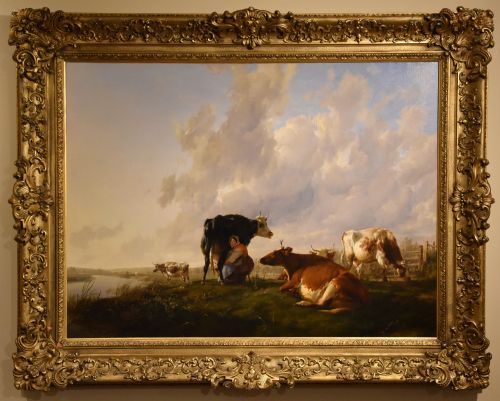
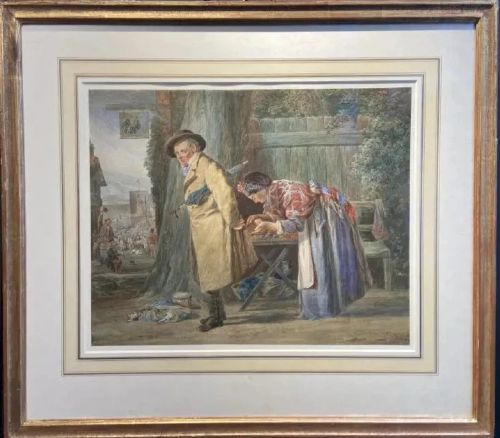
A traditional country scene painting depicts rural life, agricultural work and pastoral landscapes, most frequently originating from the nineteenth century and the Edwardian period. Buyers encounter framed artworks showing rustic cottages, river landscapes, farm animals and equestrian subjects by named artists and regional British schools.
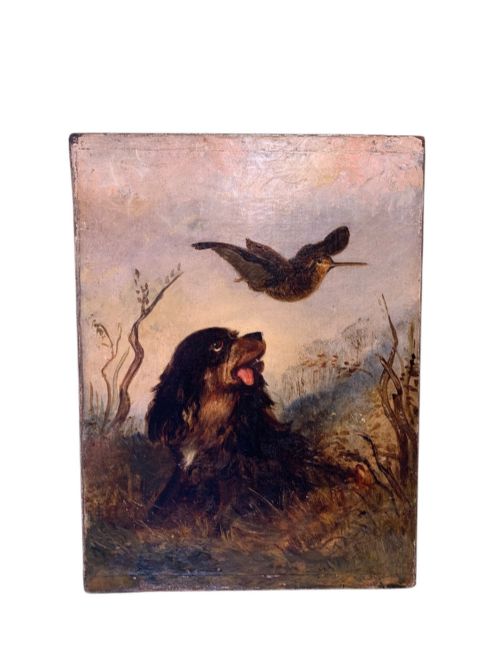
The selections span oil paintings on canvas, panel and board alongside delicate watercolours on paper. These works document rural occupations and countryside settings through styles rooted in Victorian realism, pastoralism and sporting art.
Rural subjects include shepherds with sheep flocks, dairy cattle near streams, ploughing horses in fields and figures outside thatched cottages. Each piece records the historic British countryside through the varied perspectives of Victorian and early twentieth-century painters.
Materials and methods of the works
Artists utilised oil paint and watercolour applied to traditional supports such as primed canvas, wooden panels, card and heavy paper. Giltwood and gesso frames frequently house these works, providing period housing that complements the painted surface.
The physical application ranges from detailed brushwork on panel to fluid watercolours on paper, reflecting the varied techniques of nineteenth and twentieth-century painters. Wooden boards and stretched canvases support the heavier oil compositions while paper accommodates lighter pastoral watercolours.
The inventory records various animal portraits including sheep flocks, cart horses, working spaniels and dairy cattle within British countryside settings.
Distinctions in quality across the selection
Quality separates through the precision of draughtsmanship, the handling of light and shadow, and the anatomical accuracy of animal and human figures. Works by documented painters command attention for their confident brushwork and established provenance.
The depth of composition and the harmony of the palette distinguish finer examples from standard decorative pieces. Original period framing in giltwood also contributes to the desirability and preservation of the artwork.
Percy Lancaster·William Howard Hardy·John Horace Hooper·A Marie Parsons·Robert A Nottingham·Robert John Hammond·Robert Thorne Waite·Howard Helmick·Thomas Sidney Cooper·Joseph H Barnes·Johann Friedrich Voltz·T C Hofland·Henry H Parker·Thomas Walker Bretland·Miles Birkett Foster·Henry Schouten·Claude Cardon·Sydney Yates Johnson·Hubert Wellington·John Arthur Lomax·Henry John Kinnaird·John Frederick Herring Jnr·Henry John Yeend King·Samuel Joseph Clark·Philip Henry Rideout
The Traditional Country Scene Painting Glossary
- Oil on Canvas
- A traditional painting medium where pigment mixed with drying oil is applied to stretched woven fabric. This combination allows for rich colour blending and textured impasto surfaces.
- Watercolour Painting
- Artwork created using water-soluble pigments on paper supports. This medium produces translucent washes and delicate atmospheric effects.
- Giltwood
- Wood carved and coated with gold leaf or a gold-coloured finish. It commonly frames traditional artworks from the Victorian and Edwardian periods.
- Gesso
- A paint mixture consisting of a neutral binder mixed with chalk, gypsum, or pigment. It prepares wooden panels and frames before gilding or painting.
- Victorian Realism
- An artistic approach focusing on the truthful, unidealised depiction of everyday life and subjects during the nineteenth century.
Traditional Country Scene Painting: Frequently Asked Questions
What periods do these paintings date from?
The available artworks date primarily from the nineteenth century through the early twentieth century, encompassing Victorian and Edwardian periods. Pieces reflect artistic styles of those decades including realism and pastoralism.
Dates range across the eighteen hundreds and early nineteen hundreds, capturing historical rural scenes created by contemporary artists of those eras.
How should I hang a framed oil painting?
Secure wall fixings into solid masonry or studwork using appropriate fixings designed to support the weight of the heavy wooden and gilt frames. Position the artwork away from direct sunlight and excessive moisture to protect the canvas and paint.
Maintain stable indoor temperatures to prevent expansion or contraction of the wood panel and canvas support over time.
Are watercolours framed differently than oils?
Watercolours on paper require protective glass glazing and secure mounts to keep the paper surface from touching the glass. This framing protects the delicate pigment from airborne pollutants and moisture.
Oil paintings on canvas or panel typically remain unglazed to allow the textured paint surface to breathe and reflect light naturally.
How do I identify pastoral scenes?
Pastoral scenes depict idealised or realistic countryside activities such as farming, herding livestock and rural cottage life. These compositions frequently feature agricultural workers, farm animals and natural river landscapes.
The subject matter centres on rural tranquility and agricultural labour rather than urban environments or formal portraits.