


Traditional Country Dog Painting
A traditional country dog painting brings rural sporting life and faithful companions into the home through oil on canvas.
Traditional Country Dog Painting
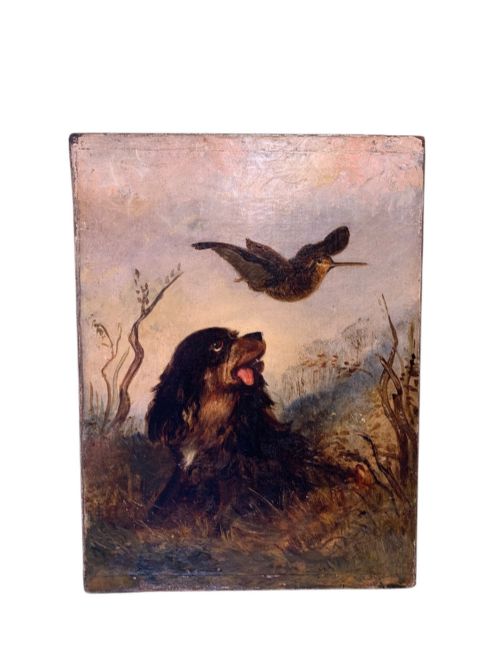
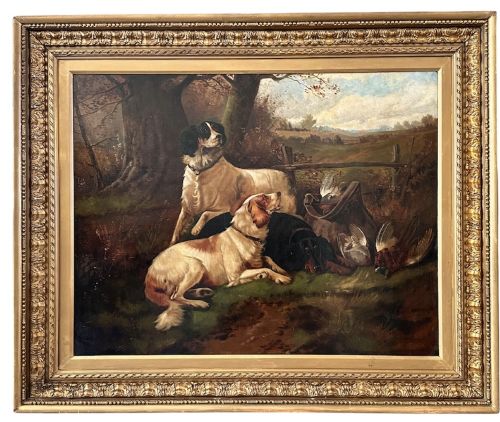
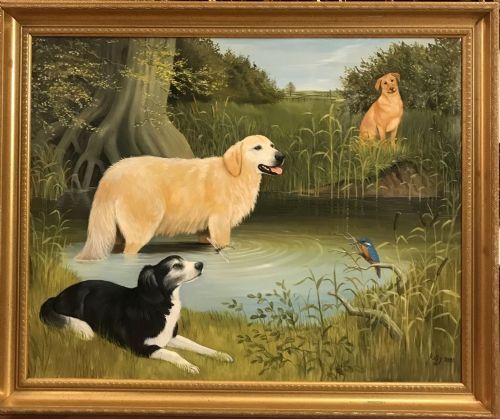
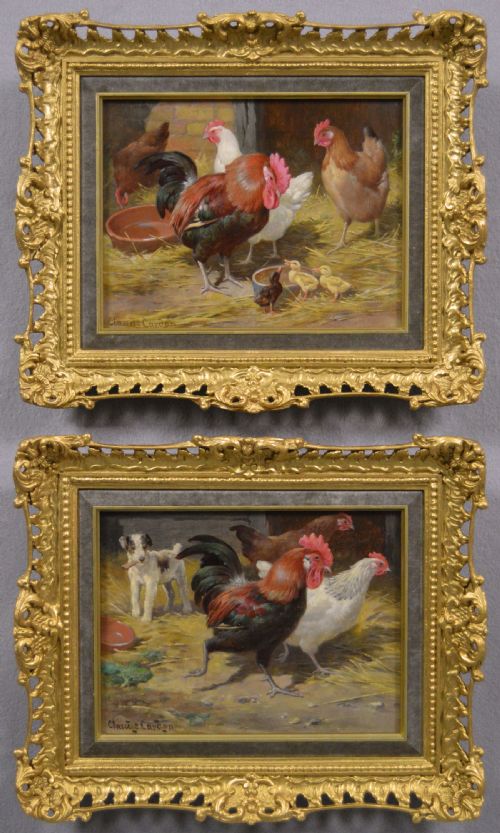
A traditional country dog painting captures sporting hounds, spaniels, and terriers within rural landscapes or country settings. These works celebrate working dogs, hunting scenes, and farm animals from the nineteenth and twentieth centuries.
Buyers will encounter oil paintings on canvas and board produced during the Victorian era and mid twentieth century. Subjects range from solitary portraits of prize greyhounds and border collies to gundogs depicted alongside pheasants and moorland scenes.
How They Were Made
Artists applied oil paint to stretched canvas or wooden panels, often building rich textures for the animals' coats and surrounding landscapes. Many works feature traditional gilt frames that complement the depth of the oil pigments.
Canvases were mounted on wooden stretcher frames, and panel paintings occasionally received protective backing repairs to preserve the wood over centuries of display.
Listings feature oil paintings on canvas and wood from the 19th Century, Victorian era, and mid 20th Century.
What Varies In Quality
Anatomical accuracy and the lively rendering of animal expressions distinguish the finer works from simpler naive school pieces. The handling of background landscapes, from wintry snow scenes to detailed walled gardens, adds depth and context to the central subject.
Signatures by recognised animal and sporting artists elevate the standing of a canvas, while unsigned works rely entirely on the strength of the brushwork and composition.
Claude Cardon·Fannie moody·Colin Graeme Roe·Henri Schouten·John Emms·George Wright
The Traditional Country Dog Painting Glossary
- Oil on Canvas
- Pigments mixed with drying oils applied to a woven fabric support. This technique allows for rich blending and depth of colour.
- Gilt
- A gold leaf or gold-coloured application used to finish wooden picture frames. It adds a traditional decorative border to the artwork.
- Naive School
- Art created by painters without formal academic training. These pieces often display charming, simplified perspectives and direct observation.
- Sporting Art
- Depictions of rural sports, hunting, and working animals. This genre records the activities of landowners, sportsmen, and their dogs.
Traditional Country Dog Painting: Frequently Asked Questions
What subjects appear in these paintings?
Canvases typically depict gun dogs, spaniels, terriers, and hunting hounds in rural landscapes, farmyards, or moorland settings. Many compositions include figures, horses, and game alongside the dogs.
Animals are shown working, resting, or participating in sporting activities with their owners.
How do I date a dog painting?
Dating relies on costume details, framing styles, canvas preparation, and recorded artist signatures from periods such as the Victorian era. Nineteenth-century works often feature specific stretcher construction and written inscriptions on the reverse.
Stylistic shifts between traditional realism and naive school painting also help narrow the creation date.
Where should I hang a country dog painting?
These works suit traditional reception rooms, studies, and hallways, pairing well with wooden furniture and neutral walls. Placing them away from direct sunlight protects the oil pigments and gilt frames.
Displaying them at eye level allows the viewer to appreciate the fine details of the animal coats and landscapes.
Are these works painted on canvas or panel?
Artisans used both stretched canvas and wooden panels as supports for oil paint during the nineteenth and twentieth centuries. Canvas pieces are mounted on wooden frames, while panel works consist of solid wood supports.
Both surfaces received layers of oil paint to create durable rural portraits.