

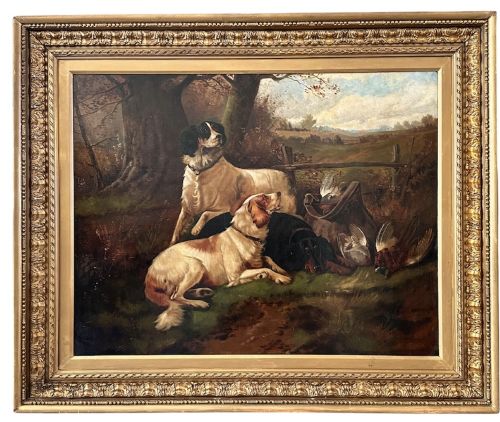


Framed Victorian Canine Artwork
Framed Victorian canine artwork captures the personality and sporting prowess of dogs in oils, watercolours, and etchings from the nineteenth century.
Framed Victorian Canine Artwork
When buyers search for framed victorian canine artwork, they encounter nineteenth-century paintings and prints celebrating dogs in various settings. These pieces range from intimate portraits of individual pets to expansive sporting scenes featuring hounds and terriers in the field.
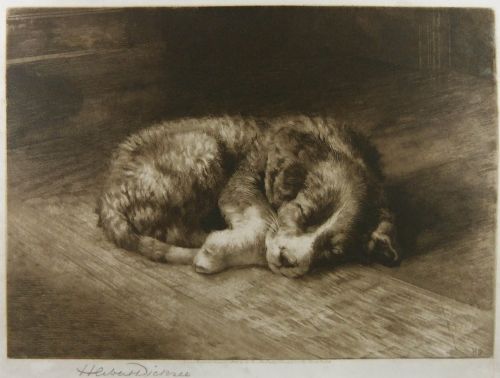
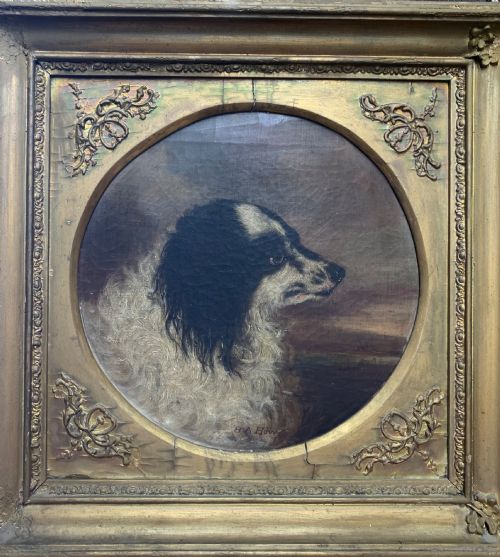
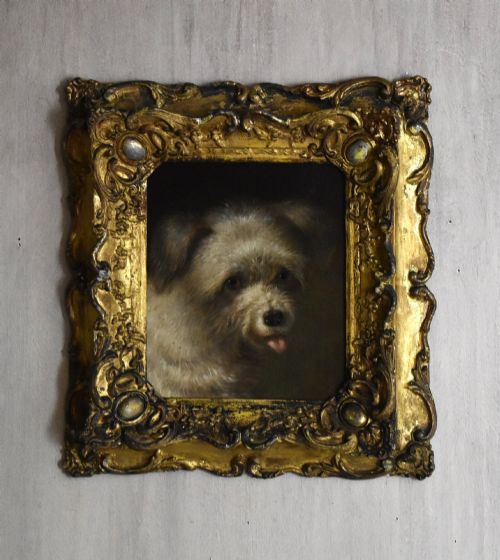
The selections on this page are predominantly oil paintings on canvas or panel, alongside original etchings and watercolours. Portrait subjects include spaniels, collies, setters, and terriers rendered with distinct character and realism.
Materials and technique
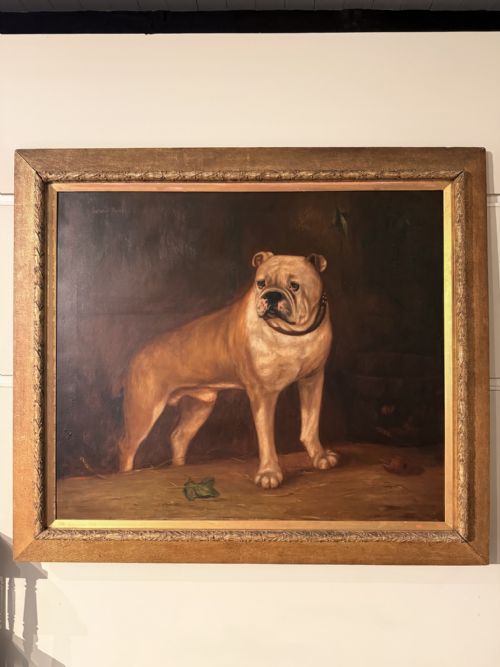
Artists of the period painted primarily in oil paint on canvas or wooden panel, utilising fine brushes to capture the texture of fur and the glint of an animal's eye. Many works utilise traditional giltwood frames adorned with gold leaf to complement the dark, rich tones of the compositions.
Printmakers employed etching and drypoint techniques on paper, scratching lines into metal plates to produce detailed monochromatic images. These printed works were subsequently framed behind glass, often mounted with paper borders to protect the delicate surface.
The collection spans the nineteenth century into the early twentieth century, featuring oil paintings, watercolours, and etchings.
Quality and execution
Quality in these canine works rests upon the artist's command of anatomy, expression, and light. Superior examples convey the specific texture of a coat and the alert posture of a working dog with anatomical precision.
The execution of the surrounding frame also influences the overall standard. Original gilt frames with period ornamentation and intact gold leaf elevate the piece far above later or replacement framing.
Valentine T Garland·Herbert Dicksee·Martin Theodore Ward·John Emms·Arthur Wardle·William Barraud·Sir Edwin Landseer·Colin Graeme Roe·John Trivett Nettleship·Jules Chardigny·Alfred Duke·George Earl·Philip Eustace Stretton·Charles Bilger Spalding
The Framed Victorian Canine Artwork Glossary
- Etching
- A printmaking method where acid bites lines into a metal plate to hold ink. This technique allows for fine, fluid lines akin to pen and ink drawings.
- Drypoint
- A printmaking process where an artist scratches directly into a metal plate with a sharp needle. It creates a rich, velvety burr along the lines when inked.
- Giltwood
- Wood carved and coated with thin gold leaf or gold paint. It provides a bright, reflective border popular for framing nineteenth-century oil paintings.
- Sporting art
- Artwork depicting hunting, shooting, racing, and animals in the field. This genre documents the working dogs and rural pursuits of the Victorian era.
- Canvas
- Heavy woven fabric stretched across a wooden frame as a support for oil paint. It forms the primary base for most nineteenth-century paintings.
Framed Victorian Canine Artwork: Frequently Asked Questions
What subjects appear in these dog paintings?
The subjects include individual pet portraits, working gun dogs, hunting packs, and terriers ratting in barns.
Many compositions place the animals within landscape settings or country houses.
How should I hang a framed dog painting?
These works suit traditional study spaces, libraries, or living rooms where timber and classic decor predominate.
Keep them away from direct sunlight to protect oil pigments and paper from fading over time.
How do I identify a sporting art piece?
Sporting art typically depicts dogs engaged in country pursuits such as retrieving game or hunting alongside handlers.
Artists focused heavily on the correct working breeds and field conditions of the period.