
Canvas Animal Portrait Painting
A canvas animal portrait painting captures domestic companions, farm stock, and sporting subjects in oils.
Canvas Animal Portrait Painting
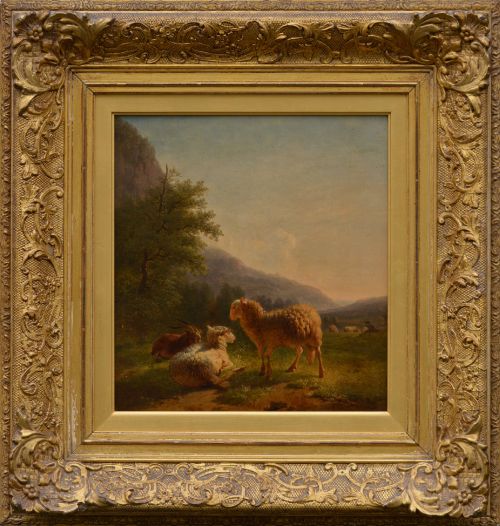
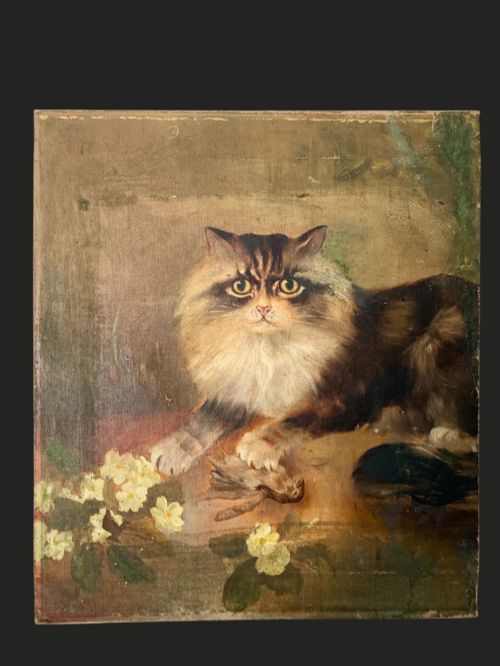
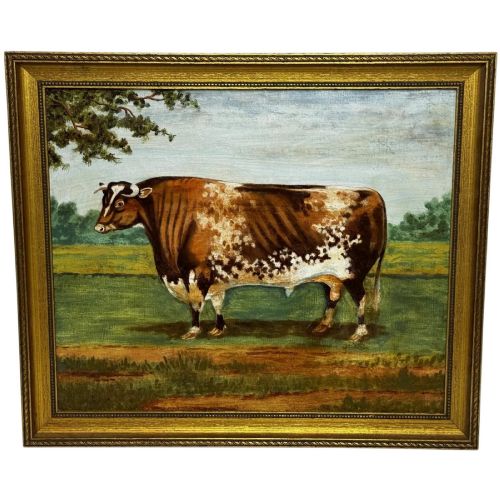
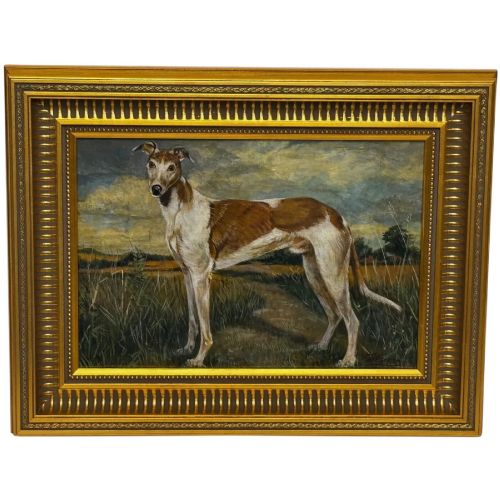
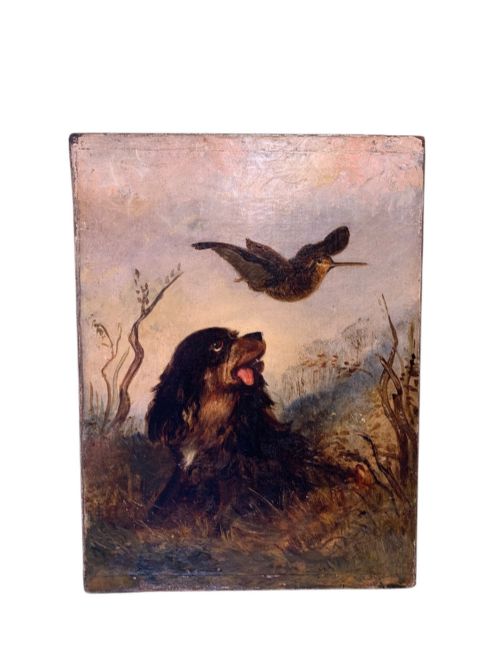
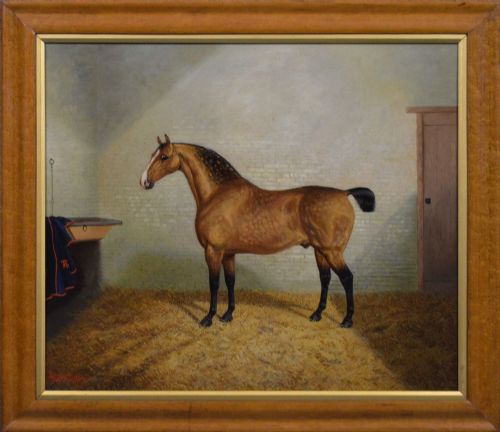
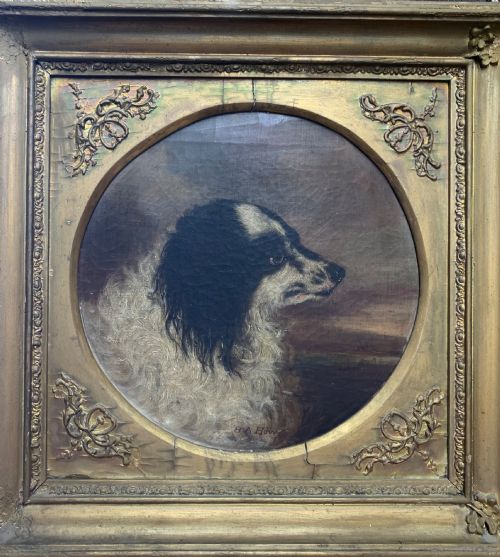
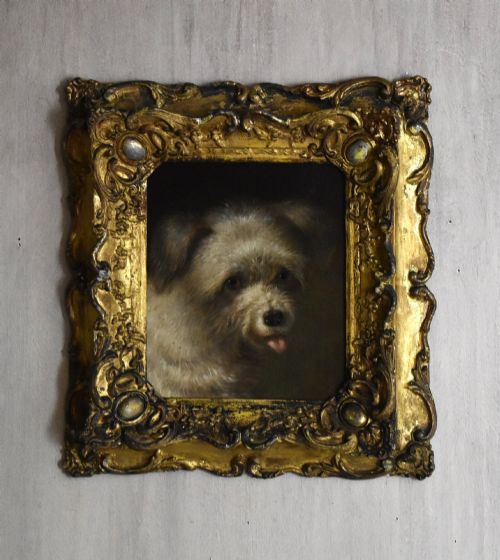
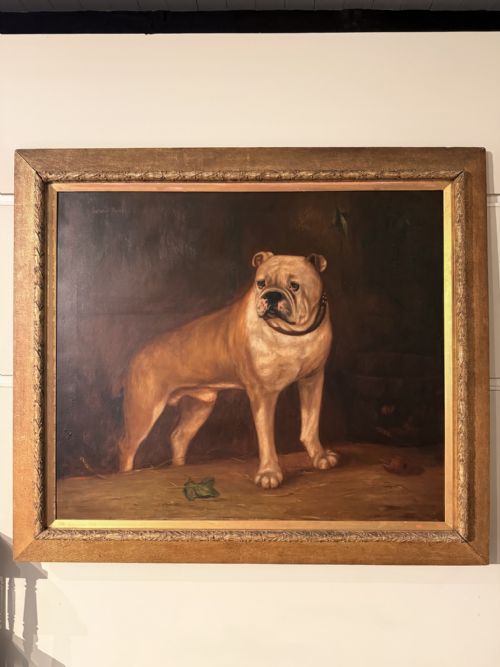
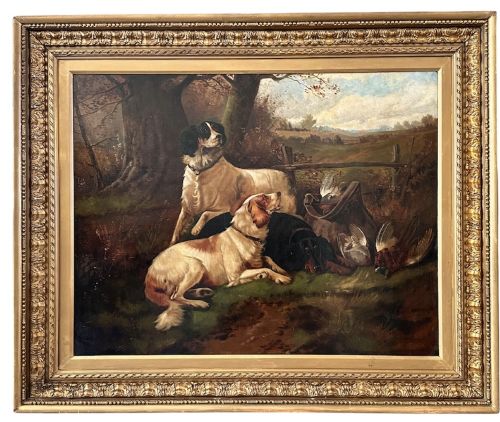
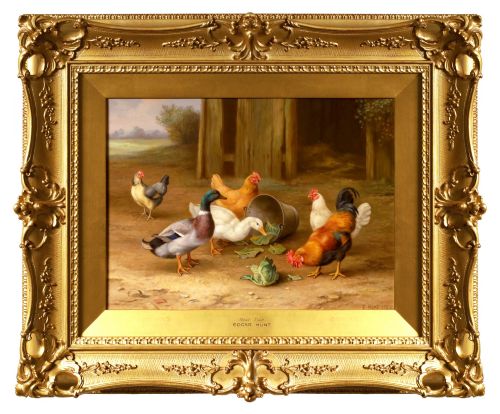
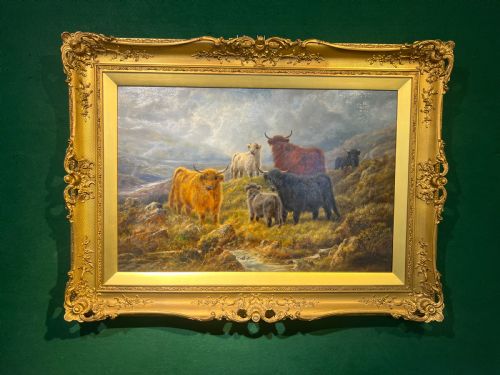
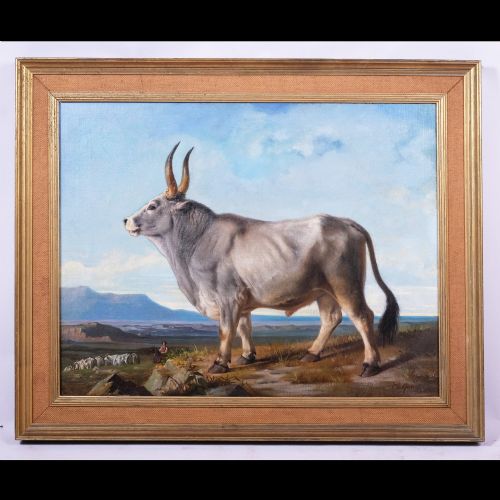
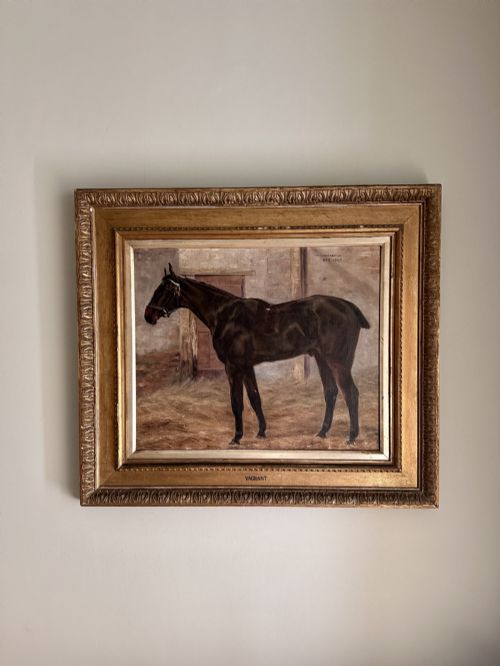
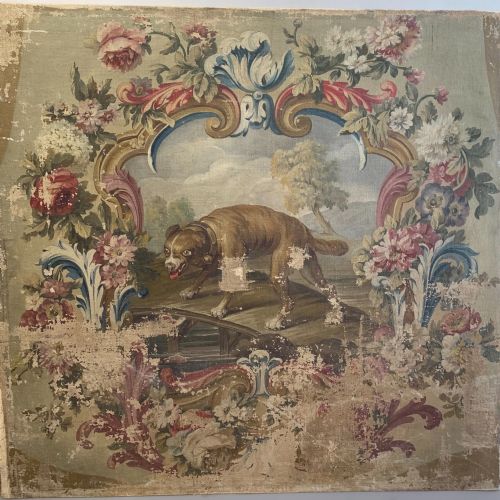
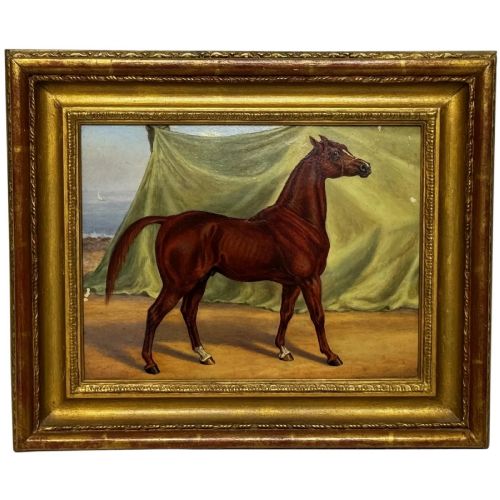
A canvas animal portrait painting focuses on horses, dogs, cattle, sheep, and domestic pets rendered in oil paint on woven fabric supports. These works range from naive folk art depictions to academic studies produced across the nineteenth and early twentieth centuries.
The most common examples encountered in this collection date from the Victorian and Edwardian periods, reflecting a strong historical taste for sporting art and animal portraiture. Many portray named racehorses, prize livestock, or specific gundogs set within realistic landscapes or simpler studio backgrounds.
Makers and regional British schools dominate the selection, though French and other continental interpretations also appear alongside naive and amateur works. Buyers select these pieces to furnish traditional interiors or to collect specific animal breeds represented in period fine art.
Materials and construction methods
These works utilise oil paint applied to stretched woven canvas supports, sometimes mounted within period wooden or giltwood frames. The ground layers typically consist of traditional gesso or priming applied to the textile base before the artist began painting.
Artists employed fine brushes to render animal coats, feather textures, and anatomical details, balancing precision with looser background brushwork. Framing often involved carved and gilded wood designed to complement the palette and scale of the picture.
Listings feature works executed in oil on canvas across the nineteenth and early twentieth centuries.
Factors influencing quality and execution
Quality depends upon the artist's command of animal anatomy, proportion, and texture, separating skilled academic painters from naive practitioners. Fine execution is visible in the rendering of light on a horse's coat or the intelligent expression in a dog's eye.
Condition of the canvas and paint layer also dictates standard, including the presence of original stretching, minimal retouching, and stable craquelure. The surrounding period frame often contributes to the overall integrity and visual presence of the artwork.
Eugène Verboeckhoven·Albert Clark·Martin Theodore Ward·John Sargent Noble·Edgar Hunt·Robert Watson·Fred Fitzpatrick·Alfred Arthur Brunel de Neuville·F.A. Clark·John Emms·LM Webb·William Henry Mander·Thomas Sidney Cooper·E H Windred·C W Tuck·George Lance·William Barraud·Sir Edwin Landseer·Colin Graeme Roe·Valentine Thomas Garland·Agnes Augusta Talboys·John Trivett Nettleship·Samuel Spode·Fannie Moody
The Canvas Animal Portrait Painting Glossary
- Canvas
- A heavy woven fabric, typically flax or cotton, stretched across a wooden frame to serve as a painting surface.
- Giltwood
- Wood carved and coated with gold leaf or gold paint, frequently used for traditional picture framing.
- Naive school
- Art produced by self-taught painters working outside academic traditions, often characterised by flat perspective and direct charm.
- Sporting art
- A genre of painting dedicated to horses, dogs, hunting, shooting, and rural sports.
- Craquelure
- A fine network of microscopic cracks across the surface of aged oil paint and varnish.
Canvas Animal Portrait Painting: Frequently Asked Questions
What is a canvas animal portrait painting?
It is an oil painting on fabric depicting domestic animals, livestock, or sporting beasts, usually produced during the nineteenth or early twentieth centuries.
These works range from highly detailed academic studies of prize bulls and racehorses to charming folk art depictions of household pets.
How were these paintings framed originally?
Most period works are housed in wooden frames, frequently finished with carved giltwood ornamentation that matches the aesthetic of the era.
Frames often bear maker stamps or gallery labels on the reverse, which help document the history of the piece.
How do I identify a naive animal painting?
Naive paintings typically display simplified perspective, direct brushwork, and a lack of formal academic training while retaining strong character.
These pieces often date from the nineteenth century and focus on beloved pets or local farm animals rather than titled champions.
Where should I hang an animal portrait?
These portraits suit traditional studies, living rooms, and hallways, particularly when paired with antique furnishings or wood panelling.
Direct sunlight and excessive moisture should be avoided to protect the oil paint and canvas from deterioration.