

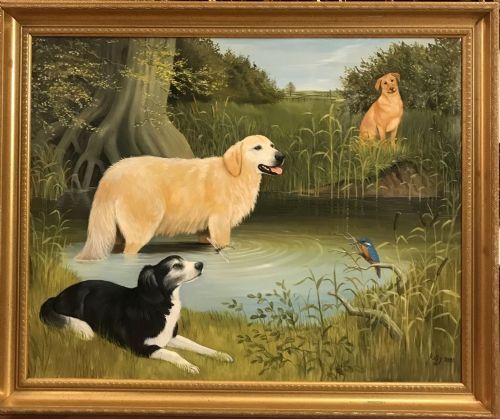


Sporting Dog Oil Canvas
Sporting dog oil canvas works capture working canines in nineteenth-century and mid-century landscapes through traditional realism and Victorian sporting art.
Sporting Dog Oil Canvas
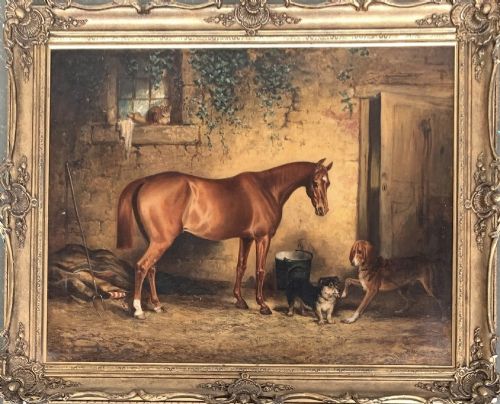
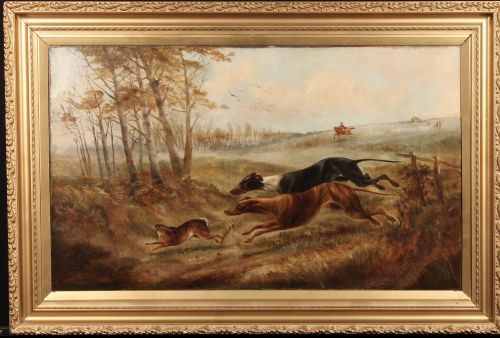
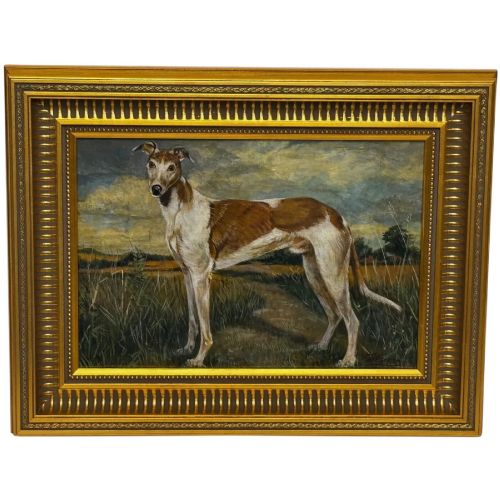
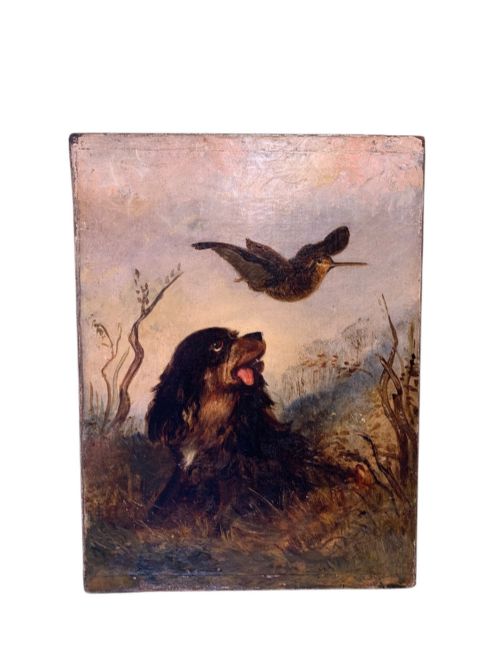
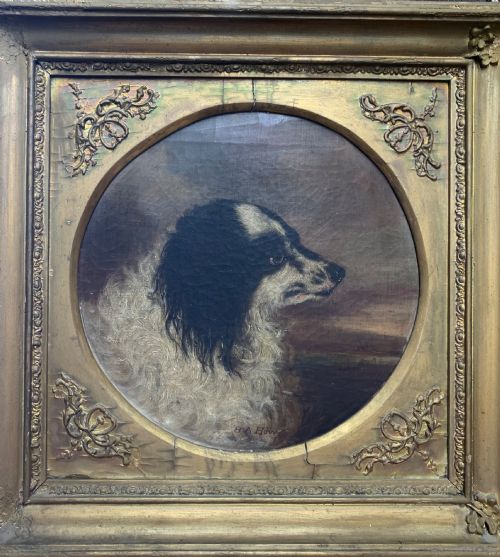
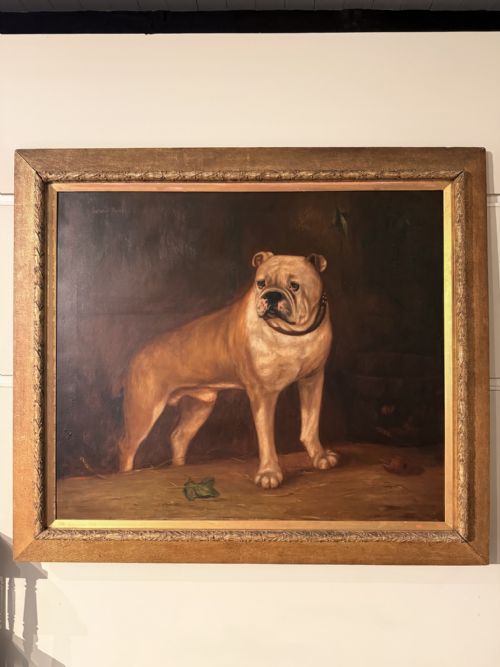
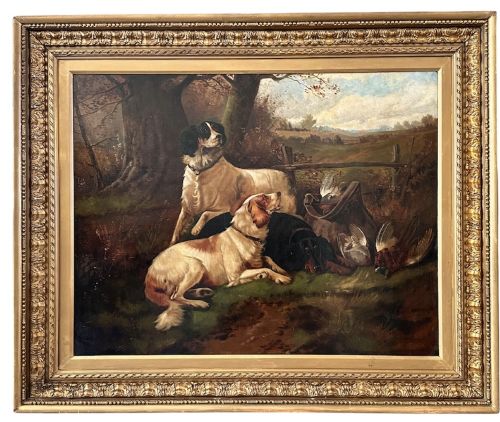
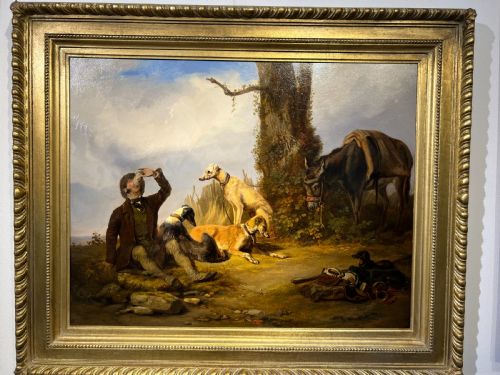
A sporting dog oil canvas depicts working breeds such as spaniels, setters, collies, and hounds within rural and moorland settings. These works record prized champions, hunting companions, and gun dogs alongside horses or figures in traditional landscapes.
The selections span nineteenth-century Victorian pieces, early twentieth-century examples, and mid-twentieth-century paintings. Most pieces utilise traditional realism and British sporting art styles to render the physical traits and expressions of specific animals.
Canvases range from intimate portraits of individual terriers and retrievers to large compositions showing packs of hounds on winter hunts or resting with a day's bag. They reflect historical relationships between owners, handlers, and their working animals.
Materials and Techniques
Painters applied oil paint to stretched canvas or board supports, often framed in period wood, giltwood, and gold leaf mouldings. The medium allowed artists to build rich textures in fur, coats, and landscape foliage through layered brushwork.
Earlier compositions relied on meticulous brush control to capture anatomical accuracy and natural light in outdoor scenes, while later twentieth-century works adopted looser handling. Pigments were worked wet-into-wet to soften edges on dog coats and moorland backgrounds.
Commonly represented breeds include pointers, spaniels, collies, terriers, and foxhounds shown in landscape settings.
What Varies in Quality
Anatomical precision and the characterisation of the animal determine the standard of a work. Superior pieces render bone structure, muscle tone, and alert expressions with convincing realism rather than rigid formulas.
The treatment of the surrounding landscape and light elevates finer examples above generic animal portraits. Painters who integrated the dog naturally into a detailed moorland or hunting scene produced more cohesive works than those who placed isolated figures against flat backgrounds.
Henry Barraud·George Armfield·Sir Edwin Henry Landseer·C R Breytle·John Emms·William Barraud·George E Sharpe·Colin Graeme Roe·Valentine Thomas Garland·John Trivett Nettleship·Fannie Moody·Edwin Frederic Holt·Robert Cleminson·John Charles Tunnard·Alfred Duke·Michael Lyne·Henri Schouten·Molly Maurice Latham
The Sporting Dog Oil Canvas Glossary
- Oil on Canvas
- A painting medium where pigments suspended in drying oils are applied to a woven fabric support. This combination provides durability and allows for subtle blending of tones.
- Giltwood
- Wood carved and coated with a thin layer of gold leaf or metallic powder. It provides traditional framing for nineteenth-century sporting art.
- Traditional Realism
- An artistic approach focused on depicting subjects with accurate proportions and lifelike detail. This style dominates British sporting paintings.
- Gun Dog
- A classification of canine trained to find, flush, or retrieve game for hunters. These animals form the central subject of many traditional canvases.
Sporting Dog Oil Canvas: Frequently Asked Questions
How do I identify a Victorian sporting dog painting?
Look for detailed realism focusing on working breeds like spaniels, setters, and hounds in rural settings. The titles and framing often reflect nineteenth-century aesthetic preferences for country pursuits.
Brushwork typically remains controlled and naturalistic, capturing the texture of canine coats and outdoor light without modern abstraction.
What subjects appear in these oil paintings?
Canvases frequently display gun dogs with a day's bag, individual portrait studies of collies or terriers, and packs of hounds on winter hunts. Horses and handlers often accompany the dogs in moorland scenes.
Some compositions record specific named champions or pets belonging to historical figures in rural landscapes.
How should I frame and display a canvas?
Period wood and giltwood frames complement the traditional character of nineteenth-century oil paintings. Hang them away from direct sunlight and excessive moisture to protect the oil paint and canvas support.
Adequate wall spacing allows the gilt moulding and landscape details to be viewed clearly without competing with modern decor.
Are mid-century sporting dog paintings different from Victorian ones?
Mid-century works generally feature slightly looser brushwork and modern canvas preparations while maintaining traditional subject matter. Depictions of spaniels, retrievers, and foxhounds continue nineteenth-century compositional themes.
Subject matter remains focused on working animals, though the surrounding landscape treatment often reflects twentieth-century painting techniques.