




Antique Big Cat Artwork
Antique big cat artwork brings the tense power of lions, leopards and tigers into a room through Victorian and Edwardian prints, drawings and paintings.
Antique Big Cat Artwork
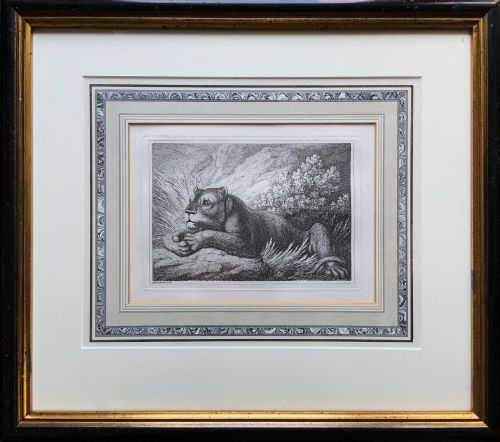
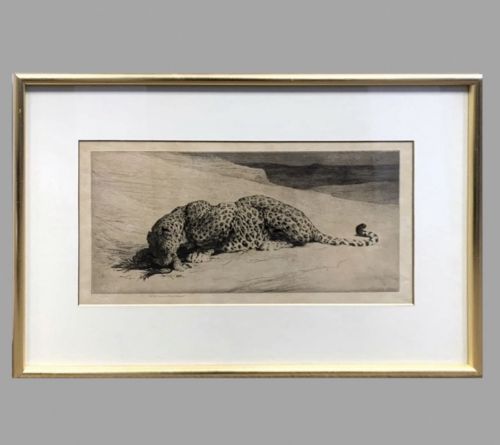
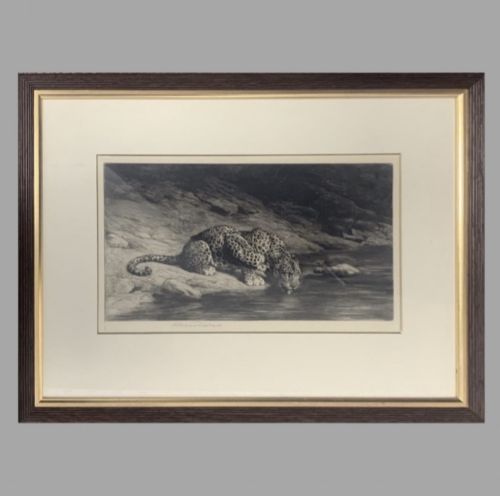
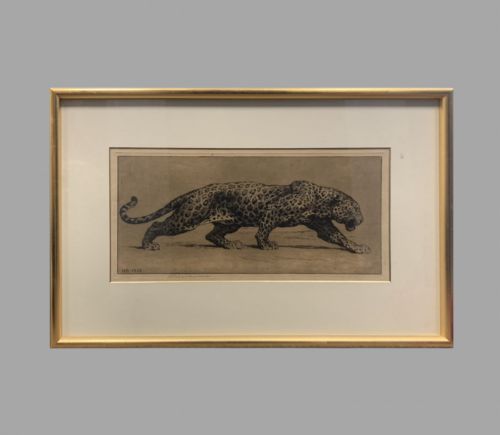
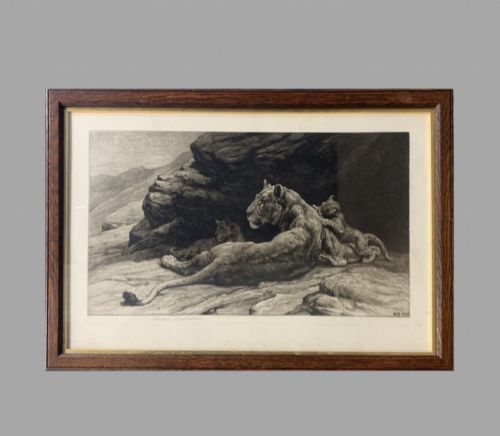
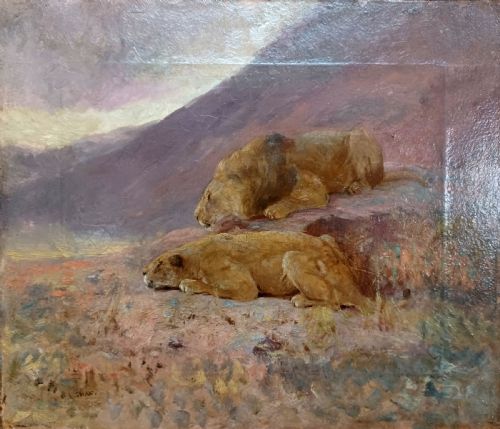
When you search for antique big cat artwork, you find nineteenth and early twentieth-century depictions of lions, leopards and tigers rendered in various media. These pieces capture the predatory focus and quiet stillness of big cats in their natural or imagined habitats.
The most common versions on this page are signed limited edition etchings on paper and vellum, alongside framed prints and oil paintings on canvas. They span late Victorian and Edwardian periods, reflecting a sustained fascination with animalier subjects in the academic tradition.
How they were made
Makers utilised traditional printmaking techniques, producing detailed etchings on paper and vellum that required precise plate work and careful hand-signing. These prints rely on fine line work and tonal graduation to render the dense fur and muscular forms of the animals.
Painters worked with oil on canvas or ink and pigment on paper, building compositions that range from intimate miniature studies to larger framed canvases. Framing often involved wood and gilt wood surrounds that complemented the academic style of the period.
Listings feature works spanning the nineteenth and early twentieth centuries, including Edwardian and Victorian animalier styles executed in oil, ink, paper, vellum and gilt wood.
What varies in quality
Quality rests in the precision of the draughtsmanship and the artist's command of anatomy, where the tension in a crouching leopard or stalking lion is rendered with acute observation. Stronger examples display a confident line and depth of tone that convey weight and movement convincingly.
The status of the impression matters significantly in print work, particularly with signed artist proofs that carry direct evidence of the creator's hand and limited edition numbers. The condition of the paper, vellum or canvas also sets apart pieces that retain their original contrast and pigment integrity.
Herbert Dicksee·Cuthbert Edmund Swan·John Macallan Swan·Geza Vastagh
The Antique Big Cat Artwork Glossary
- Etching
- A printmaking process where lines are bitten into a metal plate with acid before being inked and pressed onto paper or vellum. This technique allows for extreme fine detail in animal pelts and background foliage.
- Artist proof
- A trial proof or early impression pulled outside the main commercial run and checked by the creator. These carry the signature of the artist and indicate a high standard of printing.
- Vellum
- A prepared calfskin used as a fine writing and drawing surface. It yields a smooth, resilient ground that holds ink and etching ink with distinct clarity.
- Animalier
- A nineteenth-century artistic genre dedicated to the realistic portrayal of animals. Practitioners focused on capturing the authentic musculature and behaviour of wildlife.
- Oil painting
- Pigments bound in a drying oil medium applied to stretched canvas. This method permits rich layering and deep tonal contrasts suitable for dusk and jungle scenes.
Antique Big Cat Artwork: Frequently Asked Questions
How do I identify an original etching?
Original etchings show a distinct plate mark where the edge of the metal plate pressed into the paper or vellum during printing. Look closely for the subtle texture of ink sitting on the surface rather than the flat dot pattern of modern mechanical reproduction.
Signed examples by noted printmakers often include pencil inscriptions in the lower margin detailing the title and proof status. These marks confirm the direct involvement of the artist in pulling the edition.
Where should I hang these pieces?
These artworks suit studies, libraries or formal living spaces where traditional dark wood furniture and neutral walls provide a sympathetic backdrop. Their restrained palettes of ink, oil and gilt wood complement classic interiors without overwhelming the room.
Keep them away from direct sunlight to protect vulnerable paper, vellum and watercolor elements from fading over time. Proper placement ensures the delicate tones of the jungle scenes remain stable.
What is an artist proof?
An artist proof is an impression pulled during the print run specifically for the creator to inspect and approve. Because these are typically produced earlier in the process, they often exhibit exceptional clarity and crispness.
Collectors prize them for their association with the printmaker and their limited numbers. They represent the definitive state of the image before commercial publication.