
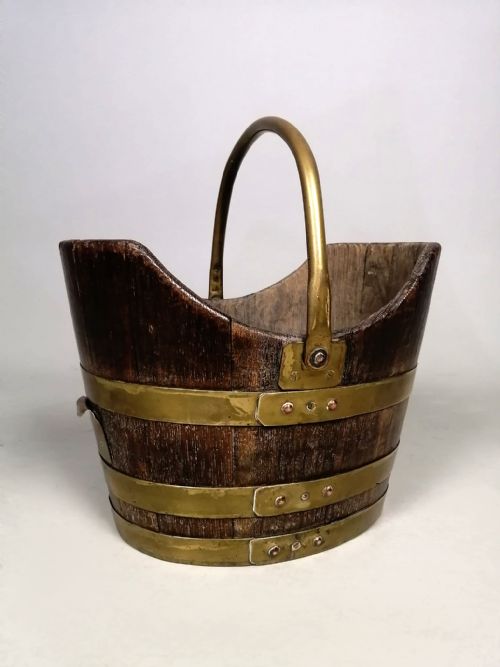


Traditional Coal Bucket
A traditional coal bucket brings functional metal and wood warmth to a fireside, holding fuel close at hand.
Traditional Coal Bucket
A traditional coal bucket serves as a fireside receptacle for solid fuel, taking the form of open buckets, lidded bins, or helmet-shaped scuttles designed for easy pouring. These pieces originate across the eighteenth and nineteenth centuries, spanning Georgian, Victorian, and Edwardian periods.
The domestic interior relies on these hearth accessories to store coal, logs, or peat while complementing the fireplace. The selection includes metal helmet scuttles alongside coopered wood bins.
Makers fashioned these vessels in English and Dutch workshops, utilising durable materials intended for daily hearth service. The designs range from rustic country examples to formal brass-banded cylinders.
Materials and construction methods
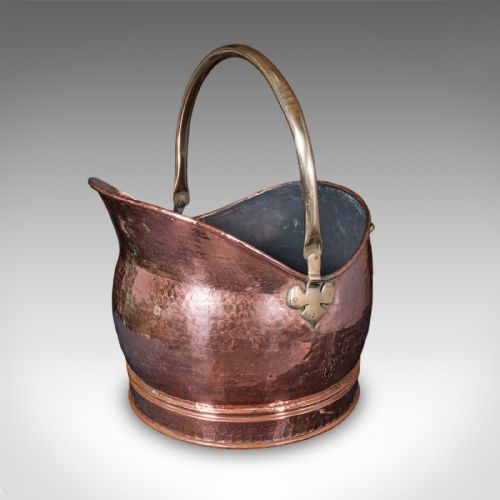
Smiths hammered sheet copper and brass into rigid helmet and bucket shapes, often adding swing handles and raised feet. These metal vessels frequently feature bright brass mounts contrasting with warm copper bodies.
Coopers constructed wooden bins from staves of oak, mahogany, walnut, or fruitwood, securing the vessels with tight metal bands. Iron, ebonised wood, and oak also appear in robust log boxes and fire buckets.
Traditional Coal Bucket Retail Price Guide 2026
Typical asking prices for traditional coal bucket among the pieces listed under this phrase on Sellingantiques today, from the lower quarter to the upper quarter. They describe what is for sale here now, not the wider market.
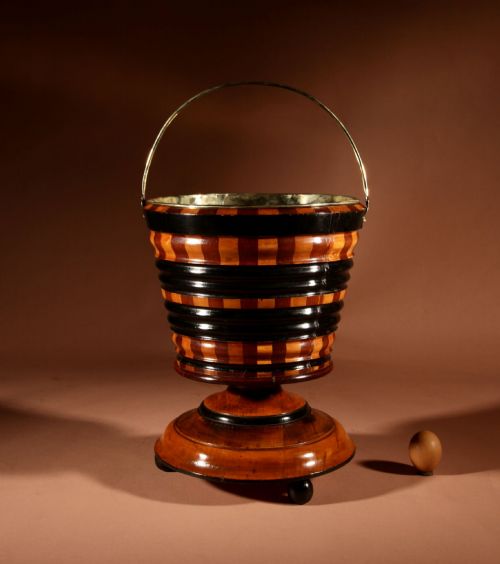
Several centuries ago, a neat tea stove bucket doubled as a discreet way to keep a small indoor kettle warm.
Distinctions in execution and material
The grade of a traditional coal bucket rests on the weight of the metal and the precision of the cooperage. Heavy-gauge copper and thick brass retain structural integrity through decades of hearth use.
Refined examples display hand-beaten surfaces, dovetailed joints, and original matching shovels. Simpler utility pieces rely on straightforward iron bands and plain wooden staves.
The Traditional Coal Bucket Glossary
- Helmet scuttle
- A coal container shaped like an upturned helmet with a flared lip for pouring fuel. The form allows steady tipping towards the grate.
- Coopered
- A method of construction using curved wooden staves bound together with metal hoops. This technique traditionally watertightens buckets and bins.
- Purdonium
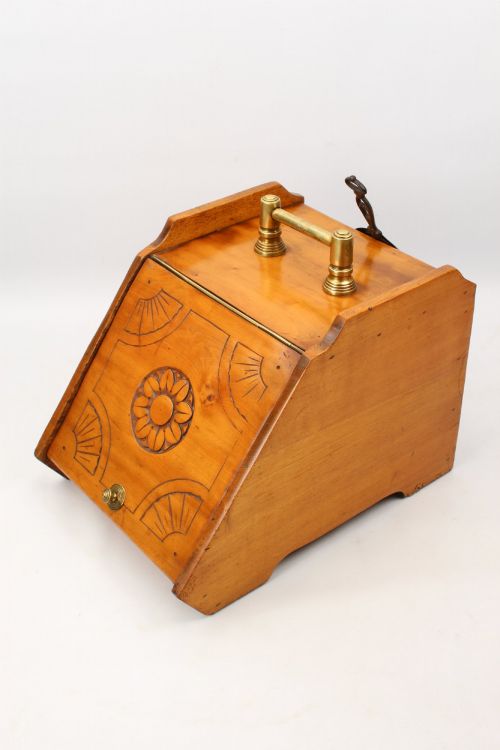
- A box-like coal receptacle with a sloping front flap and an internal metal liner. It conceals the fuel entirely from view.
- Peat bucket
- A vessel originally designed to hold cut turf or peat for burning. These frequently appear in walnut, mahogany, or oak with brass banding.
- Log bin
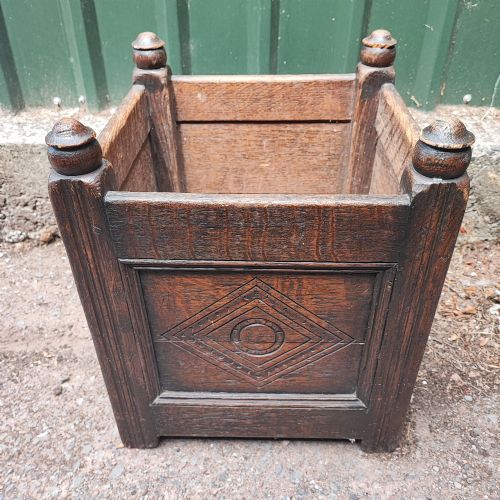
- A large freestanding container built to store firewood beside the hearth. They utilise heavy timber and metal reinforcement to bear rough logs.
Traditional Coal Bucket: Frequently Asked Questions
What is a helmet scuttle?
A helmet scuttle is a fireside vessel featuring a wide mouth and a tapered spout designed to direct fuel into the grate.
The shape allows the user to tip coal cleanly without spilling fragments onto the hearth rug.
How do I date a brass bucket?
Dating relies on observing construction marks, handle attachments, and the composition of the brass or copper sheets.
Georgian examples tend to show hand-beaten seams and heavy cast brass handles, whereas later Victorian pieces display more uniform machine-rolled metal.
Were these used only for coal?
These vessels held various solid fuels including logs, coal, and peat depending on regional availability and the size of the container.
Many sturdy timber bins also functioned as waste bins or umbrella stands in period hallways.
What does coopered wood mean?
Coopered wood construction involves fitting individual wooden staves together to form a round or oval vessel.
Metal bands or hoops are then driven tight around the exterior to hold the staves firmly in place.
Can these containers hold logs today?
Metal and wood bins remain entirely practical for holding firewood or kindling beside a modern working fireplace.
Lined metal buckets protect delicate wooden floors from damp logs and loose ash.