
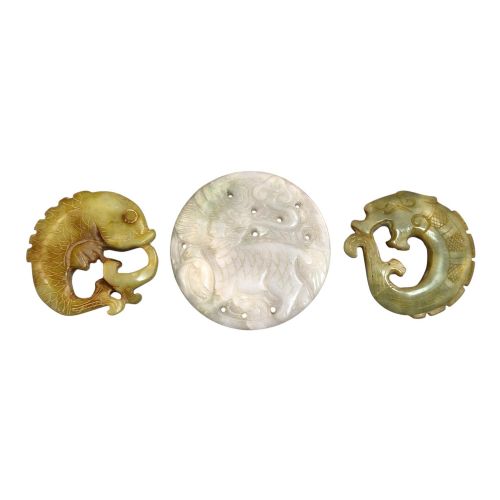


Traditional Chinese Stone Carving
Traditional Chinese stone carving brings together centuries of lapidary skill, offering everything from scholarly desk accessories to figures carved in jade and soapstone.
Traditional Chinese Stone Carving
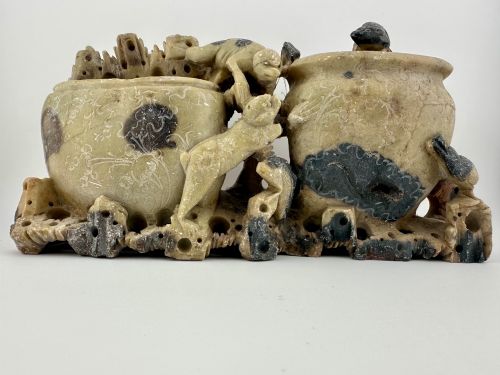
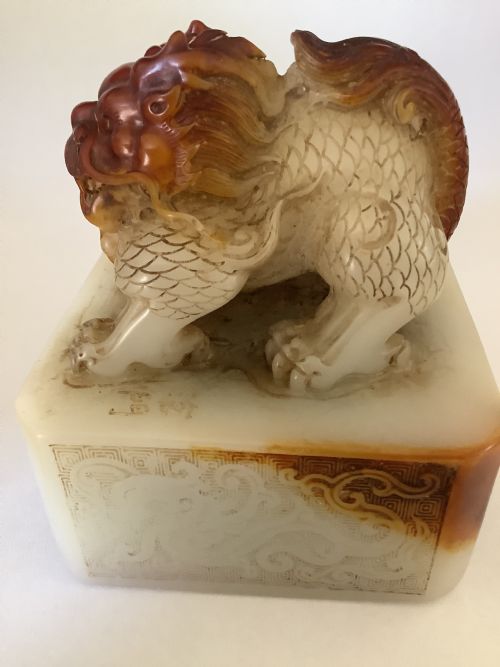
A traditional chinese stone carving encompasses various forms of sculpture, desk seals, amulets, and vessels created across the nineteenth and early twentieth centuries. These objects range from intricate scholar's desk groups and puzzle cups to large landscape sculptures mounted on hardwood stands.
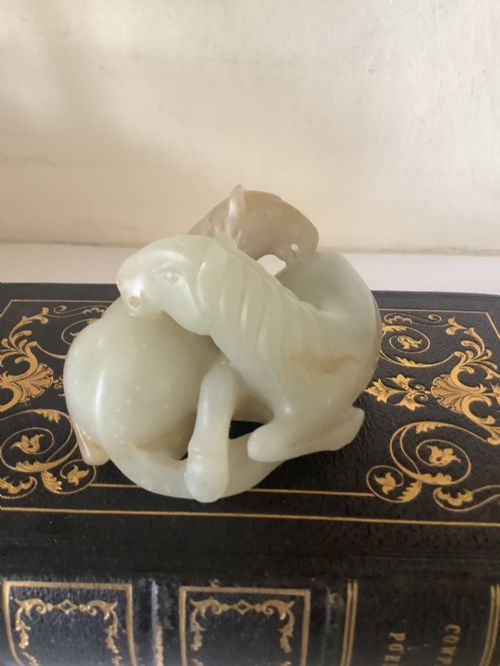
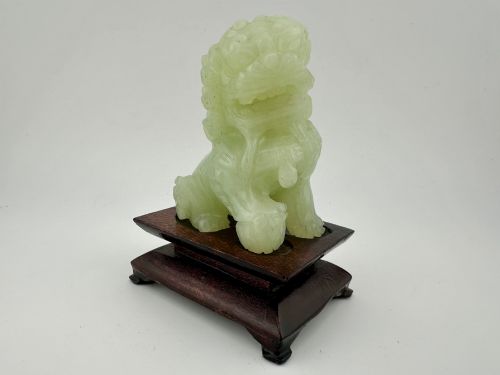
Soapstone and jade dominate the available selection, often taking the form of figures depicting men, sages, animals, and mythological beasts such as the Foo Dog. Pieces frequently reflect stylistic influences from the Qing Dynasty and the Republic Period, showcasing traditional motifs.
The objects serve multiple decorative and utilitarian functions within interiors and desktop arrangements. Buyers encounter everything from small amulets and bi discs to substantial temple guards and head rests.
Materials and technique
Carving relies on natural materials including soapstone, jade, jadeite, and hardstone, frequently paired with fitted hardwood stands. Artisans shape these dense media using hand tools to achieve detailed surface textures and fluid contours.
Techniques range from low-relief surface engraving on landscape panels and bi discs to fully rounded sculptural figures of animals and humans. The working of softer soapstone allows for intricate undercutting, whereas harder stones demand patient abrasive shaping.
Listings feature items spanning the nineteenth century, the Edwardian era, and the nineteen-twenties, utilising soapstone, jade, and hardwood.
Distinctions in quality
The refinement of the carving execution dictates the standard of each piece, distinguishing shallow, schematic incision from deeply undercut, highly expressive forms. Mastery over the natural grain and colour variations of the stone elevates the visual impact.
Proportion and anatomical accuracy, particularly in complex figures of animals, sages, and temple guardians, mark the distinction between provincial work and superior lapidary output.
The Traditional Chinese Stone Carving Glossary
- Soapstone
- A talc-schist mineral easily worked with hand tools, valued for its softness and ability to take fine detail. It appears frequently in nineteenth-century scholarly objects and animal figures.
- Jade
- A tough, dense metamorphic rock encompassing nephrite and jadeite, prized for its lustrous finish and resistance to weathering. It requires specialised abrasive techniques to carve.
- Bi disc
- A flat circular jade or stone object with a circular hole in the centre, often associated with ancient ritual and traditional carving motifs. These items frequently feature carved dragons or mythical creatures.
- Dog of Fo
- A mythical guardian lion depicted in pairs outside temples and palaces, commonly rendered in soapstone and hardstone as desk seals or bookends. These figures symbolise protection and prosperity.
- Hardstone
- A general term for semi-precious stones harder than ordinary building stone, utilised in Chinese carving for statues, desk accessories, and decorative vessels.
Traditional Chinese Stone Carving: Frequently Asked Questions
How do I identify a Qing Dynasty style carving?
Qing Dynasty style carvings are identified by traditional motifs such as Chilong dragons, Qilin, and Foo Dogs, combined with meticulous attention to surface detail. The forms adhere closely to historical iconographic traditions.
Materials typically include soapstone, hardstone, and jade, reflecting the imperial and scholarly tastes of the period.
What are stone puzzle cups?
Stone puzzle cups are ingenious drinking vessels carved from a single piece of stone, featuring interconnected elements or hollow chambers. They demonstrate the high technical skill of nineteenth-century lapidary artisans.
These items served as conversation pieces rather than everyday tableware.
How should I display a jade mountain sculpture?
Jade mountain sculptures require a stable surface away from direct sunlight and dramatic temperature fluctuations to protect the stone and its accompanying hardwood stand. Placing them on a dedicated desk or display cabinet highlights their depth.
Ensure the fitted hardwood base supports the weight of the stone evenly without rocking.