


Traditional Chinese Jade
Traditional chinese jade brings together carved nephrite and hardstone pieces shaped across centuries.
Traditional Chinese Jade
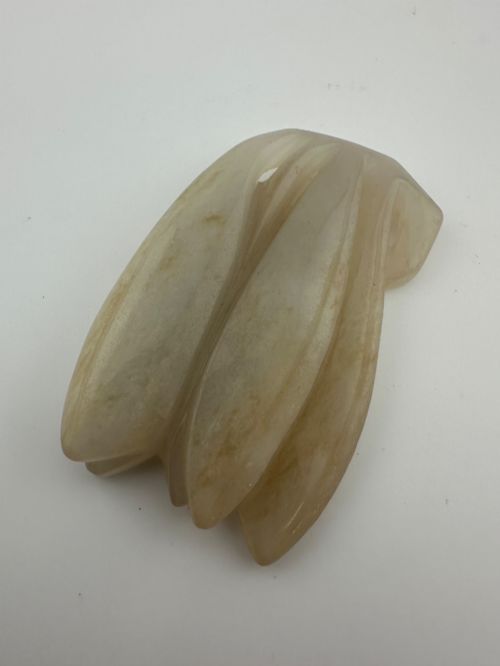
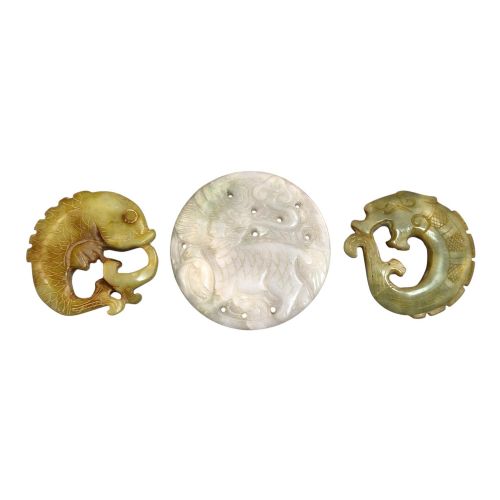
Traditional chinese jade covers decorative carvings, sculptures, and small ritual items spanning periods from the eighteenth century to the twentieth century. Collectors encounter everything from pale celadon cicada carvings to tripod censers and mountain landscape sculptures.
The objects here reflect traditional chinese and Qing dynasty styles, alongside export pieces and twentieth-century interpretations. Formats range from desk seals and amulets to earrings and head rests.
Materials and construction
Carvings utilise nephrite jade, jadeite, hardstone, and soapstone, often shaped into mythical beasts, figures, and natural scenes. Selected pieces incorporate additional elements like hardwood stands and gold settings.
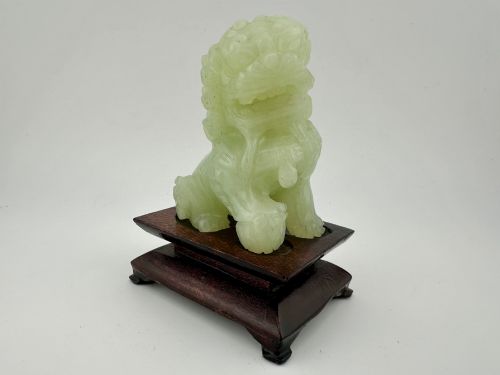
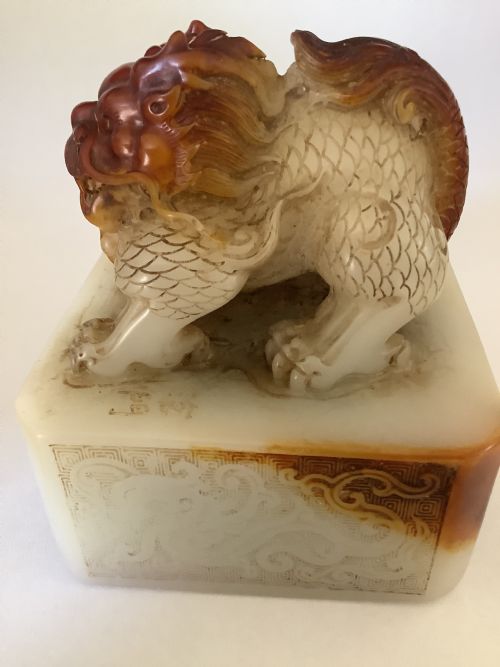
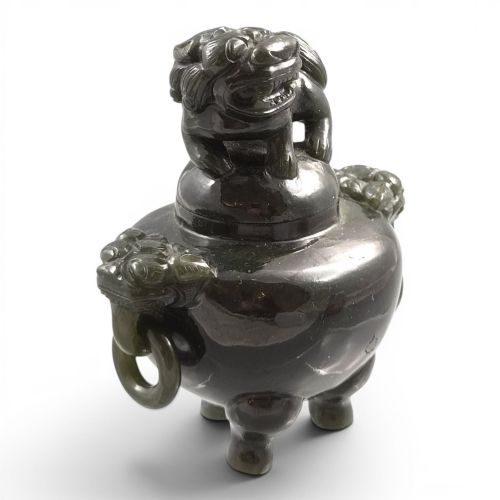
Makers shaped the dense stone through patient abrasion and carving techniques, achieving intricate detail in subjects such as foo dogs, dragons, and landscape mountains.
The listings span the eighteenth century, nineteenth century, Edwardian period, and nineteen-thirty, using nephrite, jadeite, hardstone, and soapstone.
Markers of quality
Quality rests upon the fineness of the carving and the natural characteristics of the stone itself. Superior examples display precise detail in complex subjects like mythical beasts and mountain landscapes.
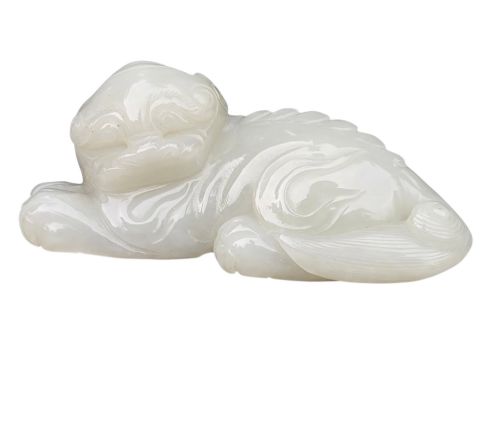
The clarity of colour in white jade or pale celadon stones distinguishes finer carvings from standard work. The integration of supporting elements, such as custom hardwood stands, also influences the overall standard.
The Traditional Chinese Jade Glossary
- Nephrite
- A dense, tough variety of jade used in many traditional carvings. It ranges in colour from white to dark green.
- Celadon
- A pale green jade tone highly valued in Chinese carving traditions. This shade appears frequently on nineteenth-century pieces.
- Bi
- A flat jade disc with a circular hole in the centre. These ancient forms persisted as traditional motifs in amulets.
- Censer
- A vessel used for burning incense, often supported on tripod legs. Jade examples typically feature mythical animal motifs.
- Foo dog
- A traditional guardian lion depicted in Chinese sculpture. These mythical beasts appear frequently on seals and censers.
Traditional Chinese Jade: Frequently Asked Questions
What is traditional chinese jade?
Traditional chinese jade refers to carved objects fashioned from nephrite, jadeite, and related hardstones across various historical periods. These pieces include decorative sculptures, amulets, and utilitarian items like desk seals.
The materials and styles follow established Chinese artistic conventions, ranging from Qing dynasty works to twentieth-century export pieces.
How do I identify older pieces?
Dating relies on stylistic conventions, carving techniques, and the specific characteristics of the stone. Pieces from the eighteenth and nineteenth centuries often exhibit specific Qing dynasty motifs and refined pale celadon or white jade.
Examining the depth of the carving and the associated components, such as hardwood stands, helps contextualise the period.
What forms do these items take?
The selection includes desk seals, bi disc amulets, tripod censers, landscape sculptures, and figural carvings of humans, birds, and mythical beasts. Some items incorporate secondary materials like gold or hardwood.
Objects range from small personal items to substantial decorative landscape sculptures.
How should I care for jade?
Jade is a tough material, but carved details and softer stones like soapstone require gentle handling to avoid chips. Cleaning is best done with a soft, damp cloth without harsh chemicals.
Display pieces safely on stable surfaces, utilising fitted stands where provided to protect the base.