
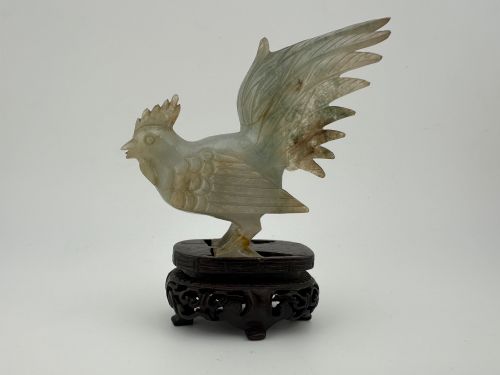
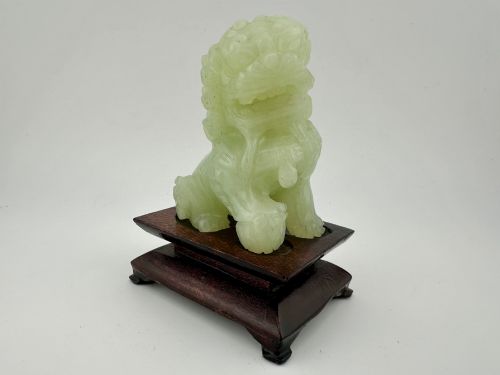
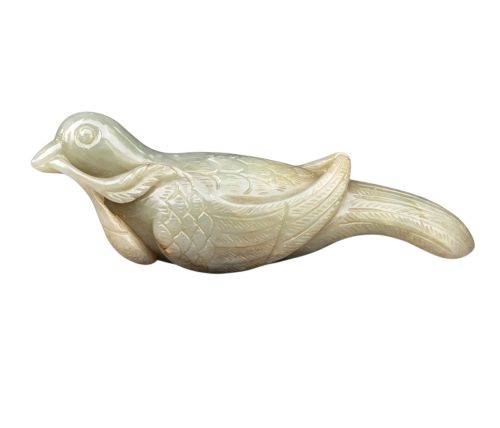
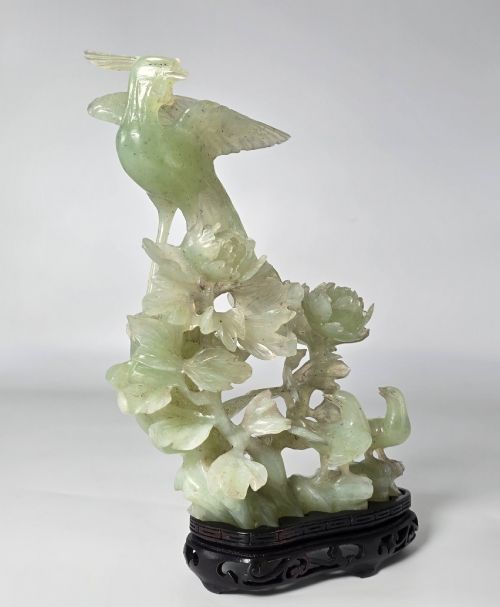
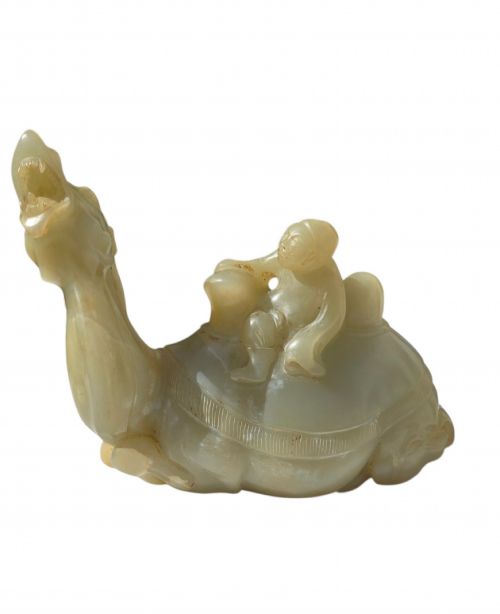


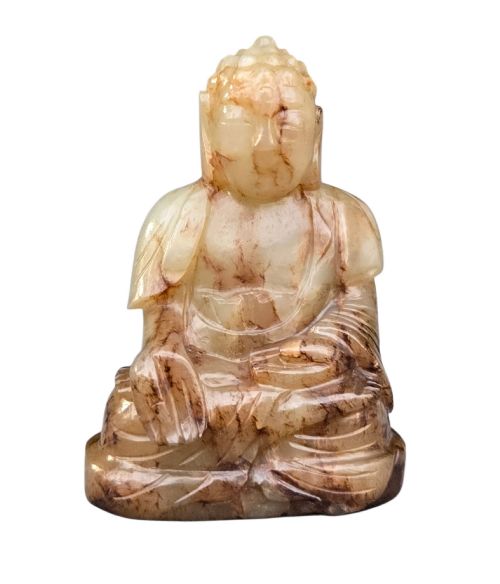


Chinese Jade Figure
A chinese jade figure brings carved stone artistry into a room, offering centuries of lapidary skill in nephrite and jadeite.
Chinese Jade Figure
A chinese jade figure represents carved stone artistry spanning from the Ming and Qing dynasties through to the early twentieth century.
Buyers encounter sculptures, decorative carvings, snuff bottles, and earrings fashioned from nephrite, jadeite, bowenite, and serpentine.
The subjects range from seated Buddhas and roosters to camels with riders, water birds, and figures in pavilions.
Materials and Carving Techniques
Carvers shaped these hardstones using specialised abrasive minerals and rotating tools to achieve smooth contours and fine surface detail.
Natural variations within celadon jade, pale green jade, and mottled jadeite dictated the placement of birds, beasts, and human forms.
Material options across the selection include jadeite, celadon jade, bowenite, and associated hardwood stands.
Judging Quality and Execution
Quality rests upon the sensitivity of the carving relative to the natural inclusions and grain of the stone itself.
Finer examples display confident undercutting, balanced composition, and a polished surface that respects the heft of the raw material.
The Chinese Jade Figure Glossary
- Nephrite
- A dense, tough amphibole mineral utilised for the majority of traditional Chinese carvings. It ranges in colour from white to deep green.
- Jadeite
- A pyroxene mineral prized for its crystalline structure and vibrant colour variations. It often appears in brighter green or mottled tones.
- Celadon
- A pale green or grey-green glaze or stone tone reminiscent of early ceramics. It provides a subdued background for intricate figural subjects.
- Serpentine
- A group of hydrous magnesium silicate minerals often resembling jade. Bowenite is a particularly hard and translucent variety seen in these pieces.
- Qing Dynasty
- The final imperial dynasty of China, lasting from the seventeenth to the early twentieth century. It produced prolific carved jade scholarship and ornamentation.
Chinese Jade Figure: Frequently Asked Questions
How do I clean a jade figure?
Dust the surface gently with a soft, dry brush to prevent accumulation in recessed crevices.
Avoid chemical detergents and water immersion, particularly when stones are mounted with organic materials like pearl or gold.
What is the difference between nephrite and jadeite?
Nephrite is a fibrous amphibole mineral known for high toughness and traditional historical use in imperial China.
Jadeite is a pyroxene mineral with a brighter crystalline structure that gained widespread popularity during the later Qing period.
How do I date an antique jade carving?
Examine the tool marks, polish quality, and stylistic conventions associated with dynasties such as the Ming or Qing.
Comparative analysis of subject matter and stone selection helps narrow the period of execution.
Where should I display a jade figure?
Place the carving on a stable, level surface away from direct sunlight and sudden temperature shifts.
Allow sufficient clearance so the sculpture can be appreciated from multiple angles.