


Green Jade Sculpture
These green jade sculpture pieces bring ancient carvers' tactile mastery into modern rooms, prized for their cool mineral weight and subtle colour variation.
Green Jade Sculpture
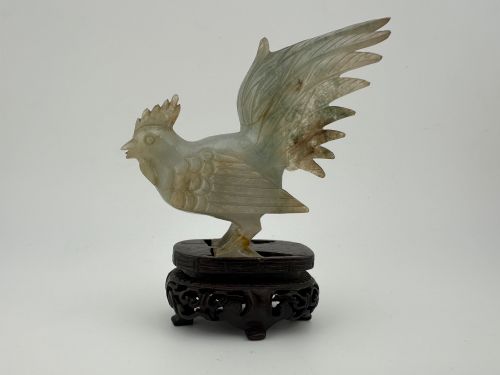
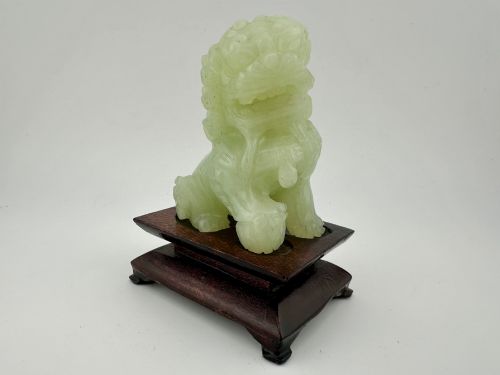
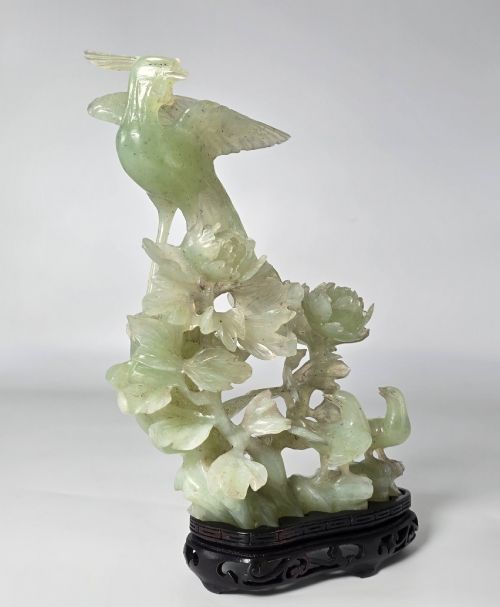
When you search for green jade sculpture, you enter a domain of traditional Chinese carving spanning the eighteenth and nineteenth centuries, alongside later twentieth-century interpretations. These works take the form of miniature figures, animal groups, scholar's desk ornaments, and ceremonial vessels shaped from dense mineral blocks.
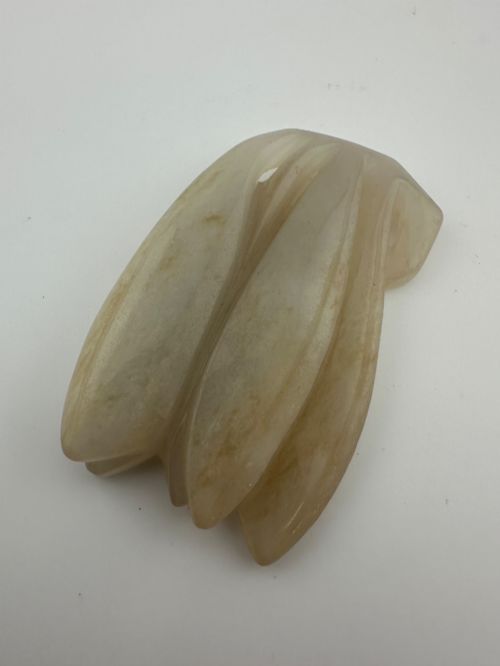
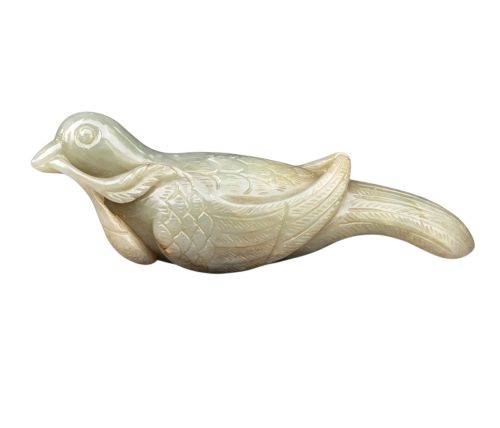
The objects on this page lean heavily towards historic Chinese artistry, encompassing Qing Dynasty and Republic Period pieces. Collectors encounter everything from pale celadon water birds and cicadas to large landscape sculptures mounted on fitted wooden stands.
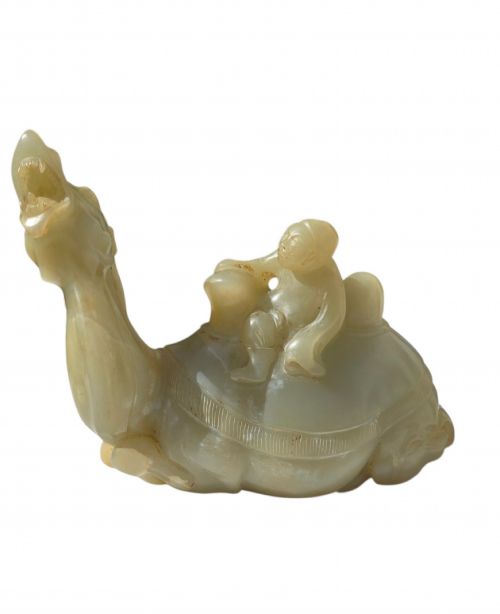
Forms range from intimate talisman pendants and fish miniatures to monumental camel and rider groups or double-sided dragon plaques. Each piece reflects specific cultural motifs, depicting auspicious animals, floral arrangements, and human figures rendered with patient handheld control.
Assessing quality and craftsmanship
Superior examples demonstrate absolute control over difficult stone, showing crisp undercutting, balanced proportions, and high polish in concealed recesses as well as prominent surfaces. Lesser pieces exhibit blunt detailing, static compositions, or heavy mechanical tool marks that obscure the natural grain of the material.
The relationship between the natural shape of the stone and the carved subject dictates artistic success. Master carvers used the specific translucency, colour graduation, and inclusions of nephrite or jadeite to animate subjects like swimming fish or mountain landscapes.
Several small animals recorded here appear to be guarding eggs or nibbling foliage, proving historic carvers appreciated household pets just as much as we do.
The Green Jade Sculpture Glossary
- Celadon
- A pale green or grey-green glaze or mineral tone mimicking jade. It remains the characteristic hue for classical scholar's desk carvings.
- Nephrite
- One of the two distinct mineral species recognised as jade, known for its dense, fibrous amphibole structure. It resists fracturing, allowing for exceptionally thin and intricate sculptural walls.
- Jadeite
- The second mineral species classified as jade, prized for its crystalline structure and vivid emerald or apple-green coloration. It achieves high translucency in top-tier imperial carvings.
- Bowenite
- A serpentine mineral hard enough to resemble true jade, frequently utilised for large nineteenth-century animal and rider groups. It displays a softer lustre and distinct fibrous texture.
- Qing Dynasty
- The final imperial dynasty of China, lasting from sixteen-forty-four to nineteen-twelve. This era produced the vast majority of elaborate hardstone carvings found in modern collections.
Green Jade Sculpture: Frequently Asked Questions
How do I clean a jade sculpture?
Dust gently with a soft, dry artist's brush or a microfiber cloth to remove surface particles.
Avoid chemical cleaning agents, ultrasonic baths, or soaking pieces that incorporate fitted hardwood bases.
Can I display these carvings in direct sunlight?
Prolonged exposure to intense sunlight can warm the mineral and potentially dry out historic organic mounting elements or patinated surfaces.
Position pieces in ambient light away from south-facing windows and direct heat sources.
What is a scholar's desk ornament?
These functional and contemplative objects were created for educated elites in traditional China to inspire poetry, meditation, and quiet study.
Forms include brush washers, water birds, and small figural groups meant to be handled frequently during quiet contemplation.
How do I tell nephrite from jadeite?
Nephrite presents an oily, greasy lustre with a dense, felted internal structure that resists direct light penetration.
Jadeite often reveals a crystalline, granular texture with brighter vitreous reflectivity and greater translucency.