


Traditional Chinese Carved Sculpture
Traditional chinese carved sculpture brings the rich iconography of East Asian folk art and imperial dynasties directly into a room.
Traditional Chinese Carved Sculpture
Traditional chinese carved sculpture encompasses figures of deities, scholars, immortals, and animals created across the eighteenth, nineteenth, and early twentieth centuries. These pieces reflect regional craftsmanship and periods including the Qing Dynasty, often taking the form of freestanding statues, mountain landscapes, and desk seals.
A buyer examining this page encounters figures carved from hardwood, root wood, soapstone, and jade, alongside gilt wood and lacquered pieces. Figures range from small scholars and fishermen to large temple guard dogs and mythical beasts.
Materials and Techniques
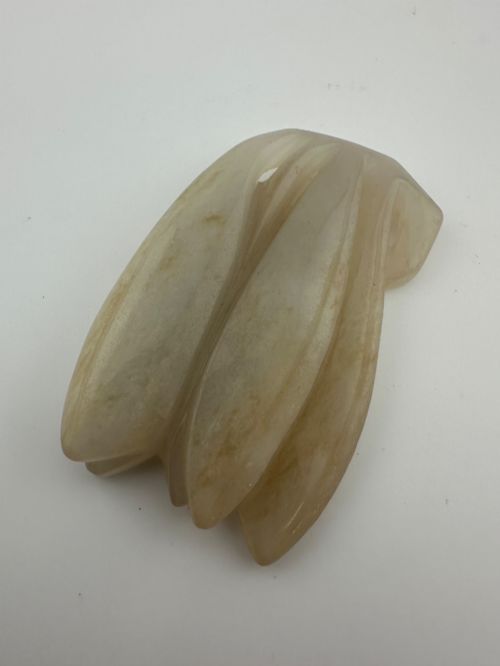
Carving relies on the natural properties of hard materials such as nephrite jade, hardstone, soapstone, and dense hardwoods like root wood. Artisans follow the natural grain and gnarled contours of the material, particularly in root wood carvings where the original shape dictates the final form of figures and animals.
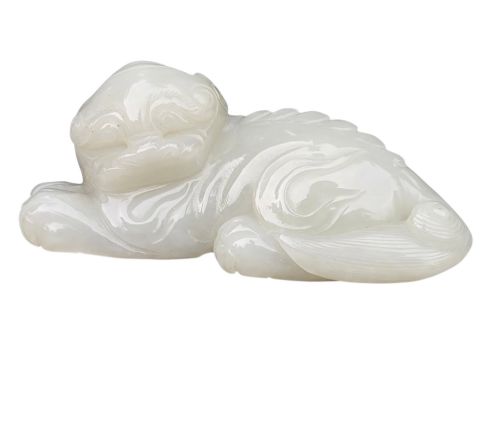
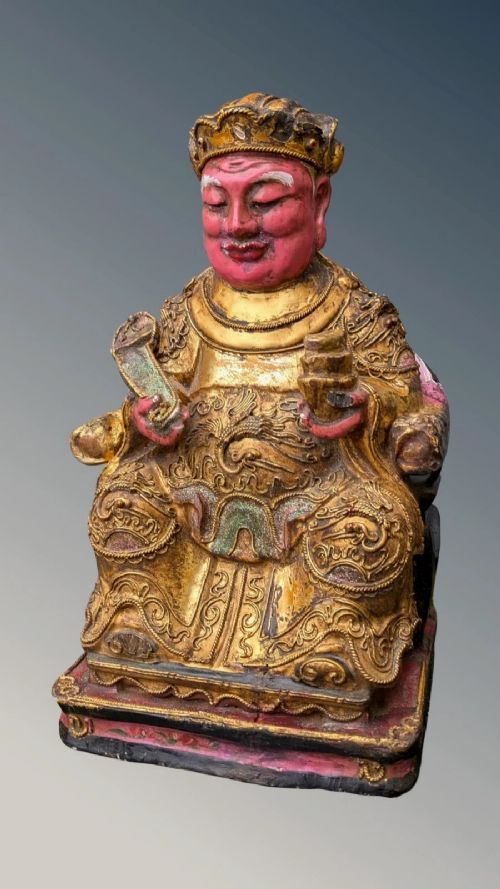
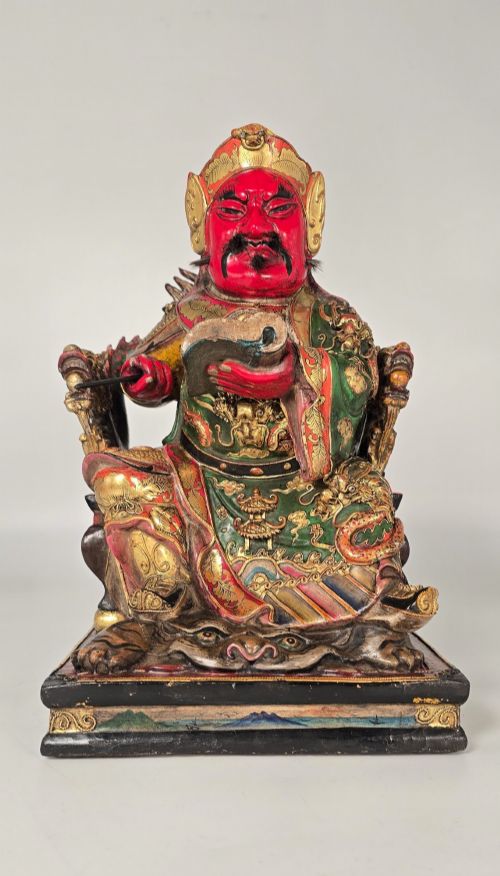
Surface finish involves polychrome painting, gesso, and gold leaf applied to wood and lacquer sculpture. Stone and jade works depend on meticulous abrasive shaping and polishing to reveal pale celadon and white tones.
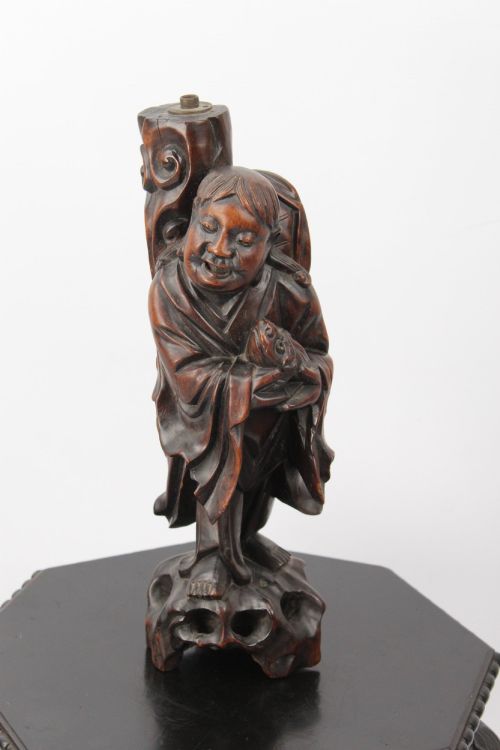
A gnarled root wood carving cleverly transforms a twisted bough into a man carrying a small boy upon his shoulders.
Craftsmanship and Material Depth
Quality rests upon the precision of the carving and the quality of the raw material, whether translucent jade or deeply figured root wood. Superior pieces exhibit fine anatomical detail in figures such as Daoist immortals and scholars, and retain original polychrome paint, lacquer, or gilding.
The relationship between the natural medium and the carved subject determines distinction, as seen in landscape sculptures integrated with hardwood stands. Lesser examples show simpler execution with surface wear and loss of applied finishes.
The Traditional Chinese Carved Sculpture Glossary
- Nephrite Jade
- A tough, dense mineral carved into smooth, pale celadon or white ornaments and landscape sculptures. It resists scratching and holds fine detail.
- Soapstone
- A soft, talc-based stone easily shaped into continuous landscapes and figurative groupings. Its soapy texture takes a smooth matte finish.
- Root Wood
- Gnarled timber selected for its eccentric natural growth patterns and twisted roots. Artisans carve figures directly into these organic shapes.
- Qing Dynasty
- The imperial dynasty ruling China from sixteen forty-four to nineteen twelve. Many carved figures and jade pieces date from its later centuries.
- Foo Dog
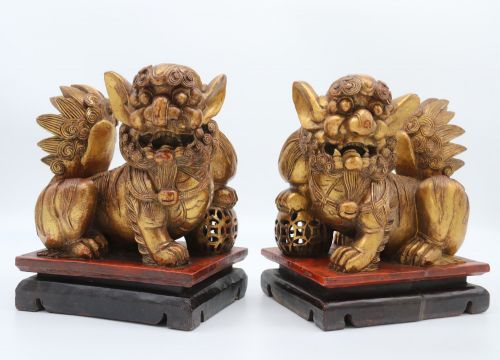
- A traditional guardian lion statue placed to protect temples and domestic spaces. These mythical beasts appear in pairs carved from wood, stone, or root wood.
Traditional Chinese Carved Sculpture: Frequently Asked Questions
What subjects appear most often in these sculptures?
Figures frequently depict Daoist immortals, Buddhist deities such as Quan Yin, scholars, fishermen, and animals including horses, pigs, and mythical beasts.
Human figures often carry symbolic items or interact with children, while animal carvings capture natural postures.
How do I care for wooden and stone sculptures?
Wooden and lacquered pieces require stable indoor humidity to prevent timber movement or cracking of the gesso and paint layers. Stone and soapstone items need gentle dusting with a dry cloth without harsh cleaning agents.
Keeping pieces away from direct sunlight protects polychrome pigments and gold leaf from fading.
How are different stone types identified?
Nephrite jade presents a dense, cool, and hard surface that resists steel, often showing pale celadon or white coloration. Soapstone feels softer and slightly soapy to the touch, easily worked into intricate desk seals and continuous landscapes.
Hardstone and general stone carvings display heavier weight and distinct mineral structures.
What is the role of stands with these carvings?
Many jade mountain landscapes and figures include fitted hardwood stands designed specifically for the base of the sculpture. These stands elevate the piece and provide stable display support.
Original matched stands enhance the integrity of the object.