
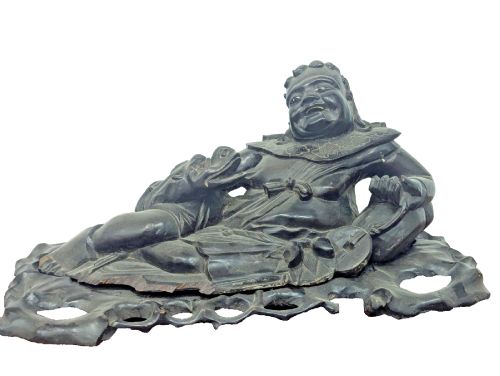
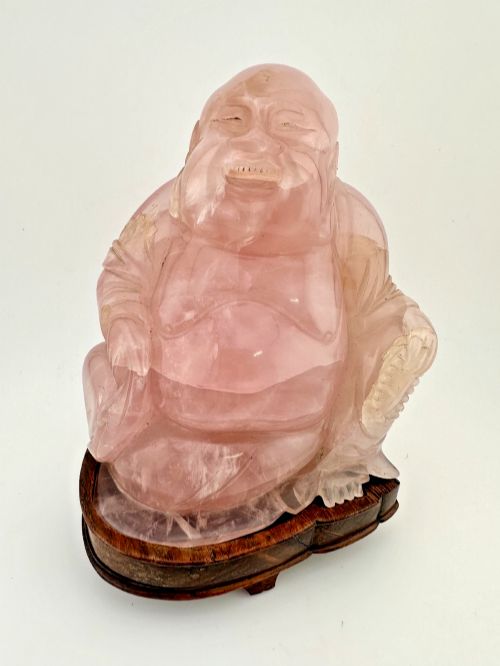
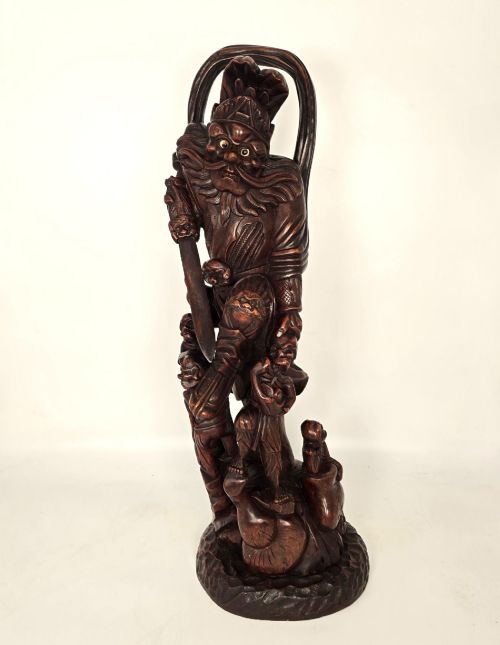
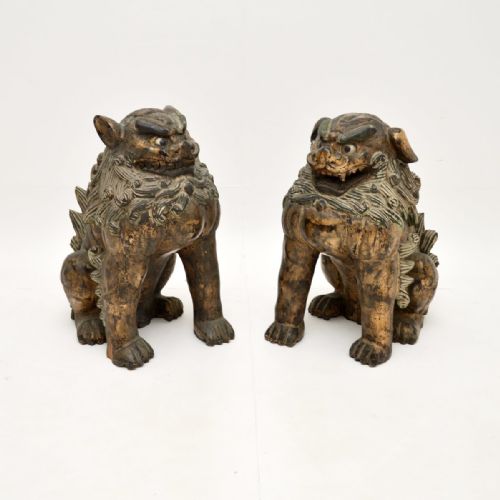

Oriental Carved Wooden Sculpture
Oriental carved wooden sculpture encompasses figures, animals and temple guardians shaped from timber across Asian traditions.
Oriental Carved Wooden Sculpture
Oriental carved wooden sculpture covers a broad spectrum of figures, animals and architectural fragments originating from diverse Asian traditions. Collectors searching for oriental carved wooden sculpture encounter representations of deities, scholars, guardians and fauna spanning multiple centuries.
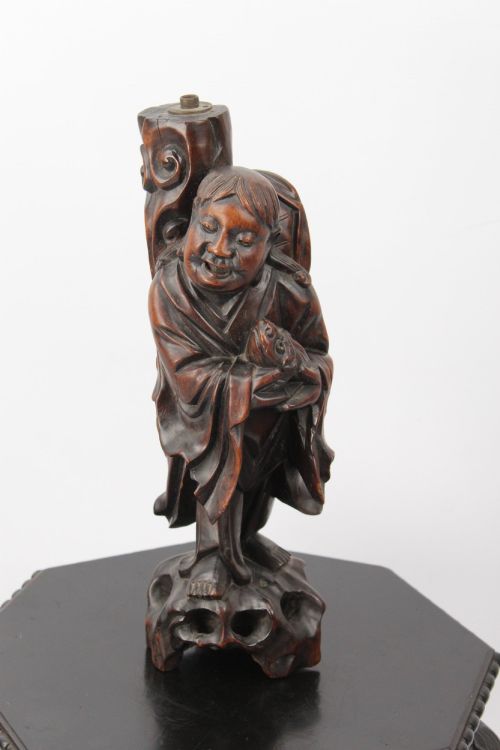
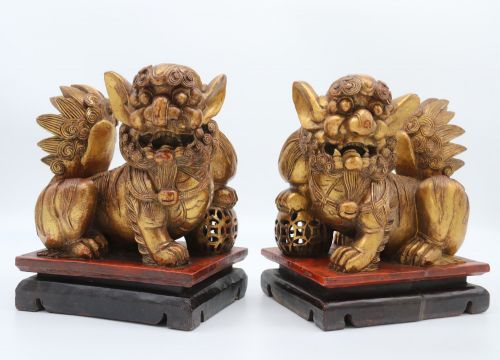
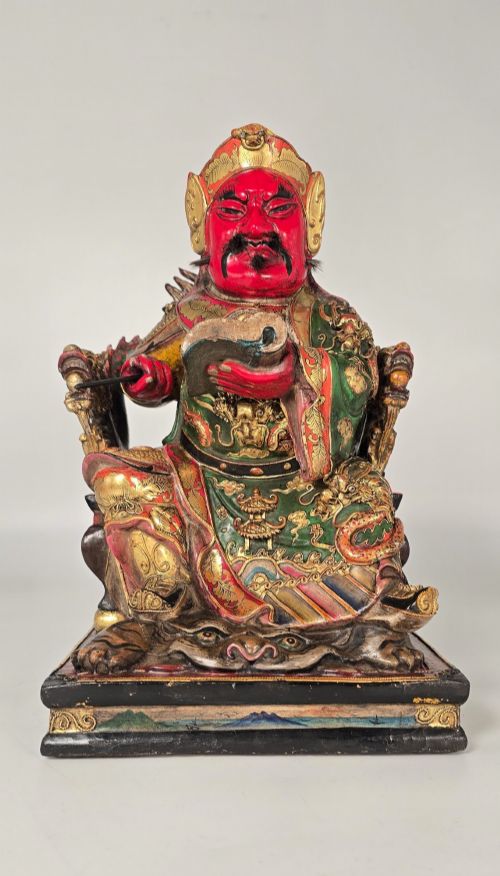
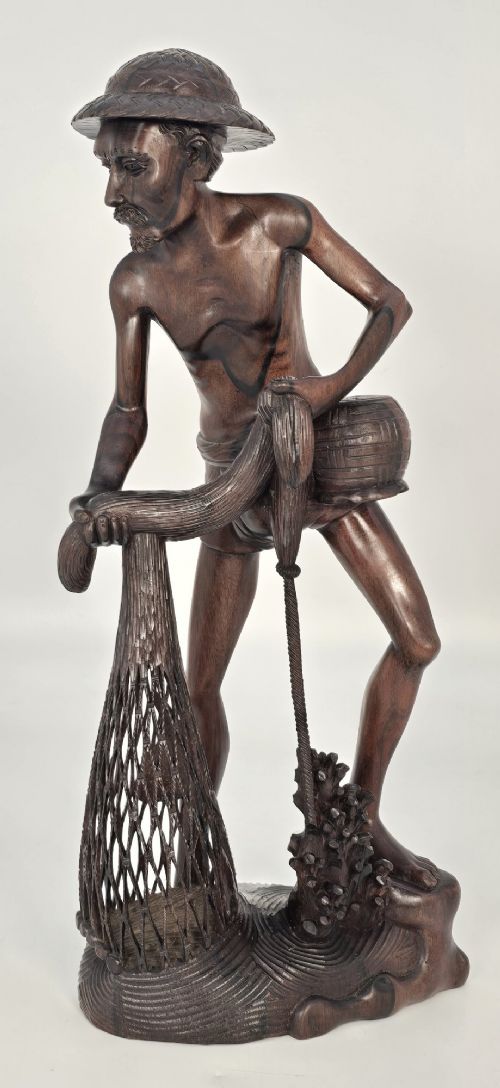
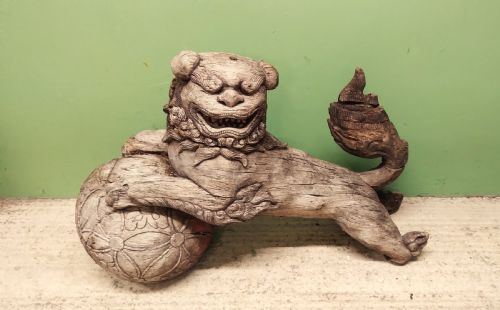
The selections on this page draw heavily from Chinese, Japanese, Indian and Southeast Asian workshops. Common forms include temple guards, Foo dogs, deities such as Guanyin and Buddha, alongside secular figures like fishermen and scholars.
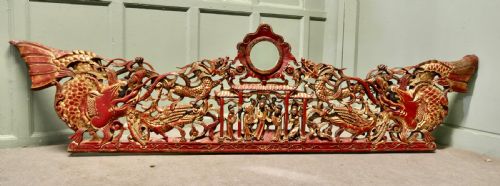
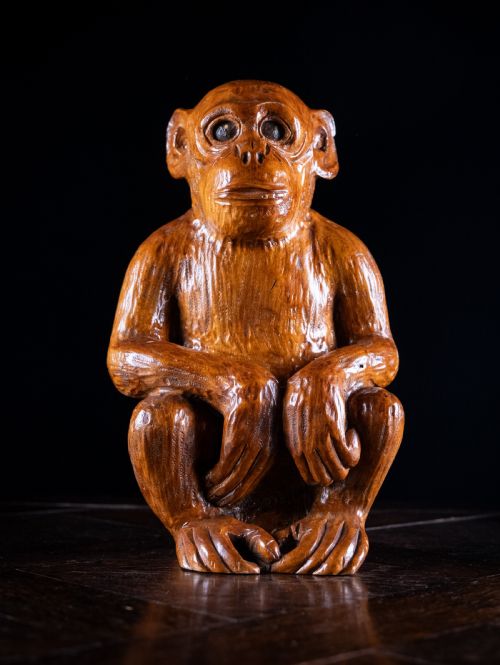
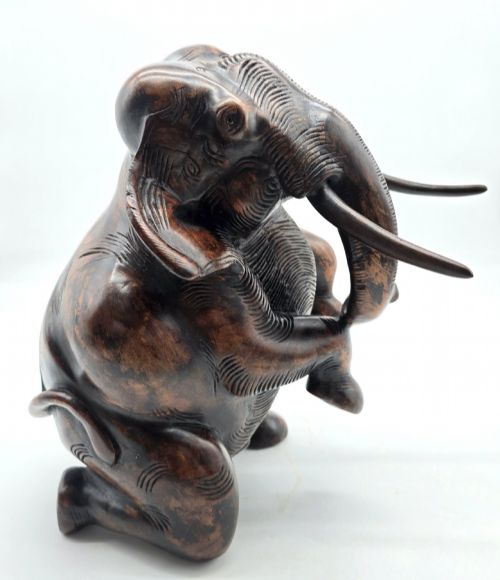
Pieces range from intimate boxwood carvings and okimono to monumental temple figures and pediments. The majority date from the nineteenth and early twentieth centuries, reflecting Qing Dynasty, Meiji period and Raj aesthetics.
Materials and methods
Carvers utilised dense regional timbers including hardwood, boxwood, root wood and hongmu. These woods allowed for intricate detailing, high relief work and smooth finishes that endured over generations.
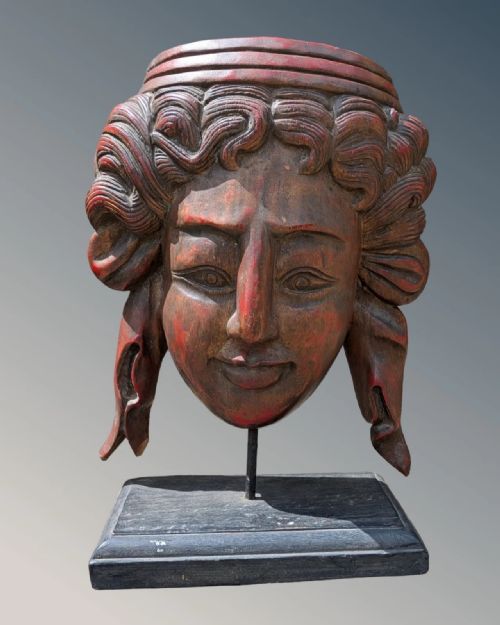
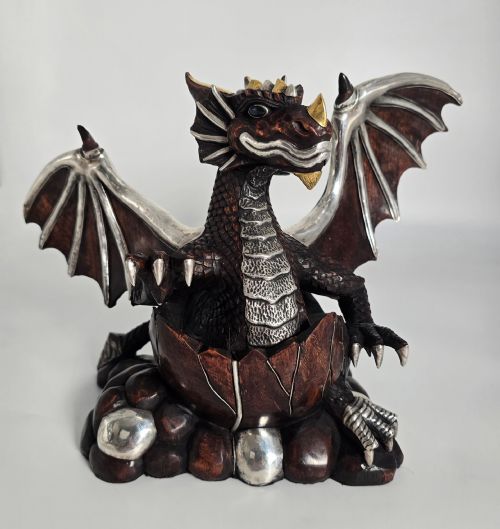
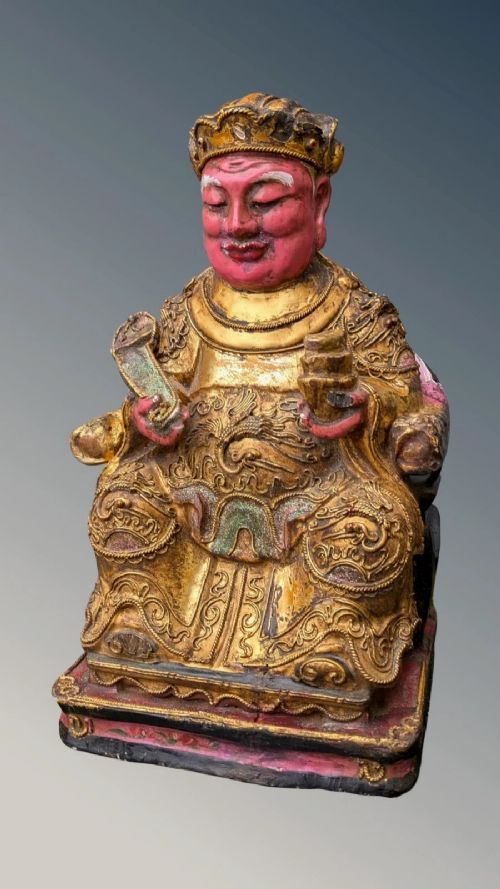
Many surfaces received additional treatments such as gold leaf, gesso, polychrome paint and lacquer. Guilds combined carving with mixed metal mounts or inlay to heighten the visual impact of temple figures and decorative objects.
Surfaces frequently combine carved wood with gold leaf, polychrome paint and traditional lacquer finishes.
Assessing quality
The preservation of original polychrome, lacquer and gilding dictates the desirability of a sculpture. Intact surfaces with honest wear indicate a higher grade of craftsmanship compared to later regilding or unsympathetic restoration.
The Oriental Carved Wooden Sculpture Glossary
- Okimono
- A Japanese ornamental carving designed for display on a shelf or in a tokonoma alcove. These sculptures typically depict figures, animals or genre scenes from daily life.
- Foo Dog
- A symbolic guardian lion commonly rendered in pairs outside temples and important residences. Sculptors often depict them with one paw resting on a ball or a cub.
- Polychrome
- Decorated in multiple colours using paint or lacquer over a wood or gesso ground. This technique adds lifelike detail to religious and secular figures alike.
- Giltwood
- Timber that has been decorated with a thin layer of gold leaf or gold powder. Artisans applied this finish to accentuate important temple figures and architectural elements.
- Root wood
- Timber formed from the root mass of a tree, utilised by carvers for its natural, gnarled contours. Artisans incorporated these organic shapes into scholarly figures and decorative objects.
Oriental Carved Wooden Sculpture: Frequently Asked Questions
How do I identify a temple guardian?
Temple guardians usually present fierce expressions, dynamic poses and armour intended to ward off malevolent spirits. Monumental scale and traces of polychrome paint or gold leaf further distinguish them from domestic figures.
Such sculptures often display weathered surfaces from centuries of exposure inside shrine halls or temple complexes. Their authoritative stance marks them out from secular carvings of fishermen and scholars.
What is boxwood used for?
Boxwood provides a dense, fine-grained surface that allows carvers to execute microscopic detail without splintering. It appears frequently in smaller netsuke, okimono and scholar pieces.
Over time, boxwood develops a warm, deep patina through handling and exposure to light. This timber choice indicates a piece intended for close inspection rather than distant temple display.
How should I care for lacquered wood?
Lacquered wooden sculptures require stable indoor humidity and protection from direct sunlight to prevent cracking. Dust them gently with a soft, dry cloth without applying chemical polishes.
Rapid temperature shifts can cause the underlying wood to expand and stress the brittle lacquer layer above. Maintaining consistent environmental conditions preserves the integrity of both the finish and the timber.
What distinguishes Meiji period carvings?
Meiji period Japanese pieces frequently exhibit hyper-realistic textures in hair, clothing and fauna. Carvers during this era pushed technical boundaries to capture individual personality and motion.
These sculptures often bear signature panels or display exceptional mastery in the rendering of subjects like okimono and naturalistic animals. Their precision reflects the high standards of Japanese workshops during the late nineteenth century.