


Traditional Chinese Altar Furniture
Traditional chinese altar furniture brings stately ritual forms and rich regional timbers into domestic rooms.
Traditional Chinese Altar Furniture
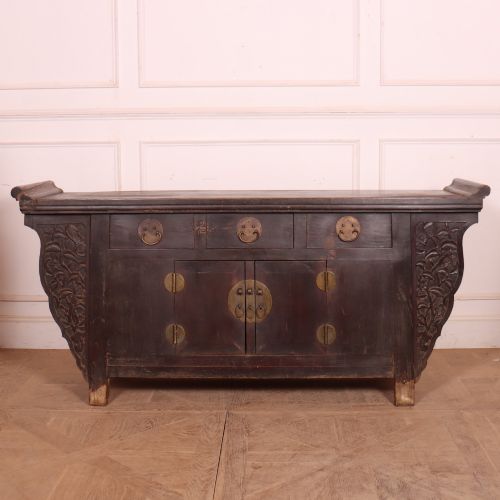
Traditional chinese altar furniture spans low tables, console tables, sideboards, and benches originating primarily from the eighteenth and nineteenth centuries. These forms reflect both courtly Qing Dynasty designs and provincial regional workshops.
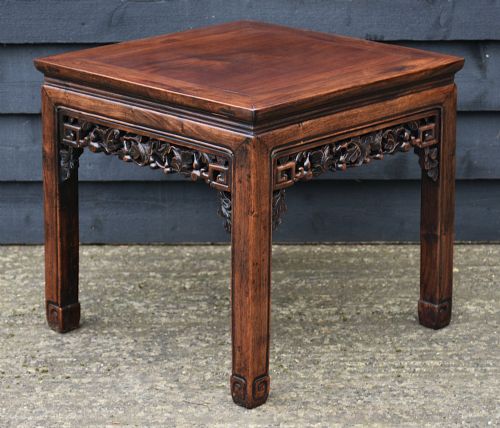
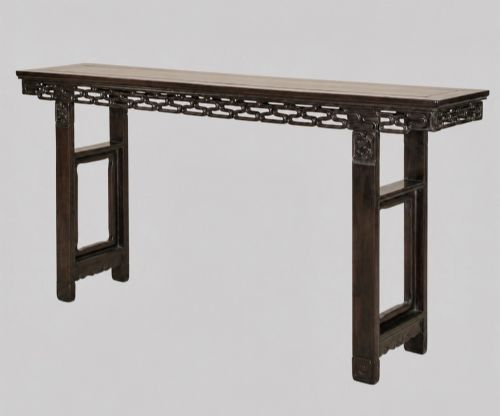
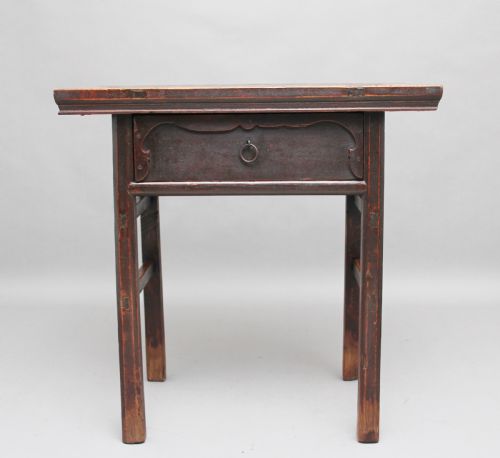
The pieces appearing on this page range from compact elm side tables to substantial hardwood altar tables with plank tops and corner legs. Buyers encounter red lacquered finishes alongside exposed timber grains in rosewood, elm, and varied hardwoods.
Assessing quality and finish
Quality reveals itself in the selection of timber and the precision of the joinery rather than surface ornamentation alone. Heavier hardwoods like rosewood command higher regard than standard elm.
Proportion and restraint in carved details separate superior workshop pieces from simpler provincial examples. The preservation of original lacquer and patination directly influences the character of each piece.
The material palette includes rosewood, red lacquer, brass, and iron alongside traditional elm timber.
The Traditional Chinese Altar Furniture Glossary
- Altar table
- A narrow rectangular table traditionally used for ceremonial displays, characterised by upturned flange ends or recessed legs. These pieces provide a striking focal point in modern interiors.
- Qing Dynasty
- The final imperial dynasty of China, spanning from sixteen forty-four to nineteen twelve. Pieces from this era display distinct regional variations in carving and form.
- Lacquer
- A durable finish derived from tree sap, applied in multiple layers and often pigmented red. It protects the underlying wood while providing a smooth sheen.
- Homgmu
- A term used to describe various dense Chinese hardwoods prized for their strength and rich grain. It translates broadly as red wood.
- Trestle table
- A table construction where the top rests on supporting upright structures rather than four independent corner legs. This form offers robust stability.
Traditional Chinese Altar Furniture: Frequently Asked Questions
How were altar tables used originally?
These tables stood against walls in temples, ancestral halls, or domestic spaces to hold ritual vessels, offerings, and ancestral tablets. Their elevated ends helped secure ceremonial objects.
Over time, these forms transitioned into functional household furnishings for displaying decorative items while maintaining their architectural presence.
How do I clean elm furniture?
Dust surfaces regularly with a soft, dry cloth to prevent particulate buildup in the grain or carved recesses. Avoid abrasive cleaners and modern polishes that can damage old finishes.
Maintain stable indoor humidity levels to protect the timber and traditional joinery from seasonal expansion and contraction.
Are these pieces made of solid wood?
Yes, traditional pieces utilise solid native timbers such as elm, rosewood, and mixed hardwoods throughout their construction. Cabinetmakers selected these dense materials for structural stability.
The natural grain and weight reflect the authentic construction methods of nineteenth-century workshops.
How do I date a piece?
Dating relies on timber characteristics, joinery methods, wear patterns, and stylistic markers associated with specific periods like the Qing Dynasty. Experts examine the patination accumulated over generations of use.
Minor tool marks and construction quirks provide clues regarding regional provincial origins versus urban workshop production.