


Traditional Chaise Longue
A traditional chaise longue offers a reclining seat for any room, bringing nineteenth-century comfort and elegance into modern spaces.
Traditional Chaise Longue
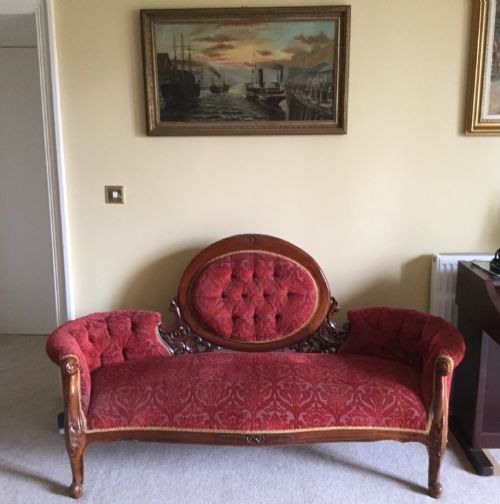
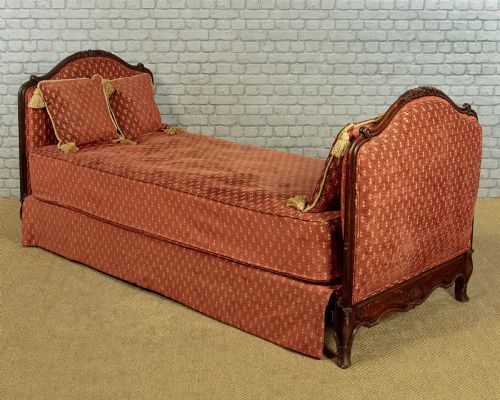
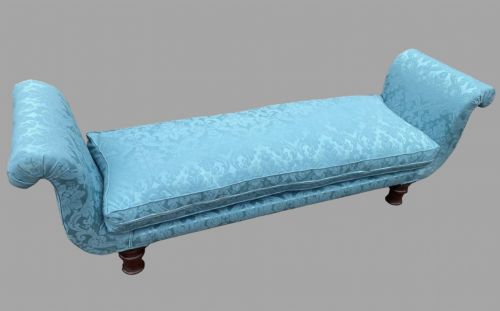
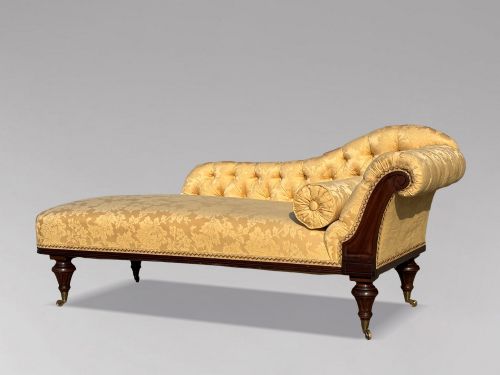
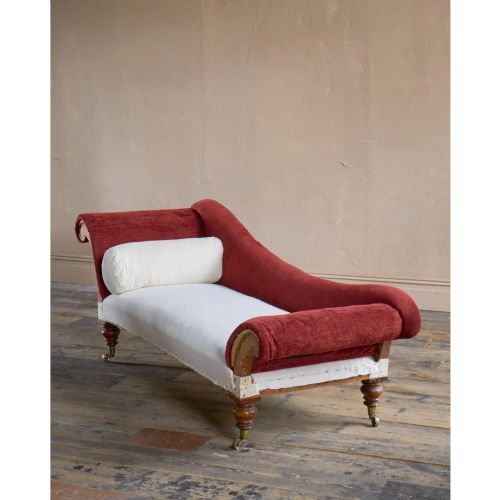
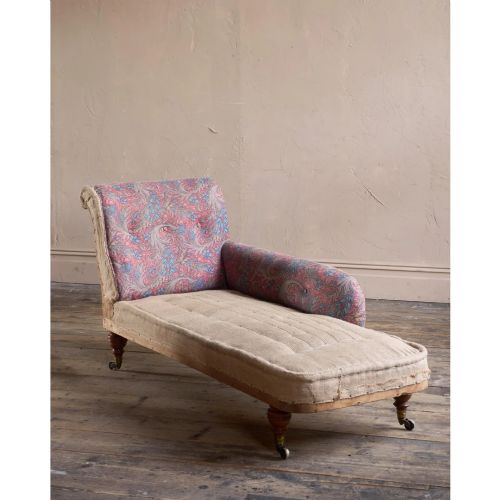
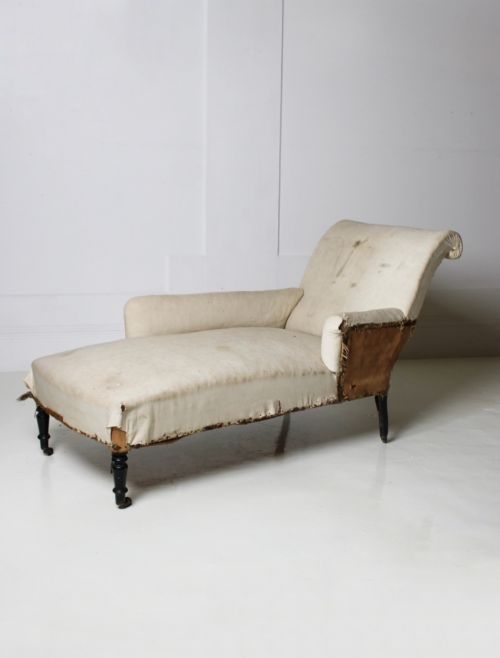
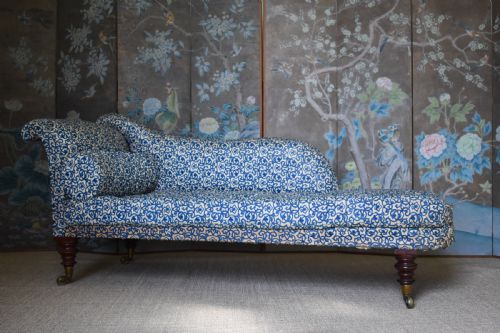
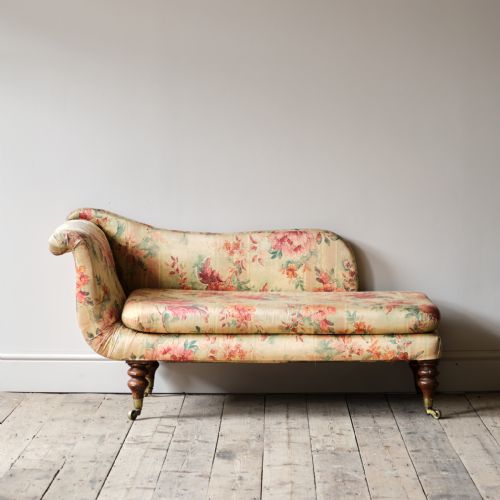
When you search for a traditional chaise longue, you are looking at nineteenth-century reclining seats designed for leisurely resting. These pieces range from Victorian buttoned models to Regency scroll-end designs and daybeds.
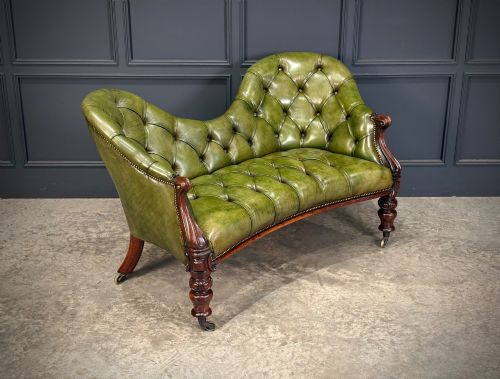
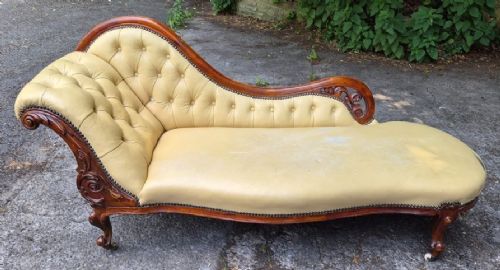
The most common versions met on this page are Victorian mahogany and rosewood framed pieces, often upholstered in velvet, leather, or brocade. They appear alongside daybeds and double-ended settees from the nineteenth century and the early twentieth century.
Origins span English cabinet makers and French provincial workshops, utilising rich timbers such as mahogany and rosewood. Forms vary from simple bobbin daybeds to substantial scroll-end settees with sprung bases.
How they were made
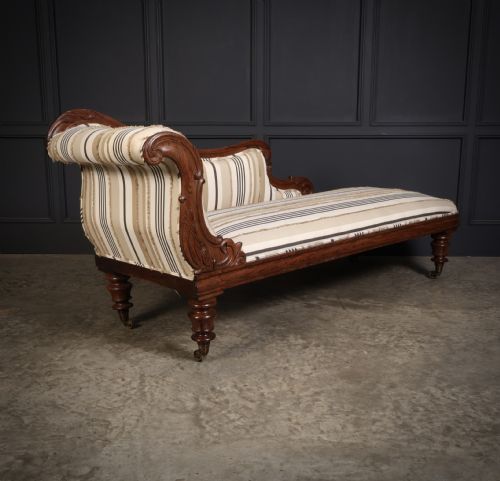
Frames are constructed from solid timbers like mahogany, rosewood, and walnut, shaped with carved details or scroll ends. Brass castors frequently support the feet for ease of movement across floorboards.
Joinery follows traditional cabinet-making methods, utilising mortise and tenon joints to bear the weight of the asymmetric frame and reclining occupant.
Periods represented span the Regency era through Victorian craftsmanship to Edwardian daybeds.
What varies in quality
The sophistication of the timber carving and the elegance of the scroll work separate standard pieces from the finest examples. Rich grain patterns in rosewood and mahogany indicate superior material selection by the maker.
Upholstery execution, from precise buttoning to the quality of the velvet or leather covering, dictates the finish. Original or sympathetic re-upholstering preserves the integrity of the piece more effectively than modern alternatives.
Howard and Sons·Jas Shoolbred·Hampton and Sons·Holland and Sons·Gillows
The Traditional Chaise Longue Glossary
- Double ended settee
- A sofa or seat with raised ends of equal height at both sides. These provide a balanced silhouette compared to the single headrest of a standard chaise.
- Buttoned leather
- An upholstery technique where leather is pulled tight and secured with recessed buttons to create a diamond pattern. This method adds firmness and texture to the surface.
- Scroll end
- A sweeping, curved wooden terminal on a sofa or chaise arm. It reflects Regency and Victorian design preferences for classical scrolling motifs.
- Daybed
- A piece of furniture functioning as both a sofa and a bed for daytime resting. Examples range from simple bobbin-turned frames to grand French styles.
Traditional Chaise Longue: Frequently Asked Questions
Where should I place a chaise longue?
A chaise longue fits well in a bedroom, drawing room, or a spacious hallway where its asymmetric shape can be appreciated from multiple angles. It requires open floor space so the scroll end and carved frame remain visible.
Position it away from direct sunlight to protect fabrics like velvet and leather from fading over time.
How do I care for leather upholstery?
Leather upholstery requires regular dusting with a dry cloth and occasional treatment with a suitable leather conditioner to prevent drying. Avoid placing the piece near heat sources that cause the hide to crack.
Keep buttons and tufts free of dust using a soft brush attachment on a vacuum cleaner.
Can I use a daybed for sleeping?
Nineteenth-century daybeds and chaise longues serve well for daytime resting and short naps. Many feature sprung bases designed for comfortable reclining.
They are narrower than standard beds, so daily overnight sleeping may require additional mattress support depending on the specific frame.
How do I identify a Victorian chaise?
Victorian examples often feature dark timber frames in mahogany or rosewood, frequently accompanied by deep buttoned velvet or leather upholstery. Carved wooden details and brass castors are common characteristics of this period.
Scroll ends and asymmetric backs distinguish them from standard settees of the same era.