

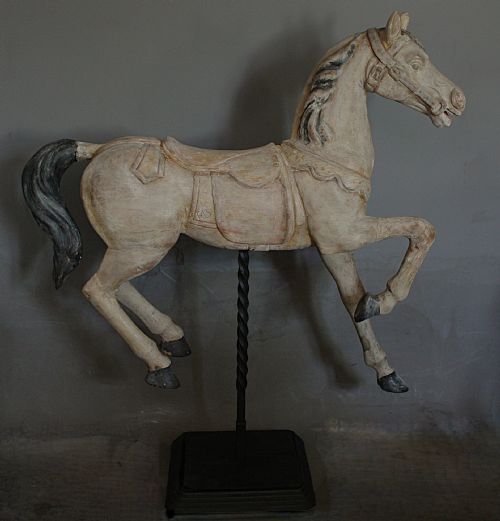


Traditional Carved Horse
A traditional carved horse brings tangible history into a room, whether through the movement of an old rocking toy or the stillness of folk sculpture.
Traditional Carved Horse
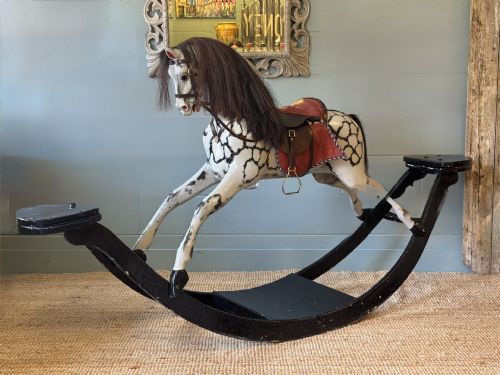
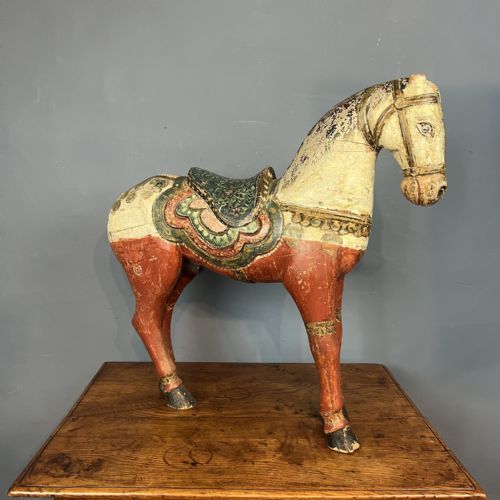
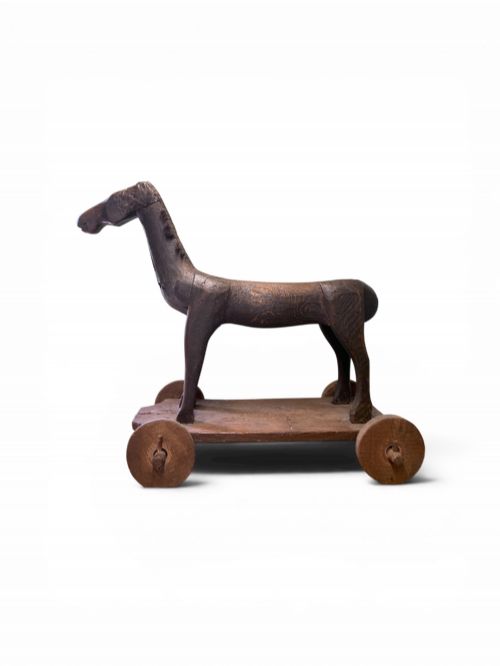
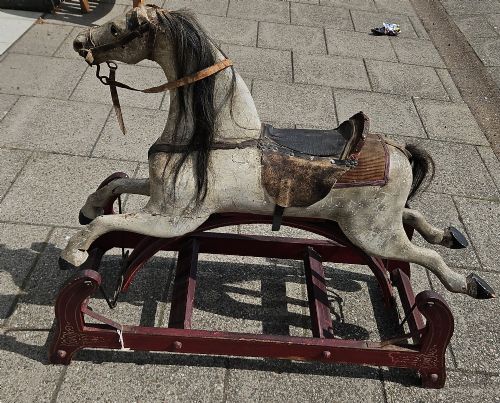
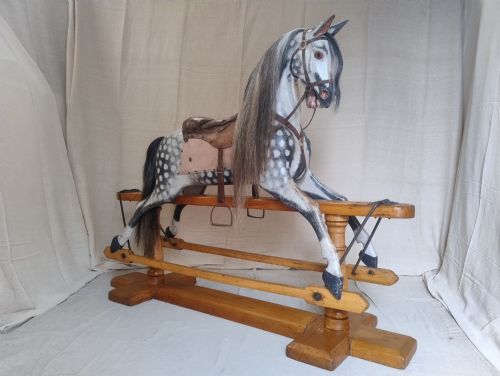
When you search for a traditional carved horse, you encounter a varied group of objects spanning nineteenth-century rocking toys, carousel figures, and regional folk art sculptures. The selection includes full-scale playroom rocking horses on original wooden rockers alongside smaller decorative models and naive carved figures.
The material record heavily favours wood, often enriched with paint, leather, and horsehair details. These pieces emerge from Victorian workshops, early twentieth-century makers, and international traditions including Chinese, Indian, and Russian folk art.
How they were made
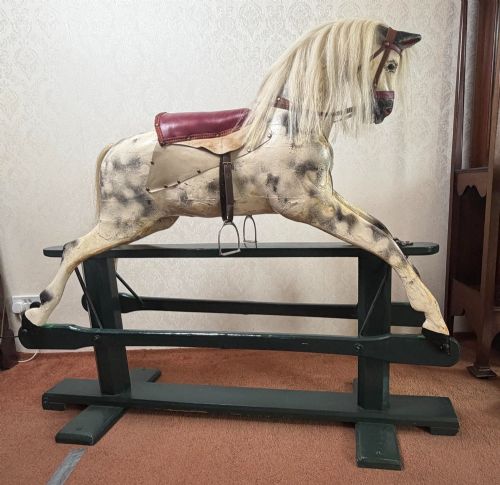
Makers shaped these horses primarily from woods such as pine, walnut, mahogany, and teak, employing traditional carving techniques to define muscle and form. Many examples retain their original painted surfaces, sometimes combined with leather tack and genuine horsehair manes and tails.
Structural elements on larger rocking horses involve sturdy iron brackets and curved wooden rockers designed to withstand active use. Smaller decorative sculptures and models rely purely on skilled hand-carving and surface finishing without mechanical requirements.
Listings feature pieces spanning the eighteenth century through the 1940s, utilising wood, paint, leather, glass, and iron.
What varies in quality
The distinction between ordinary and exceptional examples rests on the integrity of the original surface and the ambition of the carving. Pieces preserving untoched early paint schemes and original horsehair hold greater character than those with later repainting.
Attribution to documented makers or specific regional folk traditions elevates an example above unassigned workshop output. Proportions, anatomical confidence, and the survival of original components like rockers or leather harnesses further differentiate the range.
G & J Lines of London·F.H.Ayres·Collinson·Lines Bros Sportiboy
The Traditional Carved Horse Glossary
- Rocking Horse
- A toy or decorative horse mounted on curved wooden bows or a safety stand to allow motion. These objects range from nineteenth-century playroom staples to naive early figures.
- Folk Art
- Objects created within a traditional cultural vernacular, often by self-taught makers. This category includes naive wooden horses and regional carvings lacking formal academic styling.
- Carousel Horse
- A carved figure removed from a fairground roundabout. These pieces typically exhibit dynamic postures and decorative harness work.
- Original Paint
- The initial surface coating applied to a piece rather than subsequent layers. Survival of this finish preserves the intended visual character of the object.
- Horsehair
- Natural hair utilised for the manes and tails of traditional rocking and toy horses. Its presence adds textural authenticity to antique figures.
Traditional Carved Horse: Frequently Asked Questions
How do I date a traditional carved horse?
Dating relies on stylistic markers, construction methods, and materials visible in the carving and undercarraige. Victorian and early twentieth-century examples often show specific harness details and rocker shapes characteristic of known makers.
Paint layers and wear patterns also offer chronological clues. Comparing the piece to documented regional folk art or factory production helps narrow down the decade of creation.
Were these horses meant to be ridden?
Many larger examples served as children's toys and were built structurally sound on wooden rockers for active play. Iron brackets and substantial pine frames supported the weight of young riders.
Other variations, such as carousel figures or smaller decorative sculptures, functioned strictly as visual objects or artistic representations rather than functional toys.
How should I care for original paint?
Preserving an aged surface requires keeping the piece away from direct sunlight and maintaining stable indoor humidity. Excessive moisture or heat can cause old wood to split and historical paint to flake.
Dusting gently with a dry, soft cloth is sufficient for routine maintenance. Avoid chemical cleaners or polishes that might strip away fragile layers of historic pigment.
What is the difference between folk art and factory pieces?
Factory pieces typically emerged from established workshops with standardised production methods and named makers. These items often feature refined mechanical proportions and structured harness details.
Folk art horses reflect individual, naive expressions from regional traditions without commercial branding. Their charm lies in idiosyncratic carving and localized aesthetic choices.