

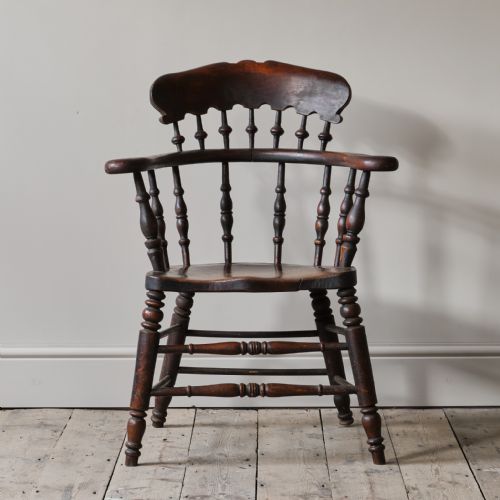
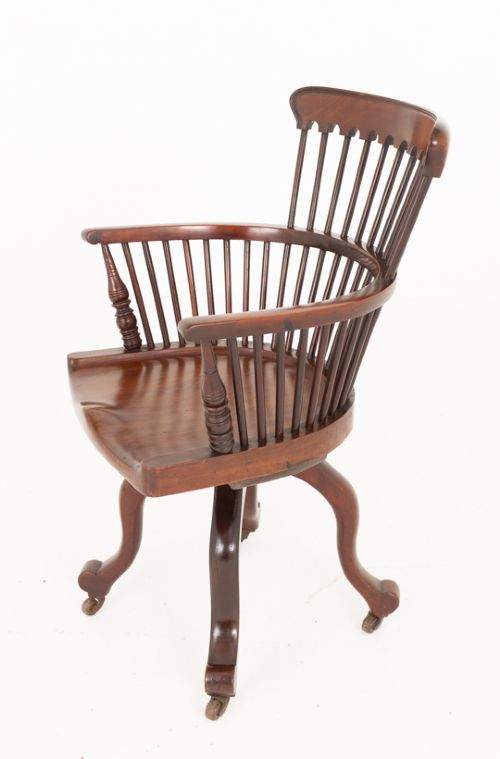
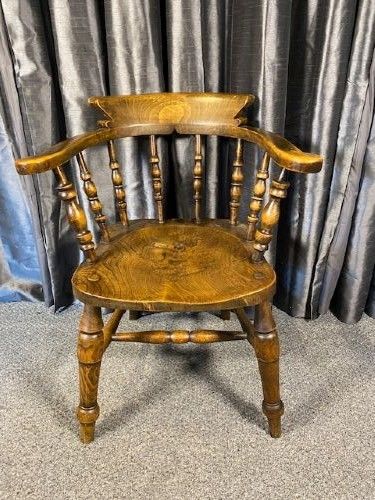
Traditional Captain Desk Chair
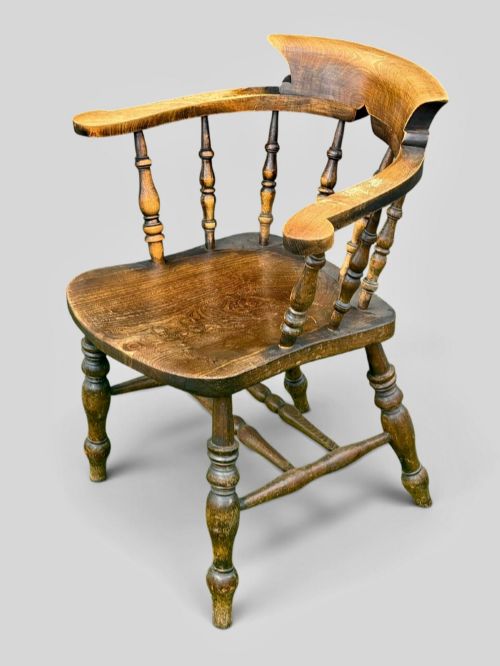
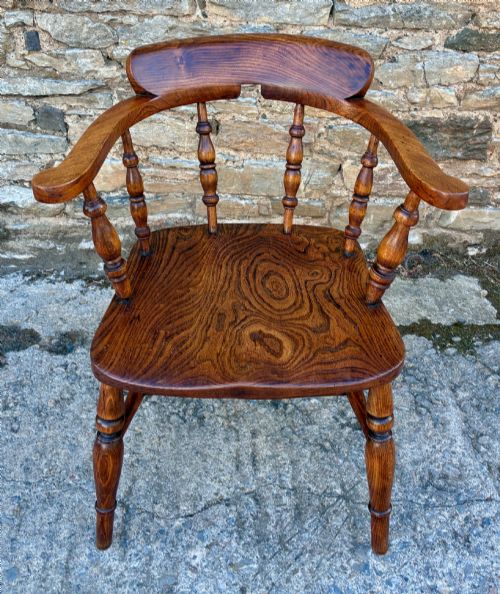
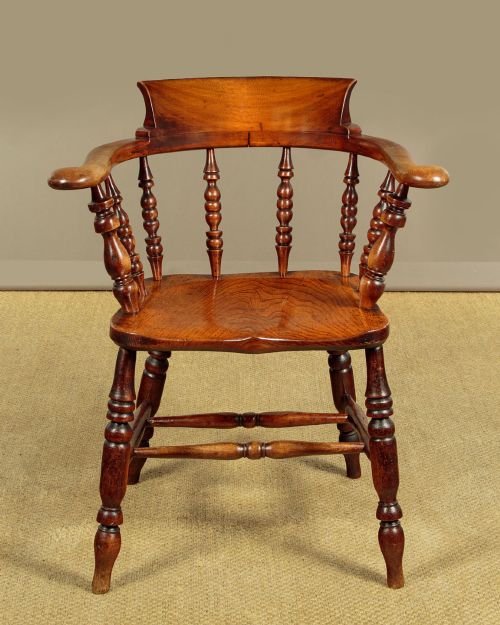
A traditional captain desk chair offers sturdy support at the desk, combining robust timber frames with low backs and comfortable elbow rests.
Traditional Captain Desk Chair
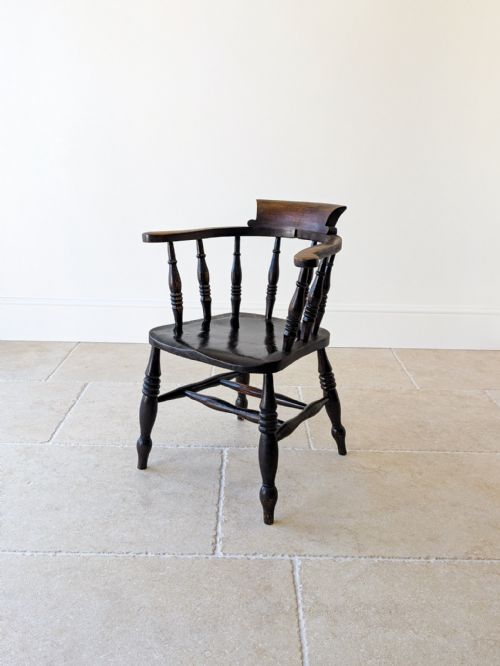
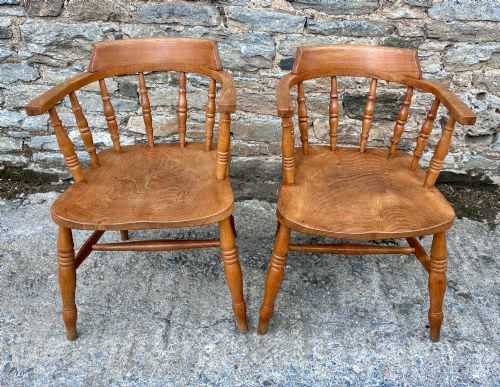
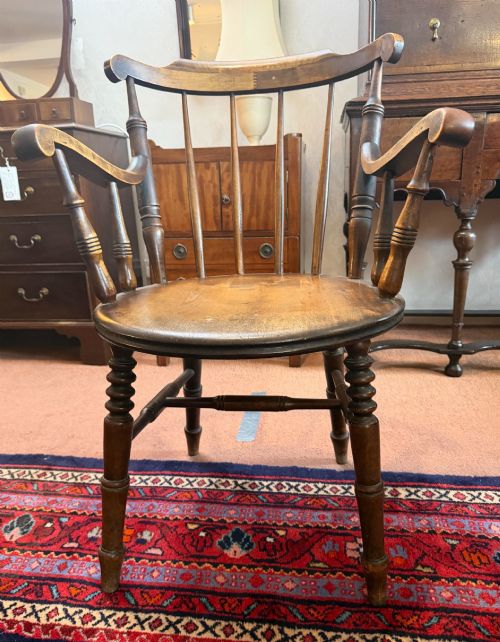
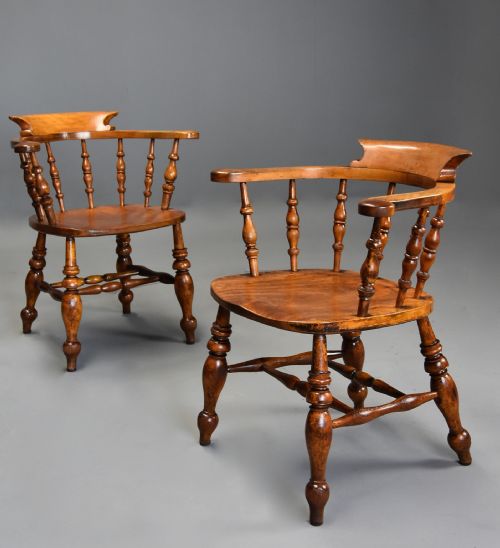
A traditional captain desk chair sits low to the ground with a rounded backrest supported by turned spindles, designed for long hours spent sitting at a desk or table. These seats draw heavily from vernacular furniture traditions, often sharing roots with Windsor chairs and smokers bows.
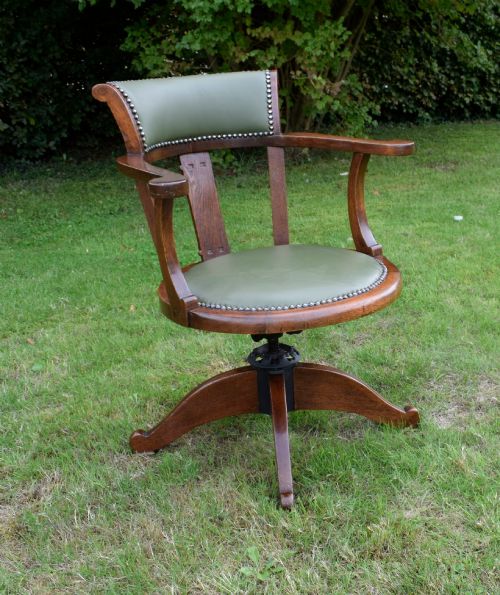
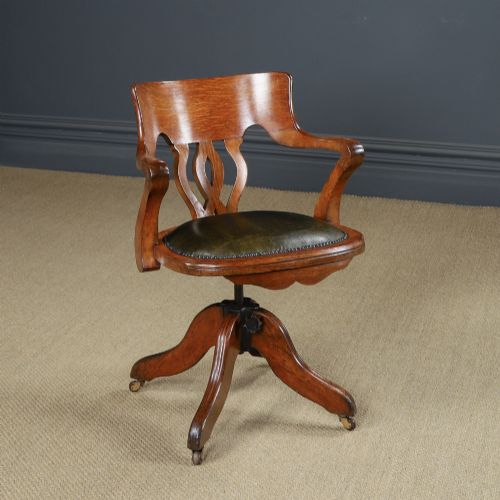
The versions most common here include nineteenth-century elm and ash armchairs, alongside later oak and mahogany swivel models fitted with leather pads. Buyers encounter regional English country examples built from local hardwoods like beech, birch, and yew alongside formal library armchairs.
Makers shaped these timber frames for heavy daily use in offices, studies, and country houses. The low profile and continuous arm bow allowed occupants to turn easily while keeping warm near a fire or working closely at a ledger.
How they were made
Cabinet makers and bodgers constructed traditional captain desk chairs using solid timbers like elm for seats, ash for bent bows, and beech for turned spindles. Artisans relied on steam-bending techniques to curve thick lengths of wood into smooth armrests, securing them into the seat with wedged tenon joints.
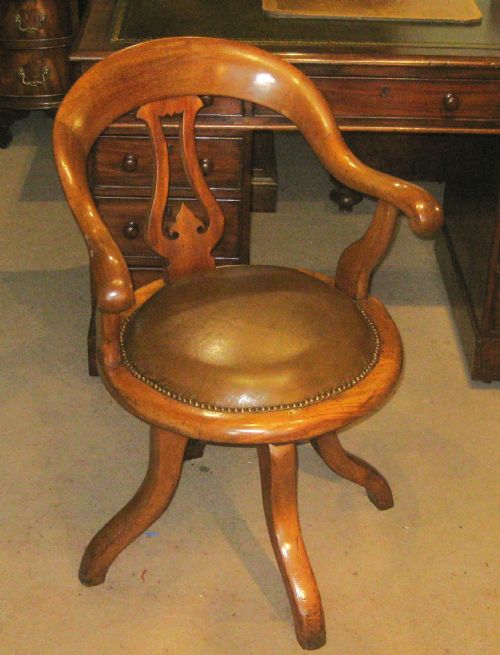
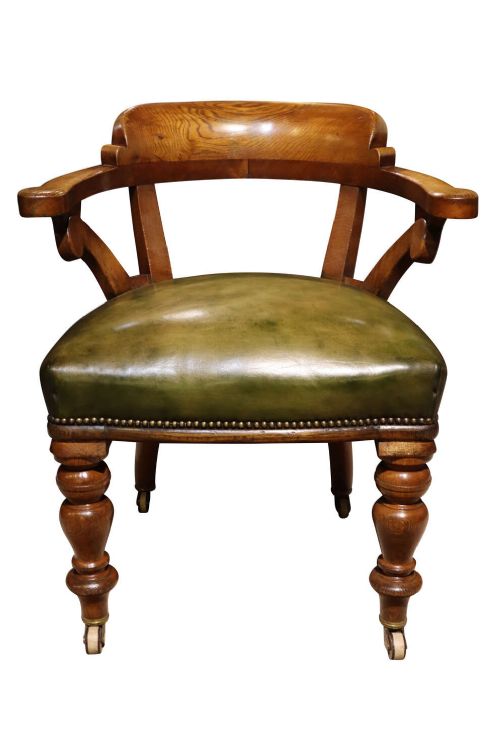
Many swivel and revolving variants incorporate iron mechanisms, brass fittings, and upholstery panels in green or brown leather. Sturdy four-legged bases, sometimes fitted with castors, support the weight of heavy timber frames and provide stability during office work.
Listings feature traditional captain desk chairs spanning the Victorian and Edwardian eras, constructed primarily from elm, ash, mahogany, and oak.
What varies in quality
Quality rests in the grain pattern of the seat timber, the crispness of the spindle turnings, and the natural patina built up over generations of use. Elm seats with deep figuring and rich colour command attention, showing the honest wear of past decades.
Structural integrity sets apart superior examples, particularly where steam-bent arms meet the saddle seat. Solid joints, original timber screws, and smooth-turning revolving mechanisms distinguish well-preserved office chairs from heavily repaired or altered pieces.
The Traditional Captain Desk Chair Glossary
- Smoker's Bow
- A sturdy wooden armchair with a low, continuous back rail and spindle supports, closely related to the captain's chair. These seats appeared widely in English country houses and public spaces during the nineteenth century.
- Windsor Chair
- A wooden chair constructed with upright spindles inserted into a solid sculpted seat rather than joined to a frame. Provincial makers produced numerous regional variations across England.
- Carver Chair
- An armchair designed to match a set of dining chairs, usually placed at the head of a table. These pieces often served double duty at writing desks in domestic settings.
- Spindle
- A slender, turned wooden rod used vertically to support the back rail of an armchair. Makers shaped these components on lathes to provide structural strength and visual detail.
- Patina
- The deep, lustrous surface sheen developed on timber over many decades through handling, polishing, and natural ageing. Collectors look for this quality as an indicator of genuine age.
Traditional Captain Desk Chair: Frequently Asked Questions
What is a traditional captain desk chair?
A traditional captain desk chair is a sturdy wooden armchair featuring a low rounded backrest, armrests, and a solid sculpted seat.
These pieces evolved from nineteenth-century Windsor designs and smokers bows, serving as practical seating for offices, libraries, and studies.
How do I date an antique wooden desk chair?
Dating relies on observing construction methods, timber choices, and tool marks left by makers on the underside of the seat. Victorian and Edwardian examples often combine elm seats with ash or beech spindles and turned legs.
Later models from the early twentieth century frequently incorporate iron swivel mechanisms, brass castors, and leather upholstery pads.
Are these chairs comfortable for daily use?
Yes, the sculpted wooden seats and supportive low armrests were originally built for long hours of administrative work. Many revolving versions also offer adjustable heights and leather padding for added comfort.
Their sturdy timber construction makes them exceptionally durable for modern home offices.
What woods were used to build these chairs?
Elm served as the primary choice for the solid, dished seats because its interlocking grain resisted splitting under heavy use. Ash, beech, and oak provided strong, flexible material for the bent arm rails and turned spindle supports.
Finer library and office variants sometimes utilised mahogany or yew.