
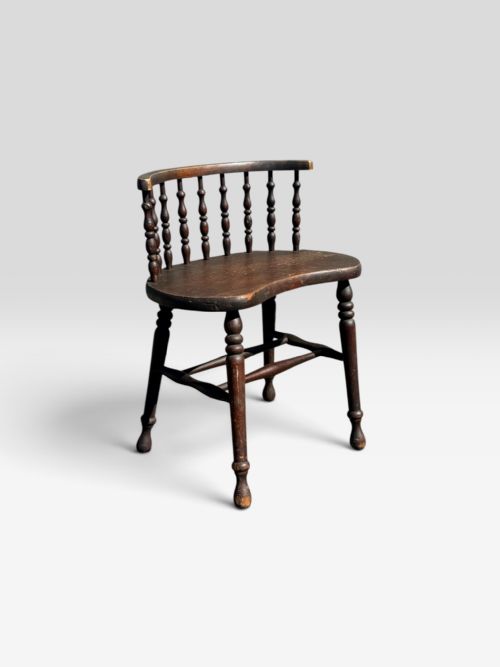
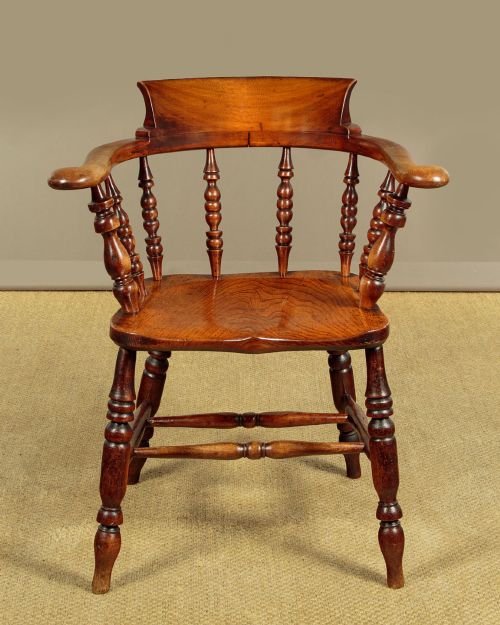
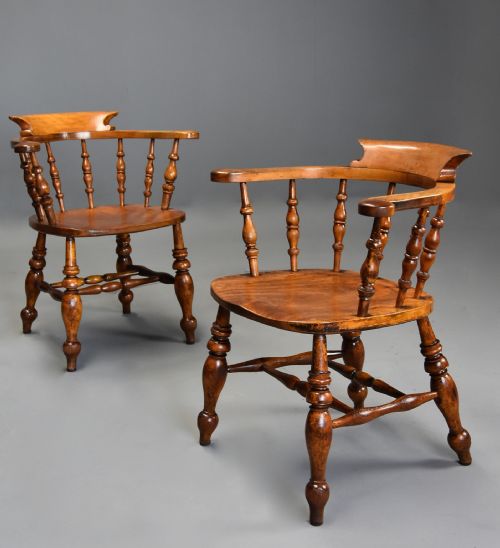
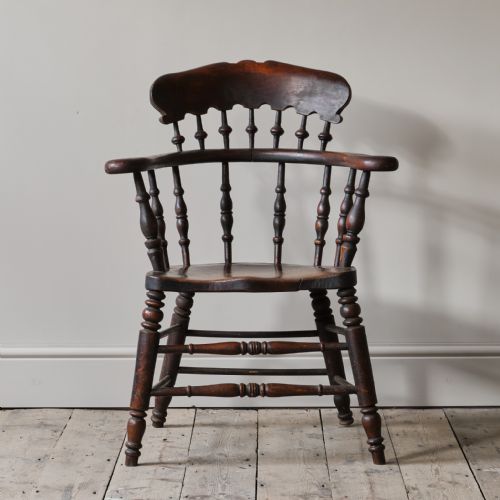
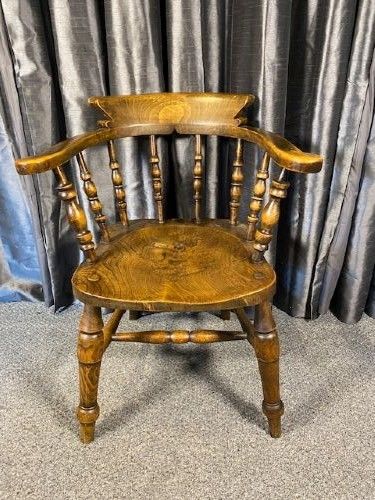
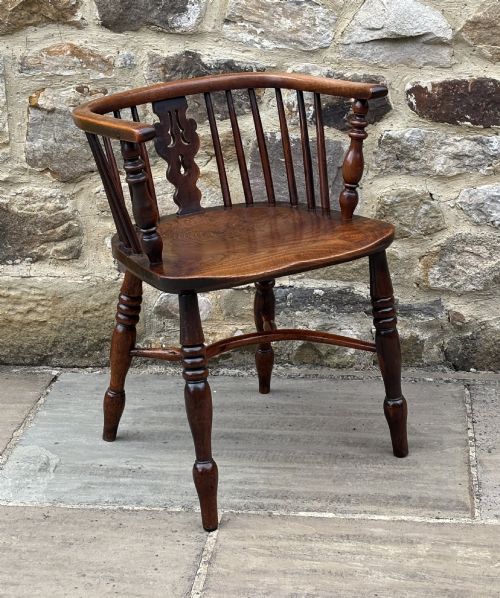
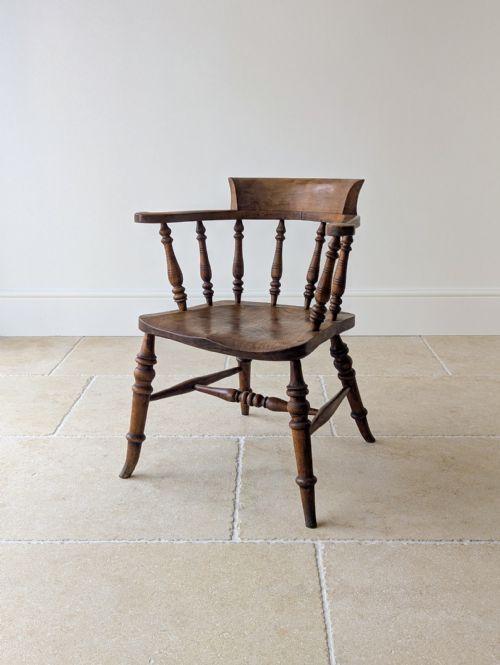
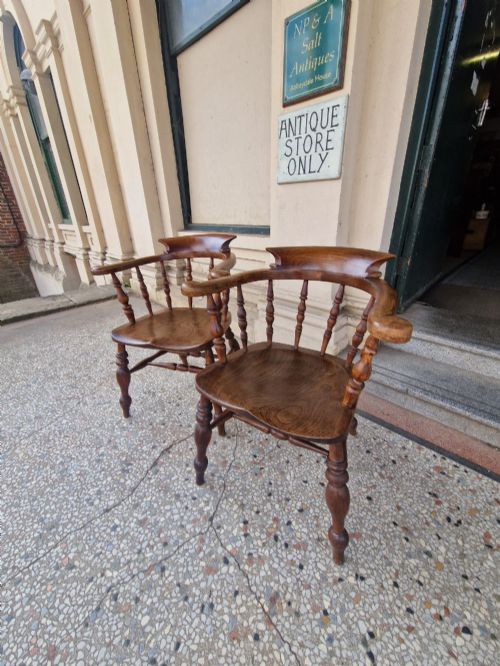
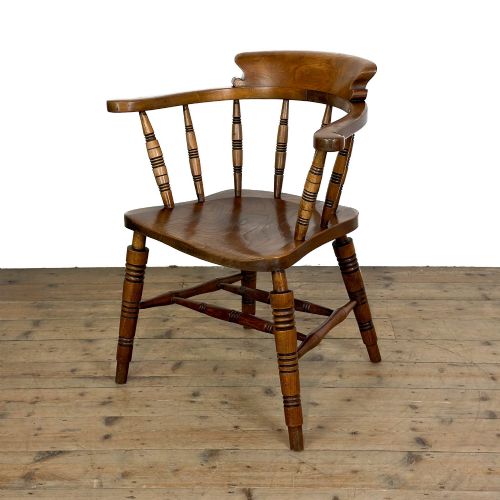
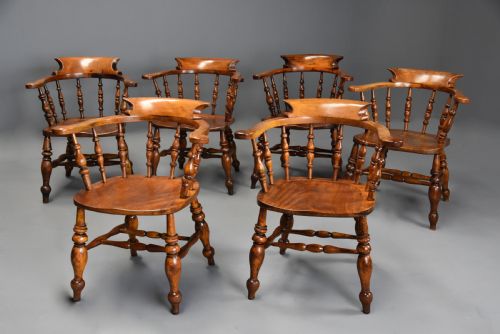
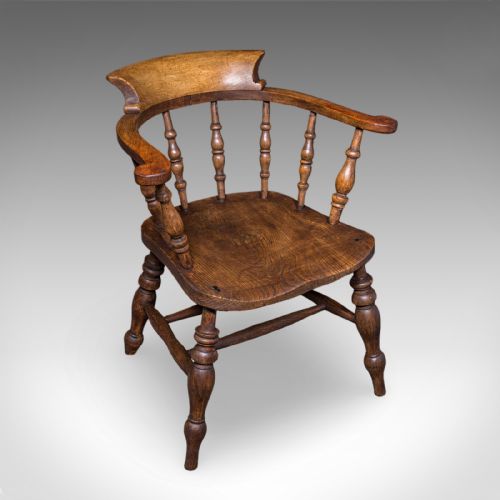
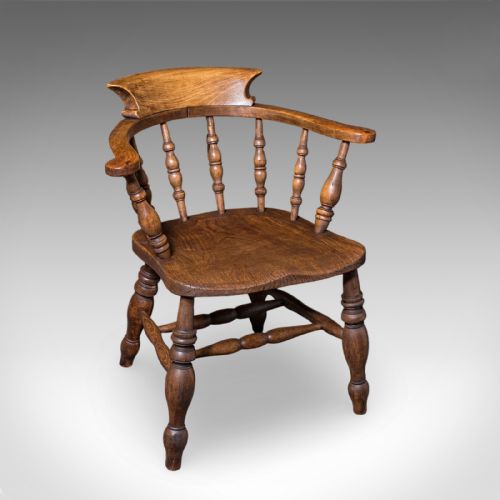
Captains Bow Chair
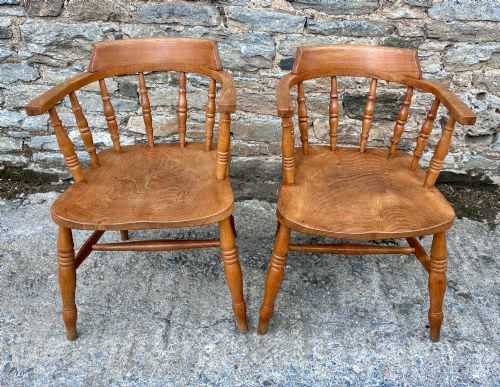
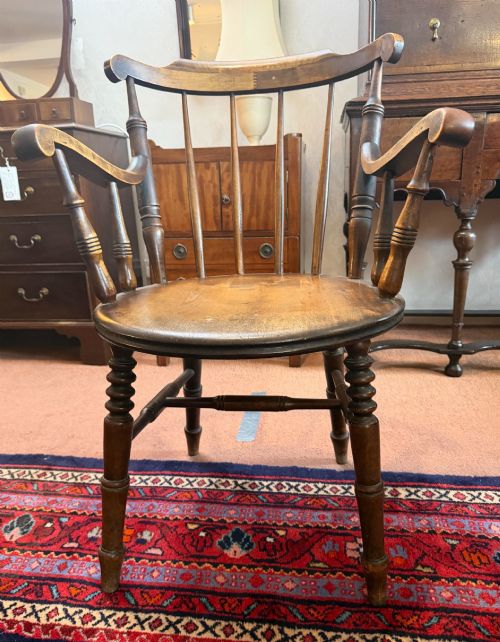
When you search for a captains bow chair, you are looking at robust nineteenth and early twentieth century elbow seating built for comfort and utility.
Captains Bow Chair
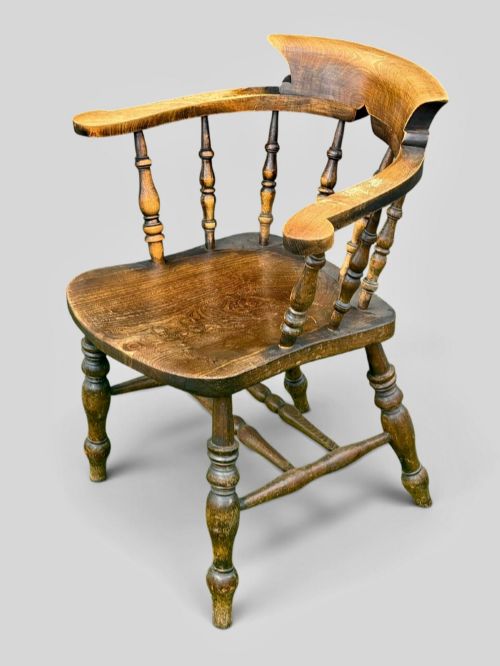
A captains bow chair sits at the intersection of traditional Windsor craftsmanship and sturdy domestic utility, commonly known in various forms as a smoker's bow or low-back armchair. These pieces emerge predominantly from Victorian and Edwardian workshops, spanning the mid-nineteenth century up to the early twentieth century.
Makers across English provincial regions, particularly around High Wycombe, produced these comfortable armchairs in significant numbers using regional hardwoods. The listings on this page demonstrate how these practical seats transition seamlessly from historical workspaces into contemporary living spaces.
How they were made
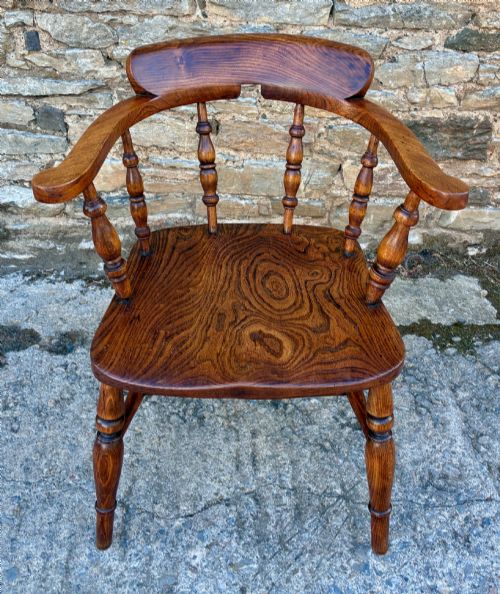
Construction relies heavily on traditional timber pairing, uniting tough elm seats with flexible ash, beech, or birch for the steam-bent bow backs and turned spindles. Craftsmen utilised wedge-tenon joints to secure the legs directly through the seat plank, ensuring long-term structural stability.
The distinctive curved backrest is achieved by steaming straight-grained wood until pliable, then bending it around a form to set its shape as it cools. Surface finishing often involves wax polish applied over decades of use, highlighting the natural grain of the oak, mahogany, or fruitwood components.
Several examples arrive with deliberately oversized arms once built to accommodate stubborn office paperwork or pipe-smoking squires.
What varies in quality
Quality rests in the harmony of the timber selection and the purity of the original construction without excessive replacement parts. Examples featuring deeply dished solid elm seats paired with thick, well-turned ash spindles demonstrate superior regional craftsmanship.
The grace of the continuous steam-bent arm bow and the depth of the timeworn surface patina dictate the visual standing of each piece. Superior items retain their original wedged leg joints and balanced proportions, showing crisp turning on the arm supports and legs.
J Elliott & Son·R Tyzack·Alsop
The Captains Bow Chair Glossary
- Smoker's bow
- A low-backed Windsor armchair featuring a continuous curved wooden rail serving as both backrest and arms. This form is frequently associated with domestic and tavern seating from the Victorian period.
- Bow-back
- A chair back constructed from a single piece of steam-bent timber curving around to form the upper frame. This technique provides both structural strength and comfortable arm support.
- Windsor
- A traditional chair construction method where legs and back spindles are wedged directly into a solid wooden seat rather than joining to a separate frame. These pieces often incorporate mixed timbers such as elm and beech.
- Patina
- The deep surface sheen and mellow colour developed by aged wood through decades of handling, polishing, and exposure. Collectors prize this indicator of genuine historical age.
- Dished seat
- A wooden chair seat carved into a hollow, ergonomic depression for comfort. This shaping is particularly pronounced in high-grade nineteenth-century elm examples.
Captains Bow Chair: Frequently Asked Questions
What is a captains bow chair?
A captains bow chair is a sturdy wooden elbow seat featuring a continuous curved backrest supported by turned spindles above a solid timber saddle seat. These designs evolved during the nineteenth century for use in offices, studies, and country houses.
They share close similarities with smoker's bow and low-back Windsor chairs, combining functional ergonomics with traditional vernacular woodworking techniques.
How do I date a captains bow chair?
Dating relies on observing construction methods, timber choices, and tool marks visible beneath the seat. Mid-nineteenth-century examples often display broader proportions and heavier ash-and-elm construction, while Edwardian versions can exhibit lighter framing.
Hardware, such as brass castors or leather upholstery additions on desk variants, also helps narrow down the production period toward the turn of the century.
Where were captains bow chairs used?
These chairs served primarily as practical seating in offices, captains' quarters on ships, studies, and country house smoking rooms. Their robust build made them suitable for daily workspace utility.
Today, they transition easily into modern homes as desk chairs, dining armchairs, or standalone accent seating in living spaces.
Are elm and beech common?
Elm and beech appear frequently because craftsmen paired their specific physical properties for chair production. Elm provided a tough, splinter-resistant wood ideal for carved saddle seats.
Beech, ash, and birch offered the straight grain and flexibility required for steam-bending the continuous arm bow and turning the supporting spindles.