

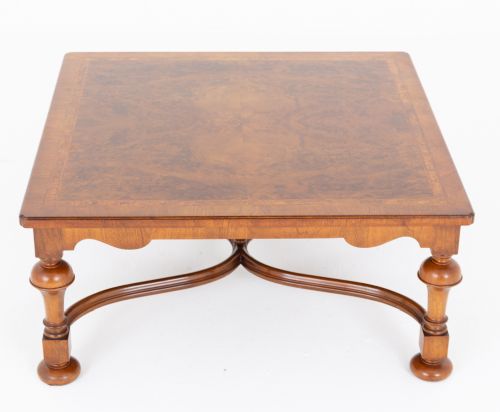
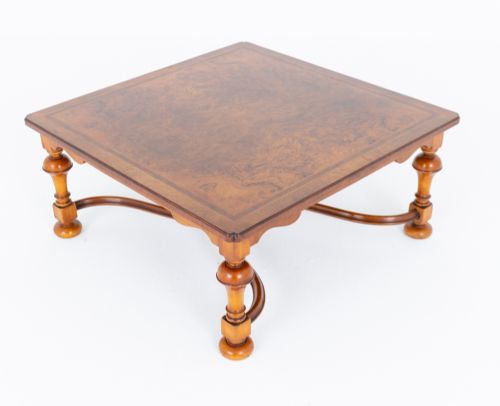
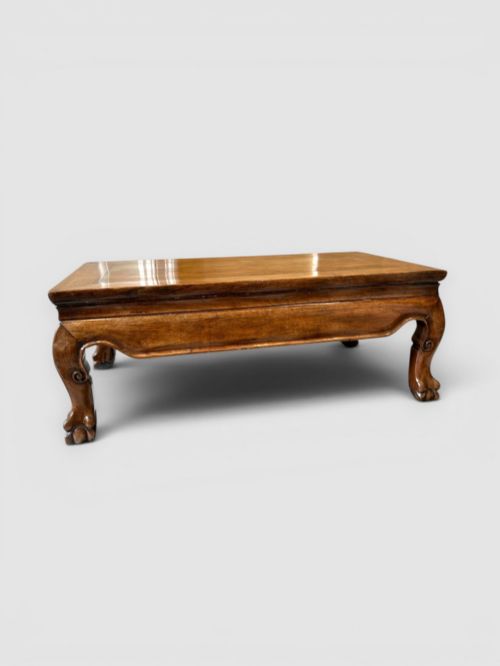
Traditional Brown Coffee Table
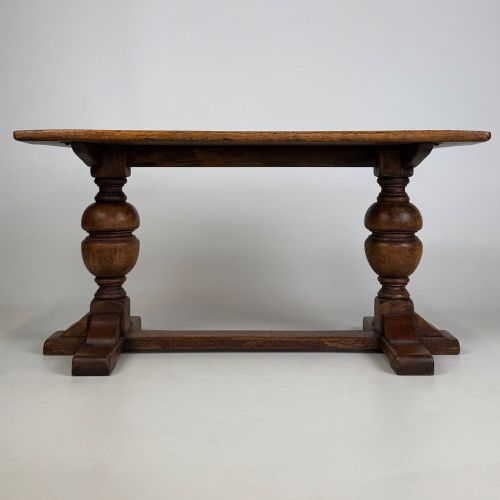
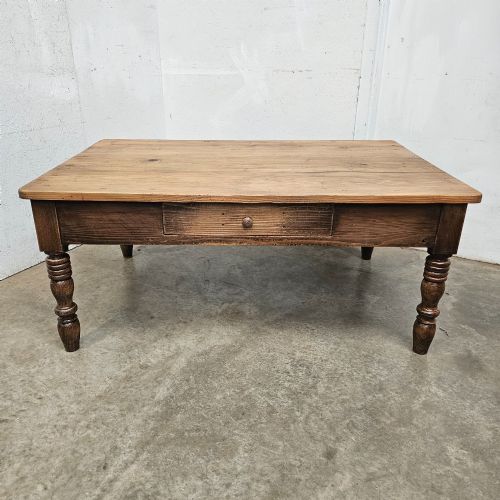
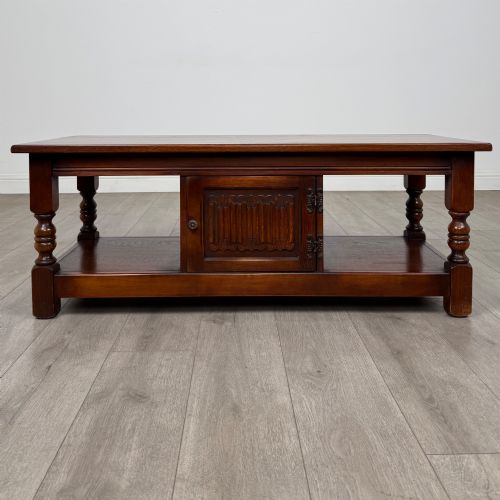
A traditional brown coffee table anchors a room with rich timber tones and solid construction spanning from the eighteenth century to the Edwardian era.
Traditional Brown Coffee Table
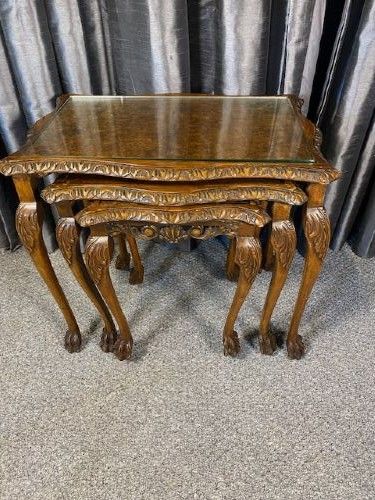
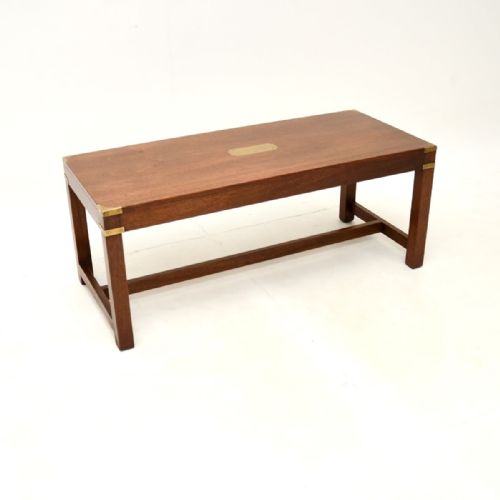
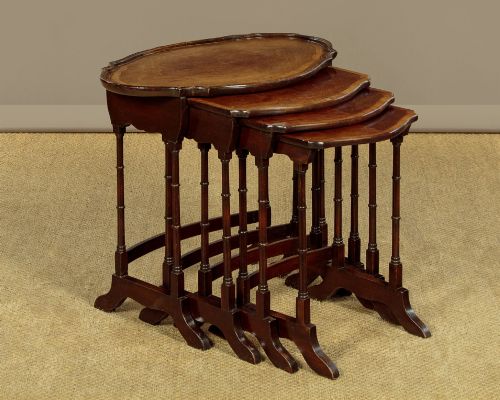
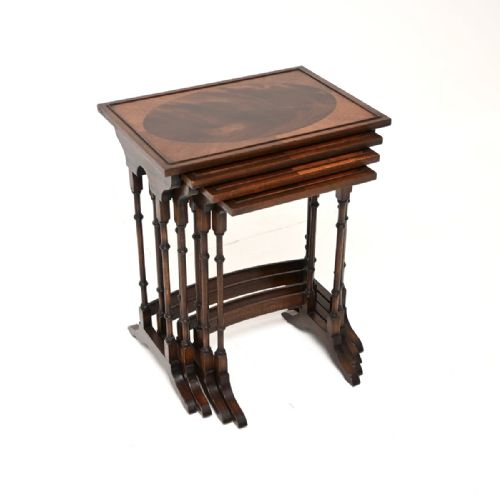
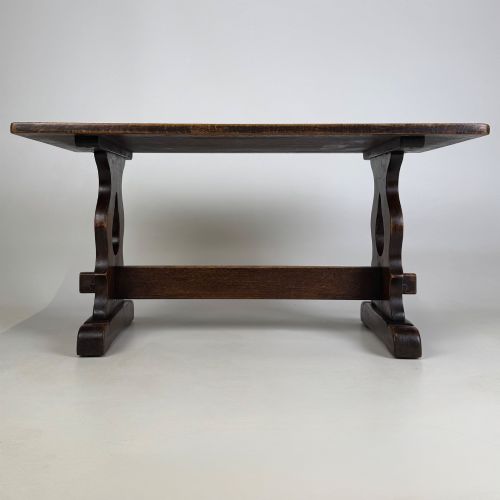
A traditional brown coffee table encompasses low wooden forms designed for living spaces, drawing on periods from the eighteenth century through to the Edwardian decades. Buyers find practical coffee tables alongside adapted side tables, nests of four tables, and low opium tables.
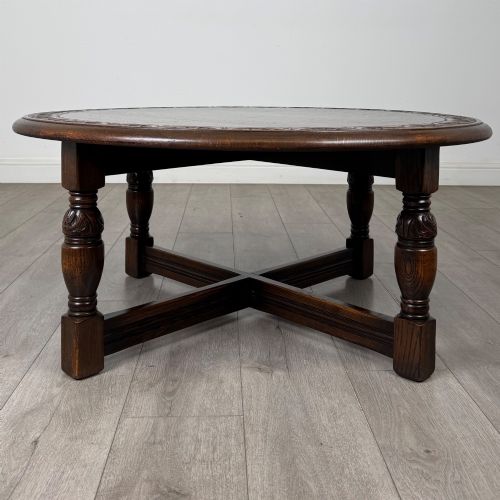
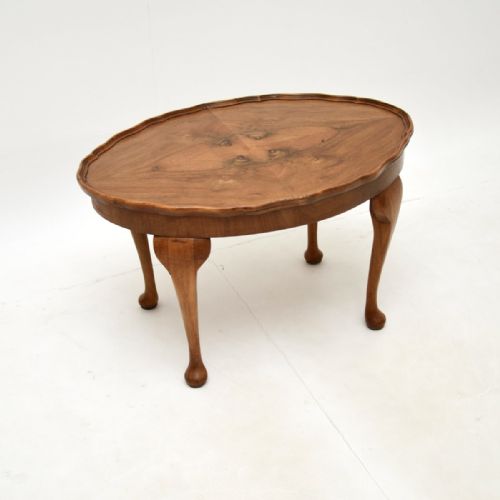
The selection on this page relies heavily on oak, mahogany, and walnut pieces from the nineteenth and early twentieth centuries. Common configurations include turned leg designs, tray tops, and carved walnut or oak structures reflecting revival styles like Carolean and Queen Anne.
How they were made
Craftsmen utilised timbers such as oak, mahogany, walnut, elm, and yew wood, often applying veneers like burr walnut or oyster veneer to create patterned surfaces. Solid planks formed sturdy rustic tops, while finer pieces incorporated inlaid satinwood or leather panels.
Construction techniques included turned legs, carved ornamentation, drop-side mechanisms, and folding stands. Brass fittings frequently complemented the darker timber bodies on tray tables and writing desks.
Listings feature woods including mahogany, oak, walnut, elm, yew, and fruit wood across the eighteenth, nineteenth, and early twentieth centuries.
What varies in quality
The refinement of the timber selection dictates the upper tier of the range, visible in figured walnut, oyster veneers, and detailed carving rather than plain utility boards. Superior pieces display thoughtful proportions and careful execution in revival styles.
Execution of secondary details, such as pie crust edges, inlay work, and stable turning, separates standard utilitarian furniture from finer decorative tables.
The Traditional Brown Coffee Table Glossary
- Nest of tables
- A set of graduated tables designed to slide one beneath another when not in use. These became particularly popular in Edwardian times.
- Tray top
- A table surface featuring a raised moulded edge to secure items from rolling off. They frequently sit upon removable folding stands.
- Oyster veneer
- Thin slices cut transversely from small branches or roots to produce circular or oval patterns resembling oyster shells. This technique appears on decorative walnut surfaces.
- Carolean style
- A revival style drawing on British design from the reign of Charles II, characterised by rich walnut and deep carving.
Traditional Brown Coffee Table: Frequently Asked Questions
How do I identify an oak coffee table?
Oak furniture displays a pronounced grain pattern with visible medullary rays, often showing a warm brown tone that deepens with age. Many pieces originate from the nineteenth or early twentieth centuries.
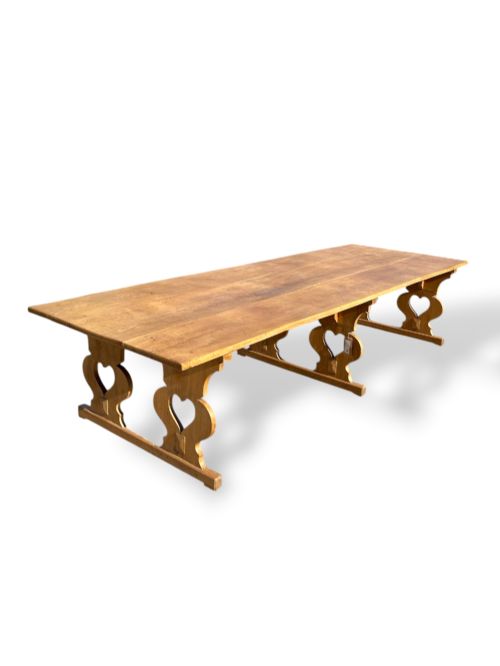
These tables range from rustic plank constructions to carved Jacobean revival designs, offering robust utility for daily living spaces.
What is a butler's tray table?
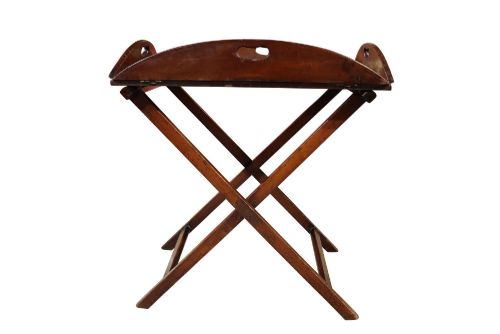
A butler's tray table consists of a removable wooden tray with hinged sides resting on a folding X-frame stand. Originally used for serving, the design translates well into a flexible low table.
Nineteenth-century examples in mahogany or walnut bring portability and traditional character to modern interiors.
How do I care for walnut veneer?
Walnut veneer requires protection from direct sunlight and excessive moisture to prevent the thin wooden layer from lifting or fading. Regular dusting with a soft cloth maintains the natural sheen.
Avoiding harsh chemical polishes preserves the grain patterns found on figured and burr walnut surfaces.