


Traditional British Rural Painting
Traditional british rural painting captures country life through oil on canvas and watercolour from the nineteenth and early twentieth centuries.
Traditional British Rural Painting
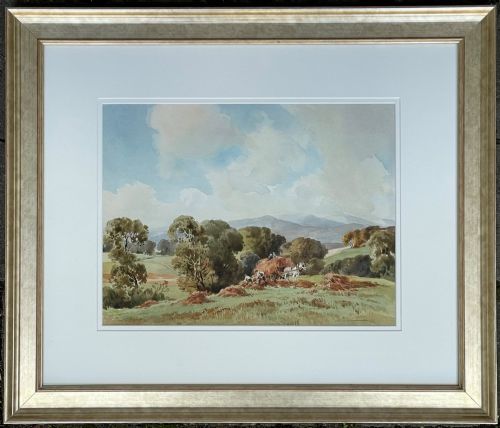
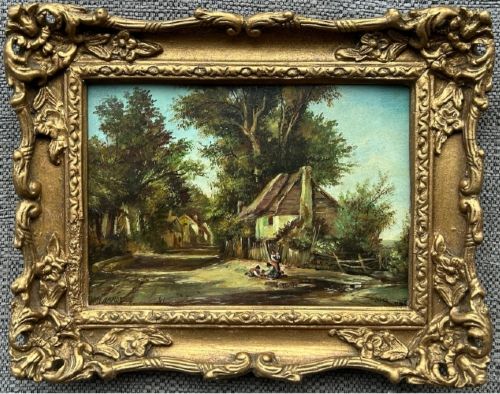
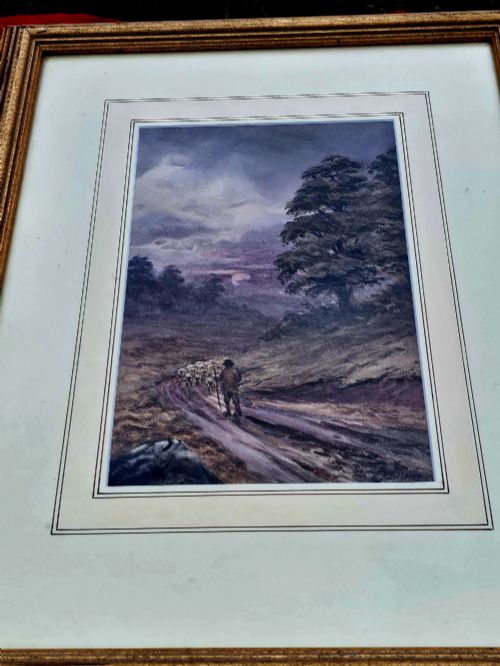
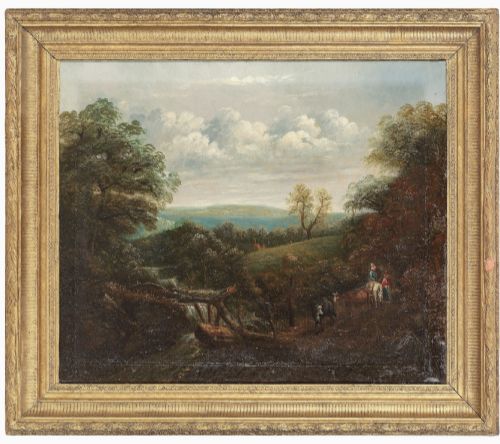
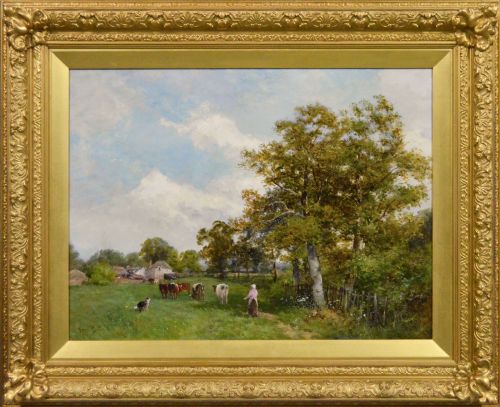
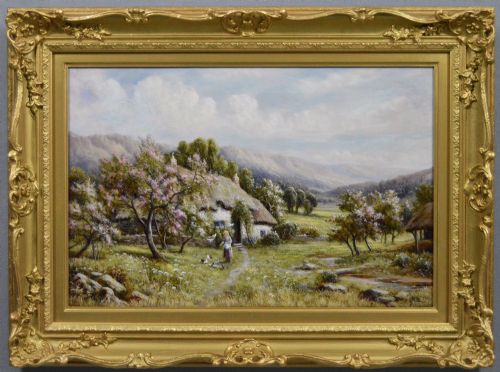
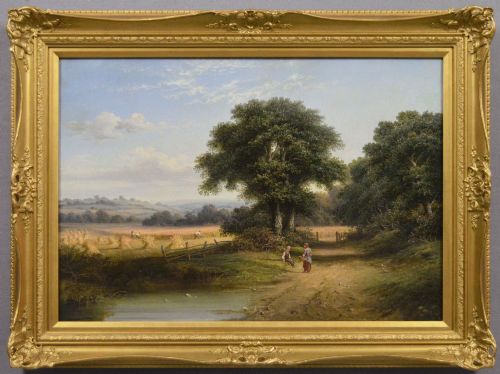
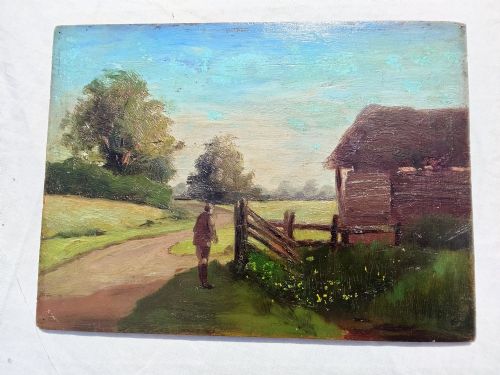
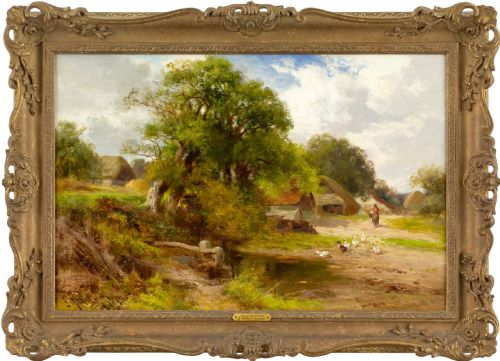
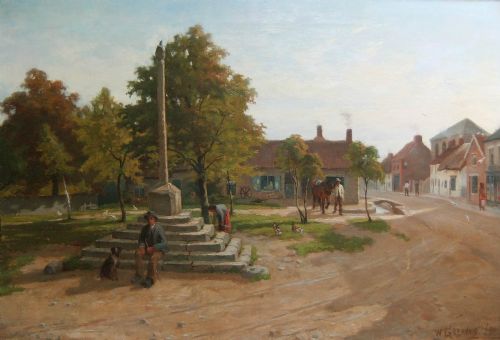
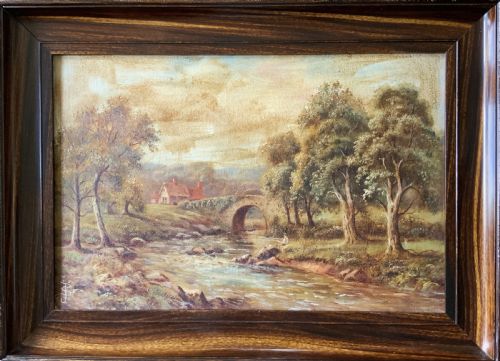
Traditional british rural painting portrays nineteenth and early twentieth century countryside scenes, encompassing farming landscapes, rivers, cottages, and agricultural labour. These works document rural life through depictions of harvest fields, sheep driving, and country paths across England, Wales, and Scotland.
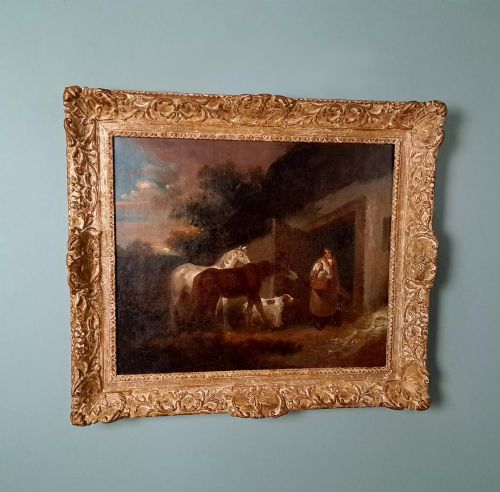
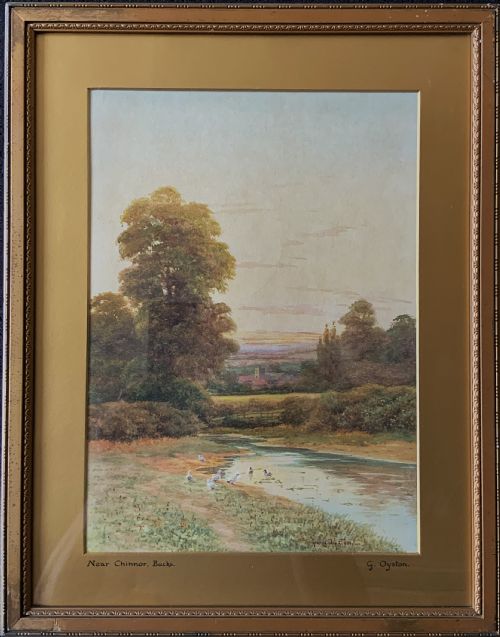
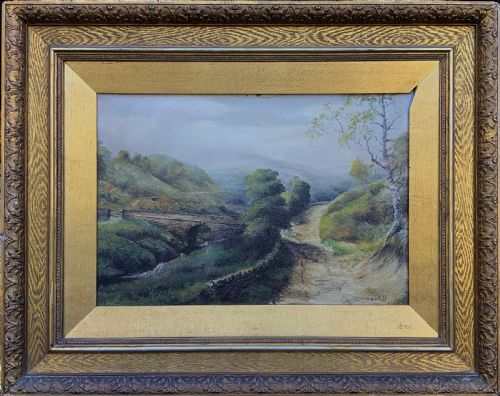
The pieces available most frequently comprise oil on canvas and watercolour paintings created by regional artists working within British Impressionism, Victorian pastoral, and the Norwich School. Buyers encounter framed watercolours on paper alongside substantial oil paintings on wooden panels and canvas.
Subjects range from quiet stream views and village cottages to busy scenes of hay cutting and livestock herding. The works reflect a period when artists turned their attention to the vernacular beauty of rural Britain.
Materials and methods
Artists painted primarily with oil paint on stretched canvas or wooden panels, utilising the rich texture of the medium to build depth in landscape foliage and skies. Watercolours on paper offer a lighter, more translucent record of countryside light and weather.
Framing forms an integral part of the physical object, with period wooden frames often housing the canvas or paper support. Pigments applied with brushwork document specific regional locations, from Yorkshire valleys to Dorset lanes.
Listings feature works spanning the nineteenth century, the Edwardian era, and the interwar period, executed in oil and watercolour.
Distinctions in quality
Quality rests upon the handling of light, atmospheric perspective, and the naturalistic rendering of figures and animals within the landscape. Works by established regional painters demonstrate greater control over composition and colour harmony than anonymous school pieces.
The depth of the pigment and the preservation of the original canvas or paper surface influence the visual impact of the painting. Stronger works capture specific weather and topographical detail with assured brushwork.
George Graham·Percy Lancaster·William Howard Hardy·William Joseph Shayer Senior·David Bates·Robert John Hammond·Walter Heath Williams·George Oyston·Sydney Yates Johnson·John Horace Hooper·Owen Bowen·Henry Charles Fox·William Henry Mander·Herbert Royle·Reginald Grange Brundrit·Fred Lawson·Henry John Yeend King·William Hoggatt·William Sydney Cooper·Henry John Boddington·Robert Finley McIntyre·Robert Winchester Fraser·James William Booth·William Langley
The Traditional British Rural Painting Glossary
- Oil on Canvas
- Pigment mixed with drying oil applied to a woven fabric support stretched across a wooden frame. This medium allowed artists to build rich layers of colour and texture.
- Watercolour
- Paint consisting of water-soluble pigments used on paper supports. It provides transparent washes that capture delicate effects of light and atmosphere.
- Norwich School
- A regional art movement of painters working in Norfolk inspired by local landscapes. It represents the first provincial art movement in Britain.
- Victorian Pastoral
- A genre celebrating idealized rural life and agricultural labour. These scenes emphasise harmony between humanity and the countryside.
- British Impressionism
- A late nineteenth and early twentieth century movement focusing on everyday subject matter and visible brushstrokes. Artists sought to capture transient effects of natural light.
Traditional British Rural Painting: Frequently Asked Questions
What subjects appear in these paintings?
The works depict agricultural activities such as hay cutting, harvest gathering, and herding sheep along country lanes. Views frequently include rivers, thatched cottages, and rural workers in nineteenth and early twentieth century settings.
Artists focused on specific regional landscapes across Britain, recording local topography and rural architecture with observational detail.
How do I care for an oil painting?
Oil paintings require stable indoor humidity away from direct sunlight to prevent canvas warping and pigment degradation. Dusting should occur gently with a soft, dry brush without applying cleaning solutions.
Keeping the work away from extreme temperature fluctuations preserves both the canvas support and the original period frame.
How do I date a rural painting?
Dates are identified through artist signatures, biographical records, and stylistic indicators such as clothing styles or agricultural methods depicted in the scene. Canvas stamps and framing techniques also offer clues to the period of creation.
Many works carry specific dates in the artist signature or accompanying documentation from the period.
Where were these paintings created?
Painters worked outdoors in rural locations across England, Wales, and Scotland, recording regional landscapes from Yorkshire and Dorset to the Thames valley. Artists travelled to specific farming communities and riverbanks to paint from direct observation.
Local topography is often named directly in the title or inscribed on the reverse of the panel or stretcher.