




Victorian Harvest Scene Canvas
A victorian harvest scene canvas brings the golden fields and rural toil of the nineteenth century straight into your room.
Victorian Harvest Scene Canvas
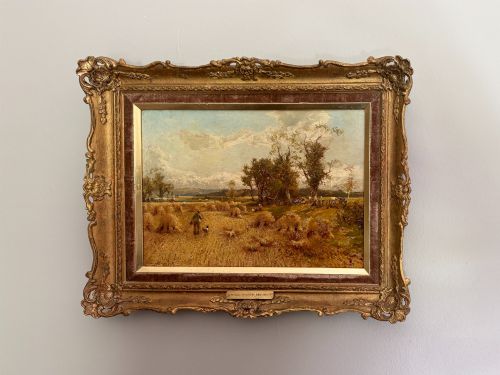
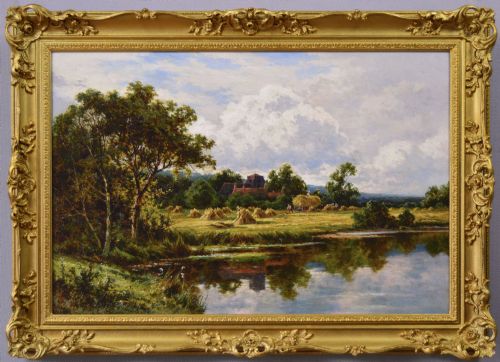
A victorian harvest scene canvas is an oil painting on canvas capturing agricultural life, haymaking, and cornfields from the nineteenth and early twentieth centuries. These works range from pastoral landscapes by Henry H Parker to detailed genre scenes featuring farmworkers, horses, and loaded wagons.
The pieces on this page span several decades from the mid-nineteenth century up to the early twentieth century, reflecting British Impressionism, Victorian Pastoral, and Victorian Realism. Common settings include specific English locations like the Vale of Evesham, Sussex, and Nottinghamshire.
Collectors encounter various interpretations of the theme, from tranquil sunset views to bustling fields of wheat and grapes. Most examples are housed in their original gesso and giltwood frames.
What Varies in Quality
The distinction between works rests on the artist's ability to render light, atmosphere, and human or animal anatomy with conviction. Finer canvases display confident brushwork and a balanced composition that draws the eye naturally across the rural landscape.
Frame preservation also influences the overall integrity of the piece, as original period giltwood and gesso mouldings add considerable character when they survive intact alongside the canvas.
Keep an eye out for the occasional stray farm dog keeping watch over the cornfield while the heavy horses haul the harvest home.
Henry John Boddington·James William Booth·Henry H Parker·Walter Heath Williams·Arthur Walker Redgate·Joseph Paulman·Henry John Kinnaird·Frederick William Jackson·George Cole·William Greaves·Joseph Thors·Alfred Augustus Glendening Snr·John Clayton Adams·Arthur Heinrich Wilhelm Fitger
The Victorian Harvest Scene Canvas Glossary
- Canvas
- A heavy woven fabric stretched across a wooden frame to serve as the support for oil paintings. It provides a durable surface that holds textured brushstrokes effectively.
- Gesso
- A plaster-like mixture applied to wooden frames as a base for gilding. It allows craftsmen to carve intricate relief details before adding gold leaf.
- Giltwood
- Wood carved and coated with gold leaf or gold paint. It was extensively utilised for nineteenth-century picture frames to enhance the warmth of oil paintings.
- Genre painting
- Artwork that depicts aspects of everyday life by depicting ordinary people engaged in common activities. Harvest scenes fall neatly into this tradition by recording agricultural labour.
- British Impressionism
- A late nineteenth-century movement focusing on light and brushwork applied directly to outdoor scenes. Artists adopted these methods to render natural harvest lighting.
Victorian Harvest Scene Canvas: Frequently Asked Questions
What periods do these canvases date from?
The works shown originate from the nineteenth and early twentieth centuries, spanning movements from Victorian realism to British impressionism.
Dates on these pieces stretch from the eighteen-sixties through to the nineteen-twenties, capturing a changing era of rural art.
Are the frames original to the paintings?
Many examples retain their period wooden frames finished with gesso and giltwood or gold leaf. These surrounds were chosen to complement the warm autumnal tones of the harvest subject.
Checking the reverse of the canvas often reveals clues regarding the framing history and past ownership.
How should I hang a large oil painting?
Large canvases require sturdy wall fixings secured directly into studs or masonry to support the weight of the wooden stretcher and heavy gilt frame. Position the artwork away from direct heat sources and strong sunlight to protect the oil paint.
Maintain stable room humidity to prevent the canvas fabric from slackening or the gesso frame from cracking over time.
What subjects appear alongside harvesters?
Artists frequently included farmworkers with horses, carts laden with hay, and domestic animals such as dogs within the cornfield settings. Specific regional landscapes, including the river Kennet and the Vale of Evesham, provide the geographical backdrop.
Some compositions focus on the final load of the harvest day, while others capture grape harvest celebrations.