
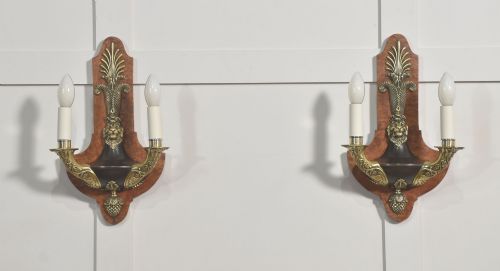
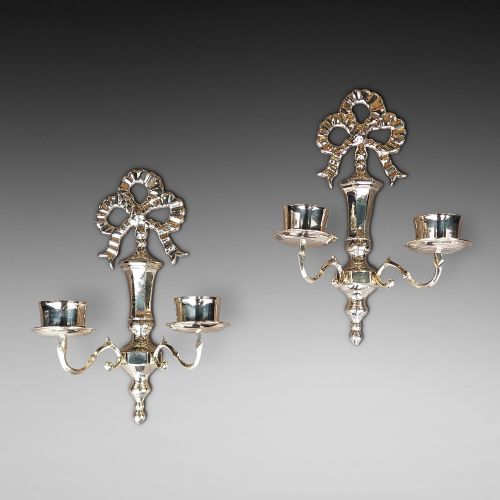
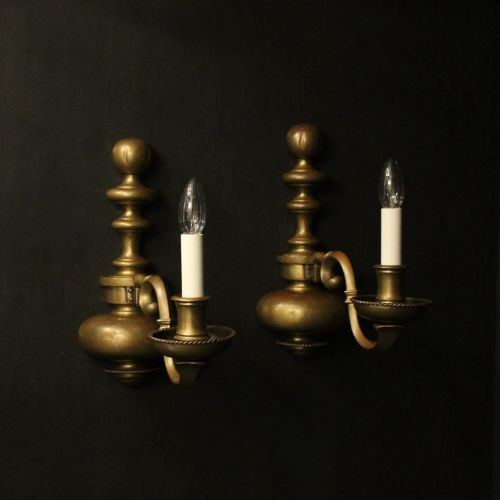


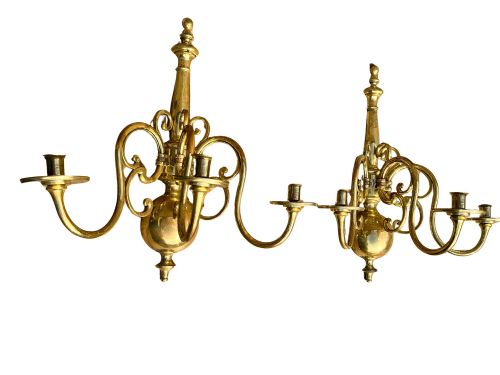


Traditional Brass Sconces Pair
Traditional brass sconces pair fixtures bring immediate character to a room, offering warm illumination through matched metalwork from the Victorian, Edwardian, and early twentieth-century periods.
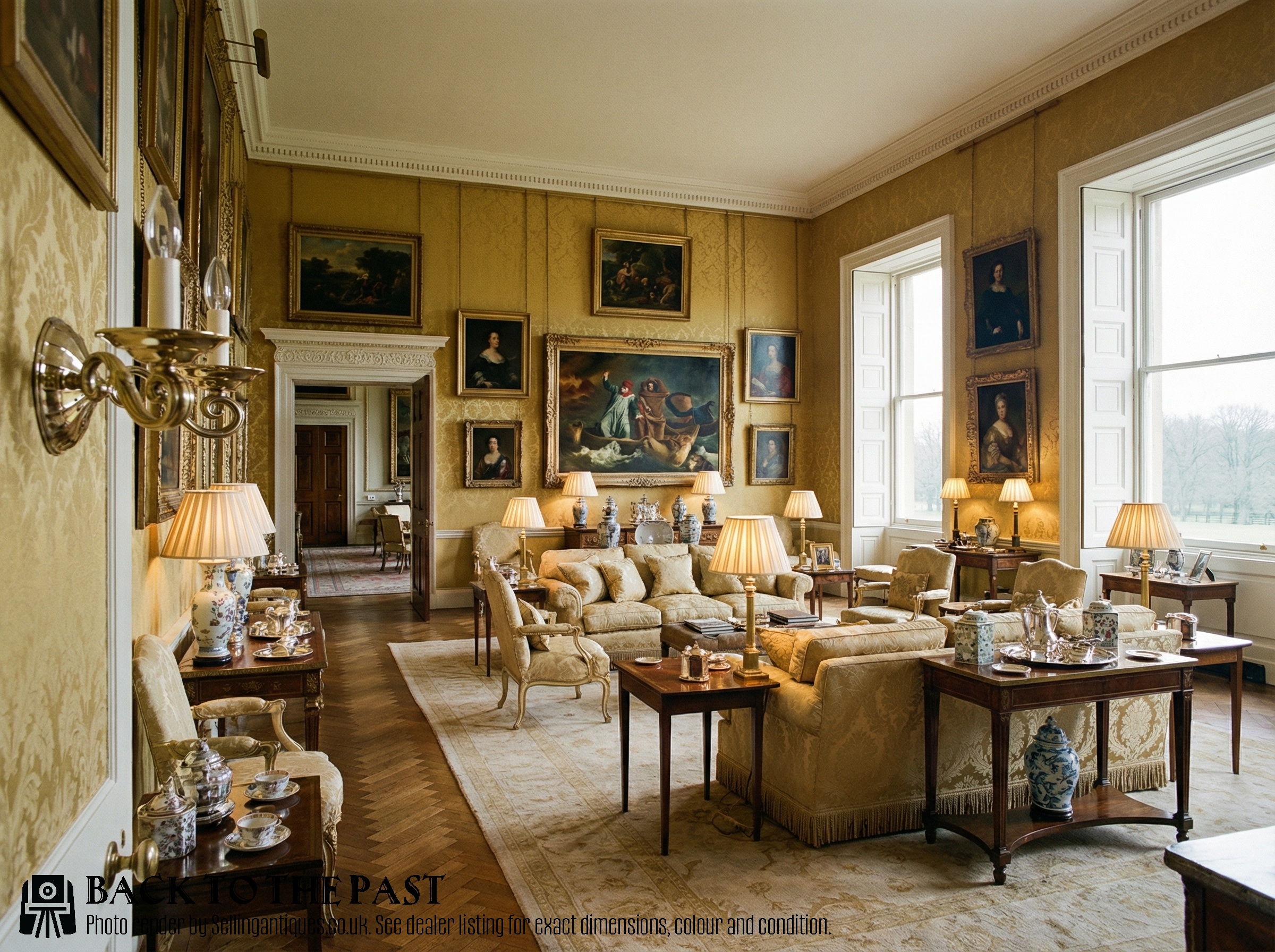
Traditional Brass Sconces Pair
These traditional brass sconces pair listings encompass matched sets of wall-mounted lighting and candlesticks spanning from the nineteenth century into the 1930s. Buyers searching this phrase encounter items designed for dual illumination, often styled in Adam Revival, Gothic, or Empire aesthetics.
The selection ranges from simple cast brass wall brackets to elaborate multi-arm fixtures incorporating glass, crystal, or bronze elements. Many pieces reflect specific periods such as the Edwardian era or Victorian epoch, utilising timber bases like oak and mahogany alongside the dominant metalwork.
Materials and construction methods
Items rely heavily on brass, cast brass, and bronze, frequently combined with secondary materials such as oak, mahogany, glass, and crystal. Metal components are cast, turned, or patinated to achieve different surface finishes, ranging from bright gilded effects to darker antique tones.
Wooden elements like barley twist columns or backplates are turned and joined with the metal fittings using traditional hardware. Fixtures often incorporate multiple branches or arms designed to hold candles or early electrical fittings.
Carriage lamps once illuminated dark nineteenth-century pathways before finding a second life indoors as dramatic wall lighting.
Factors of distinction
Quality rests in the crispness of the casting and the weight of the metal utilised in the arms and backplates. Finer examples display deliberate chasing, balanced proportions, and integrated decorative motifs rather than plain, mass-produced stampings.
The harmony between matched pairs indicates the level of original craftsmanship, where hand-finished details show consistency across both items. Superior pieces also integrate complementary materials like cut crystal drops or turned hardwoods with precise joinery.
F. & C. Osler
The Traditional Brass Sconces Pair Glossary
- Brass
- An alloy of copper and zinc used extensively for its warm metallic tone and durability in decorative lighting. It takes various finishes from polished bright to patinated dark.
- Sconce
- A wall-mounted lighting fixture designed to hold candles or electric bulbs, projecting light outward into a room. These often feature decorative backplates to reflect the light.
- Patinated
- The surface appearance acquired by metal through age or chemical treatment, creating a darkened or mellowed skin. This finish highlights the underlying texture of the bronze or brass.
- Adam Revival
- A neoclassical style drawing on ancient Roman and Greek architecture, characterised by symmetry, delicate swags, and urn motifs. This aesthetic appears frequently in late nineteenth-century metalwork.
Traditional Brass Sconces Pair: Frequently Asked Questions
How do I mount traditional wall lights?
Wall fixtures typically secure to structural backing using appropriate screws through the main backplate. Professional installation is recommended to ensure secure fixing to walls and safe integration with electrical wiring where converted.
Heavier multi-branch models require solid wall anchors to support the combined weight of the metal and glass components safely.
Can these fixtures be wired for electricity?
Many antique candle brackets and wall lights are adapted for modern electrical wiring by running internal cables through the original arms. Qualified electricians can usually handle this conversion while preserving the external period appearance.
It remains important to check individual descriptions to determine whether a piece retains its original candle fittings or has already been converted.
How should I clean antique brass?
Maintenance generally requires only gentle dusting with a soft, dry cloth to protect the existing surface finish and accumulated patina. Avoid harsh chemical cleaners or abrasive polishes that strip away historical character and thin the metal surface.
Preserving the natural ageing on bronze and brass helps maintain the authentic visual appeal of nineteenth and early twentieth-century pieces.
What defines Edwardian lighting style?
Edwardian pieces often reflect lighter, more refined interpretations of earlier historical designs, coinciding with the rise of Arts and Crafts influences. These items frequently combine brass with natural timbers like oak to create functional, elegant domestic furnishings.
The aesthetic values simplicity of line alongside traditional hand-working techniques, moving away from heavier Victorian ornamentation.