
Double Arm Candle Sconces
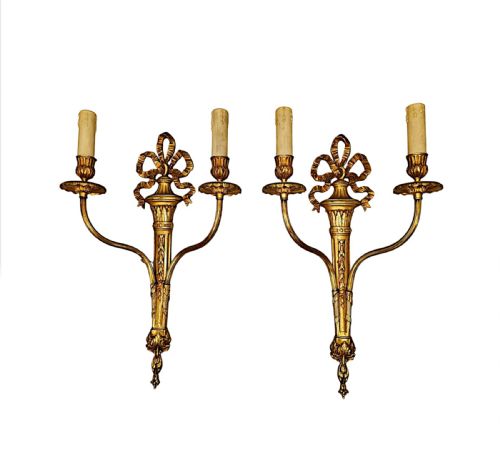
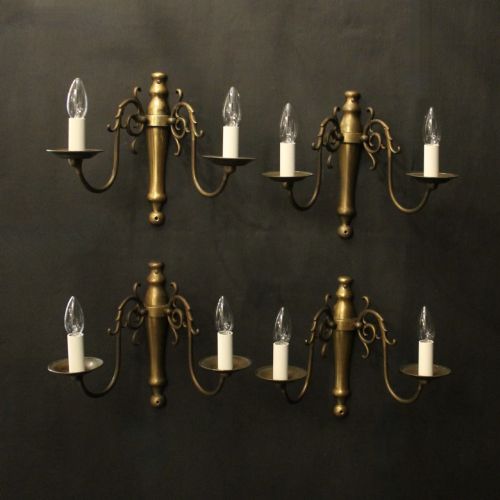
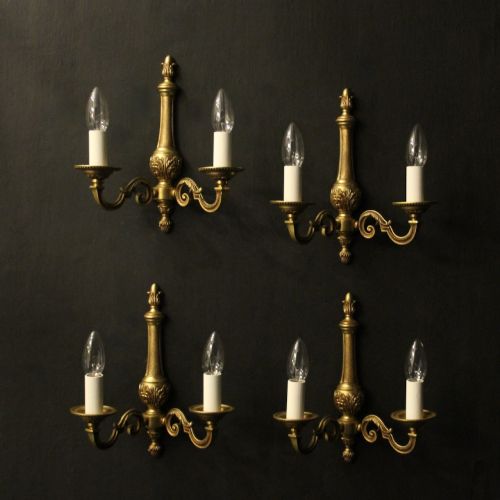
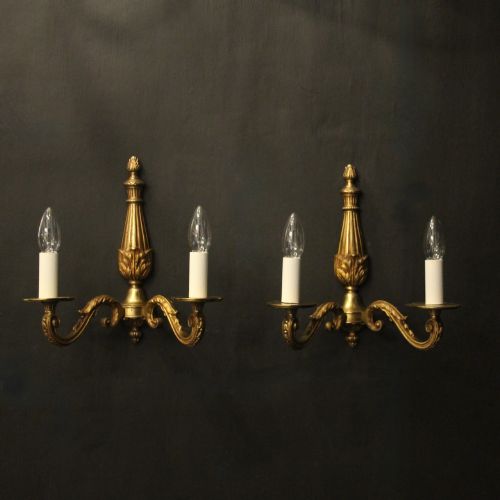
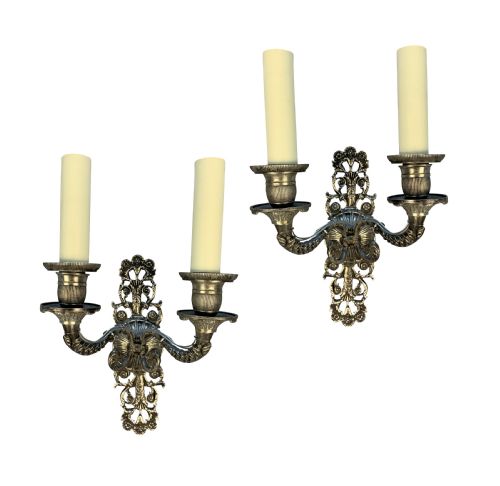
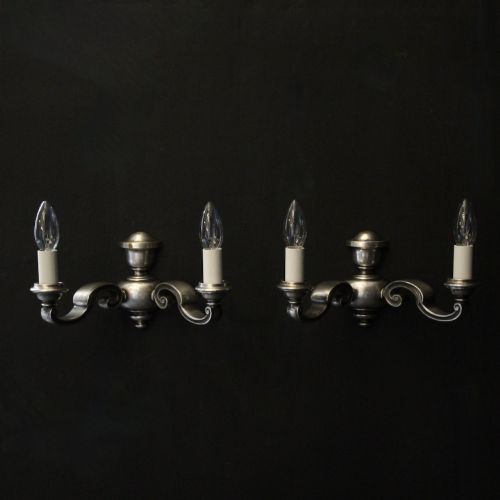
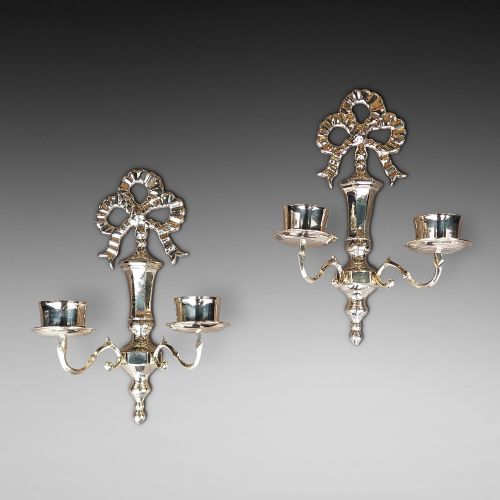
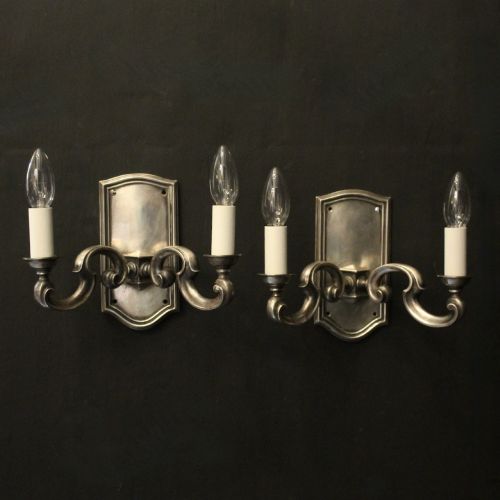
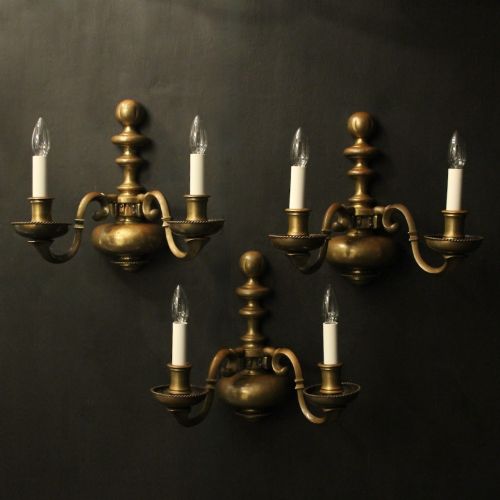
Double arm candle sconces bring soft illumination to a wall, taking the form of gilded bronze, brass and silver plate from the nineteenth and early twentieth centuries.
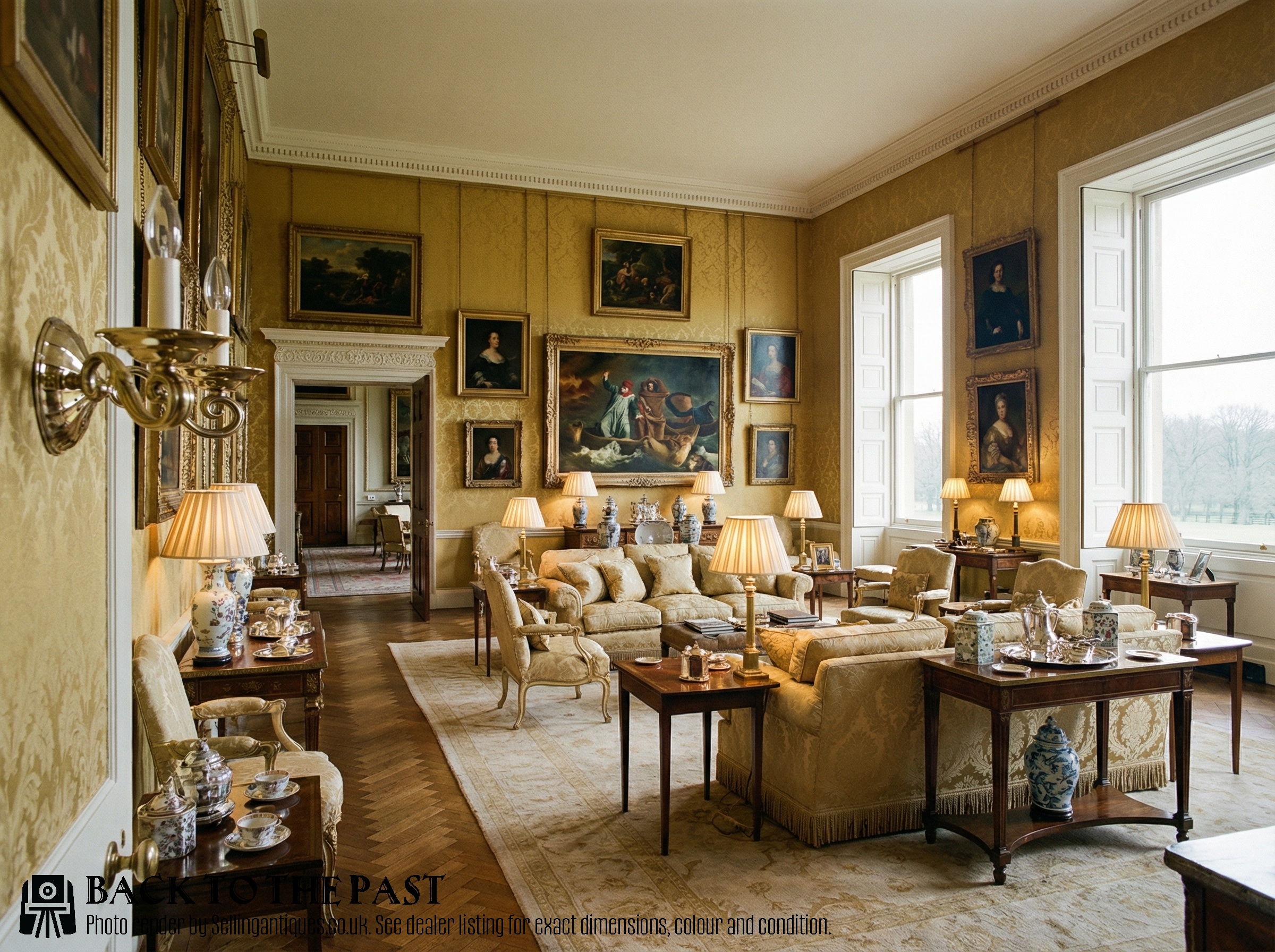
Double Arm Candle Sconces
When you search for double arm candle sconces, you encounter wall-mounted lighting fixtures designed to hold two candles at once. These pieces emerge predominantly from the nineteenth century, the Edwardian era and the decades leading up to 1930.
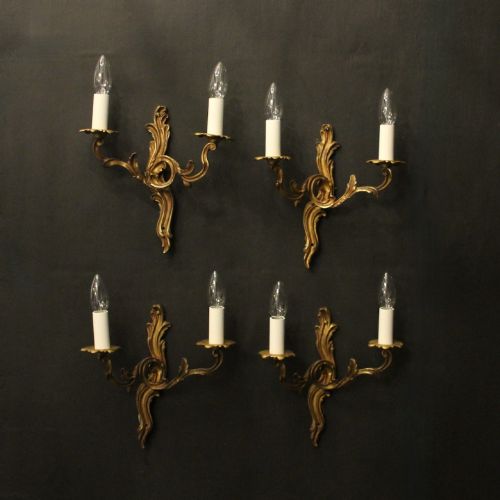
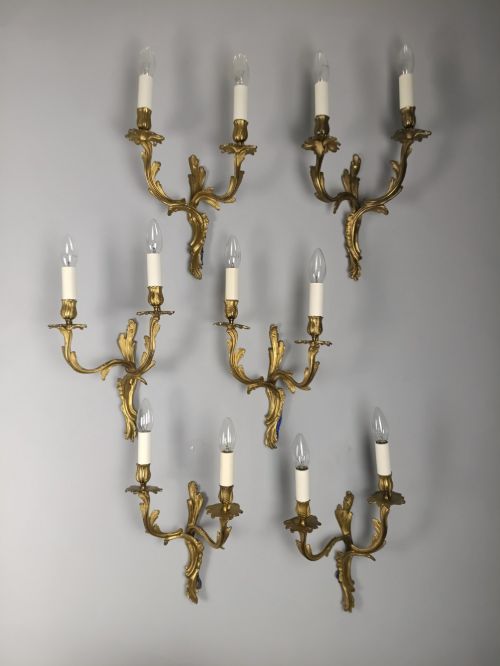
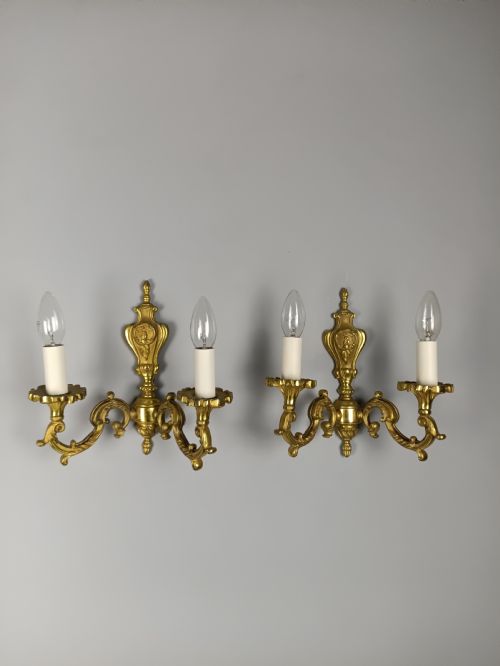
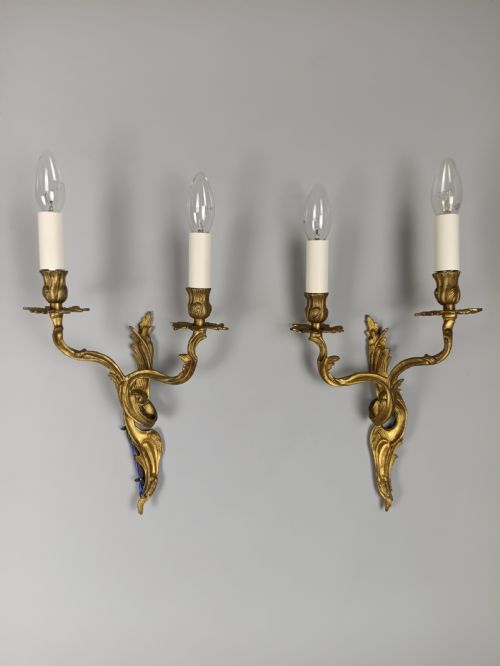
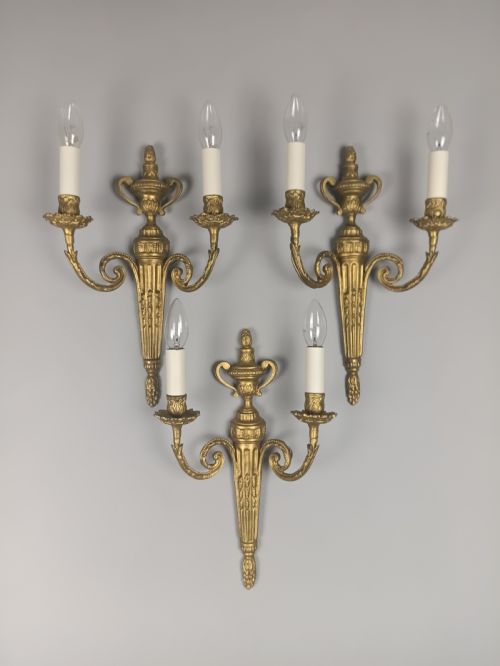
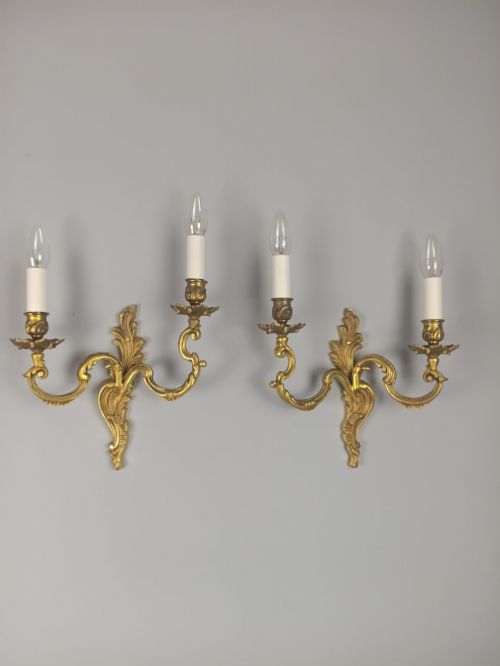
The selections available here lean heavily toward French workshops influenced by Rococo, Neoclassical and Empire styles, alongside English brass and silver-plated interpretations. Pairs and larger sets appear frequently, often taking the form of twin-arm wall lights or candelabra adapted for the wall.
Makers drew on historical revivals, creating pieces that range from ornate Rococo scrolls to restrained Adam and Georgian designs. You will find that most examples balance decorative metalwork with functional twin arms intended to project candlelight across a room.
How they were made
Makers utilised cast brass, bronze and ormolu as the foundation for the majority of these fixtures, frequently applying a layer of gilding to enrich the surface. Silver plating also appears on both English and French examples, providing a brighter metallic sheen.
Casting and chasing techniques allowed artisans to shape intricate foliate scrolls, backplates and candle arms, particularly in French Rococo and Empire pieces. Giltwood provides an alternative medium in certain Florentine wall lights, offering carved detail rather than cast metal.
Listings span brass, bronze, ormolu and silver plate, reflecting nineteenth-century and early twentieth-century manufacturing traditions.
What varies in quality
The refinement of the casting and chasing marks the primary distinction between standard production and superior work. Crisp detail in the acanthus leaves, urns and scrolling arms indicates a maker who invested considerable time in finishing the metal after it left the mould.
The weight and depth of the gilding or ormolu further define the upper tier of pieces, where rich gold tones remain intact across complex surfaces. Heavier gauge brass and bronze provide structural integrity that lighter stamped metal simply cannot match.
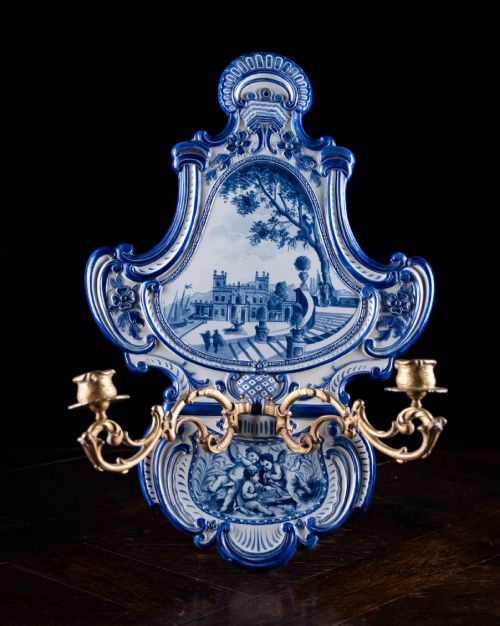
F. & C. Osler·Villeroy & Boch
The Double Arm Candle Sconces Glossary
- Ormolu
- Finely ground high-carat gold mercury-gilded to bronze, creating a rich metallic finish typical of fine French decorative objects. It requires gentle dusting rather than harsh chemical cleaning to preserve the surface.
- Rococo
- A decorative style characterised by asymmetrical scrolls, shell motifs and organic curves. This aesthetic dominated many French wall lights produced across the nineteenth and early twentieth centuries.
- Empire
- A neoclassical style inspired by the art of ancient Rome and Greece, favouring symmetry, military motifs and classical drapery. Pieces from this tradition often display architectural rigour and formal balance.
- Silver plate
- A thin layer of silver bonded to a base metal core, such as copper or brass, to give the appearance of solid silver. It offers a bright reflective quality suited to domestic interiors.
- Backplate
- The flat or shaped section of metal that secures the sconce firmly to the wall while supporting the projecting candle arms. It often carries the principal decorative ornament of the piece.
Double Arm Candle Sconces: Frequently Asked Questions
How do I hang a heavy bronze sconce?
These fixtures require secure fixing into solid masonry or direct attachment to wall studs using appropriate screws and rawlplugs. Because cast bronze and brass carry substantial weight, relying solely on plasterboard can pull the fitting loose over time.
Ensure the backplate sits flush against the wall surface so that the weight distributes evenly. If wiring for electricity or aligning twin candle arms, check the plumb of the piece before final tightening.
Are these sconces wired for electricity?
Many wall lights from the early twentieth century and Victorian period were originally designed solely for candles, though some have received electrical conversions later in their lifespan. Examining the nozzle and backplate reveals whether a central channel exists for modern wiring.
Unconverted examples retain their original drip pans and candle cups intended for wax use. A qualified electrician can advise on how to adapt or maintain them safely depending on your domestic setup.
How do I date an antique wall light?
Dating relies on examining the casting quality, fixing screws, metal composition and stylistic cues such as Rococo revival or Edwardian neoclassical motifs. Older pieces often feature hand-finished chasing and threaded pins rather than modern machine-cut fasteners.
Comparing the form with dated examples helps narrow the period of manufacture, though many revival designs continued well into the twentieth century. Maker marks or stamps on the reverse of the backplate can also provide definitive clues.