
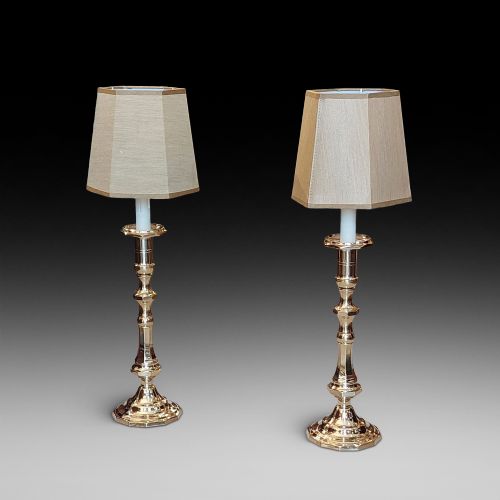
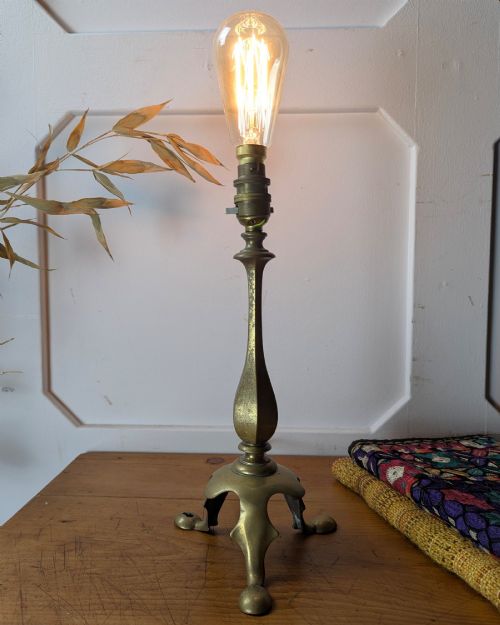
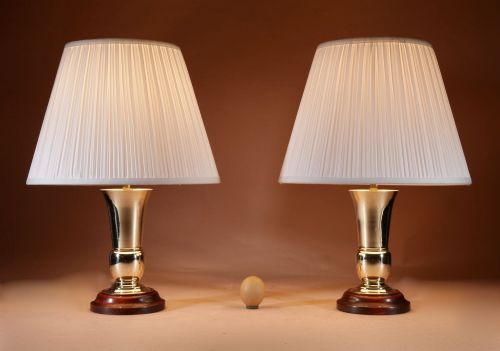
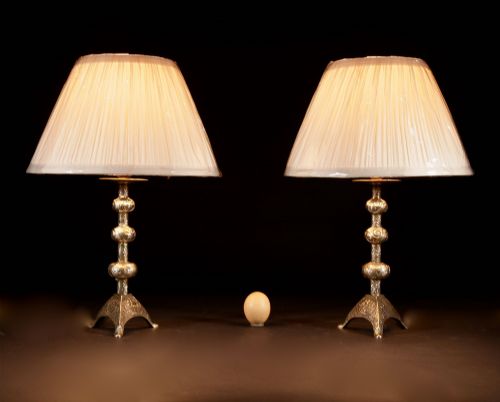
Traditional Brass Desk Lamp
A traditional brass desk lamp brings steady, focused illumination and period character to a workspace, drawing on centuries of metalworking and utilitarian design.
Traditional Brass Desk Lamp
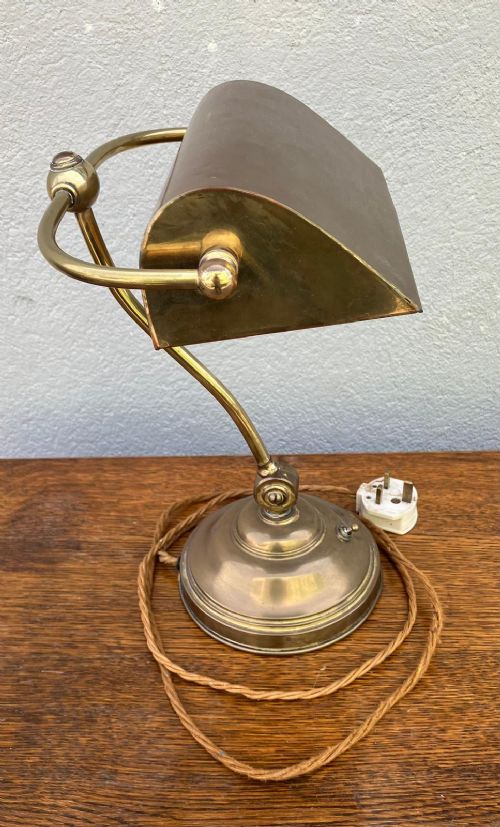
A traditional brass desk lamp encompasses utilitarian student lights, adjustable reading lamps, and bankers lamps from the Victorian, Edwardian, and early twentieth-century periods. These pieces adapt historical lighting mechanisms for daily use on writing desks and library tables.
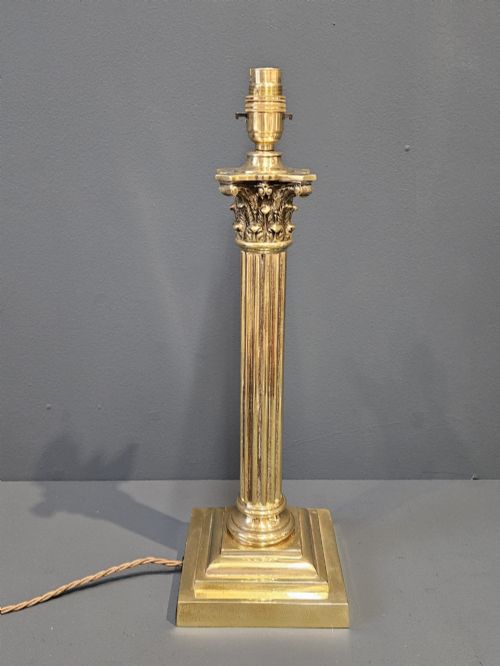
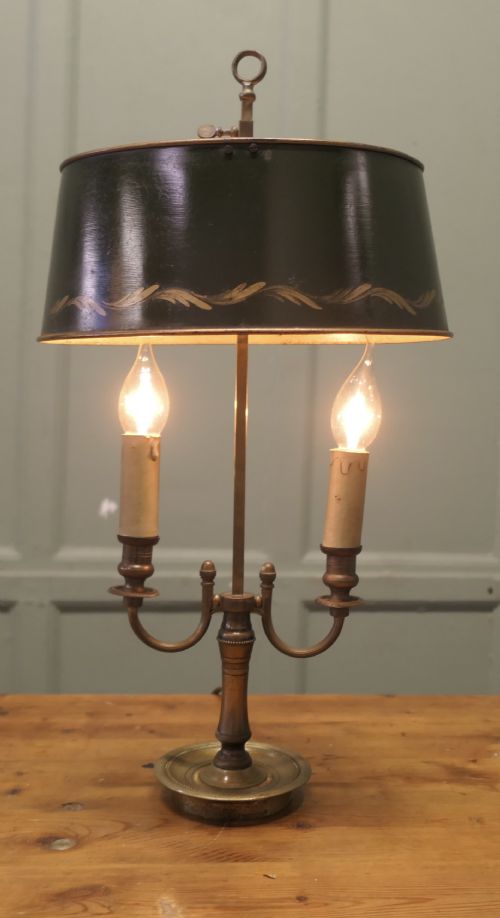
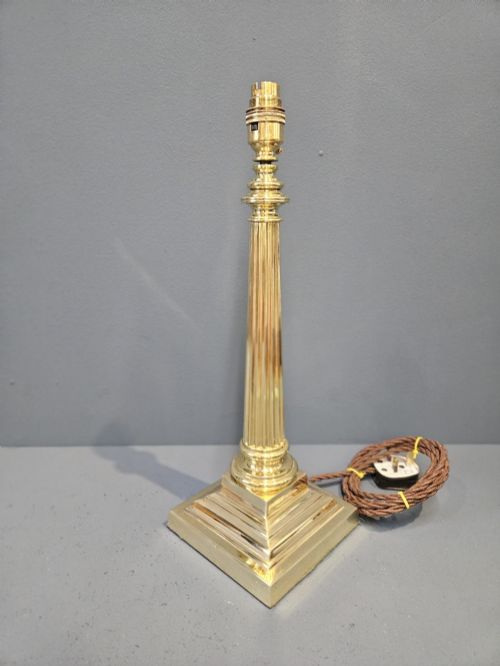
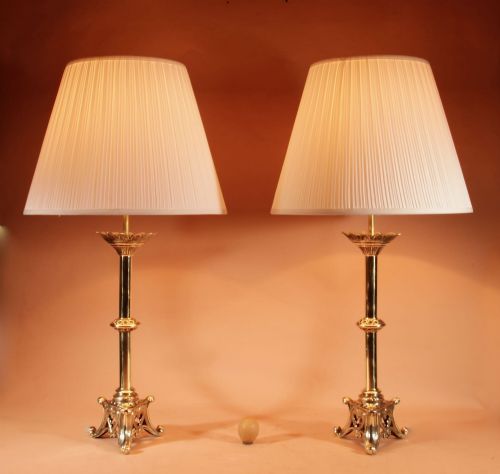
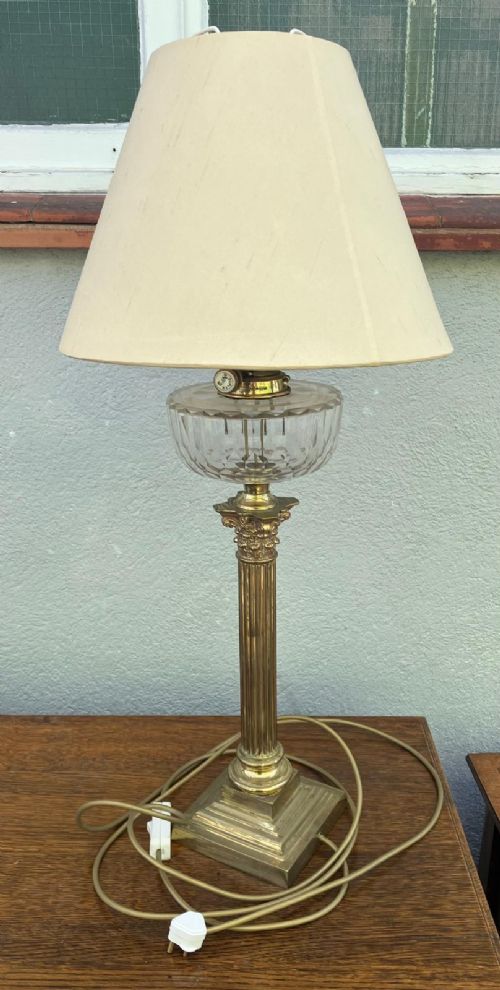
The version most commonly encountered on this page is the brass column table lamp, often styled with Corinthian or Doric capitals, alongside adjustable student lamps and green-shaded bouillotte forms. These designs reflect the domestic and professional lighting needs of the nineteenth and early twentieth centuries.
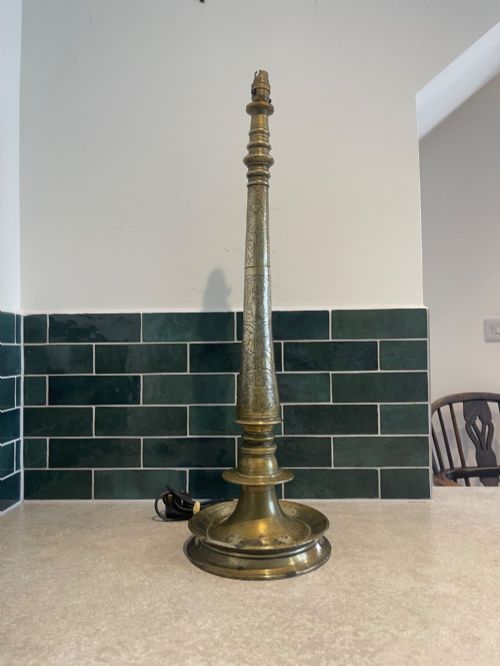
The evidence records pieces spanning the nineteenth century through to the 1930s, incorporating styles such as Neoclassical revival, French Empire, Arts and Crafts, and Romanesque revival. Alongside dedicated desk lamps, the selection includes converted oil lamps, newel post lamps, and candlestick lamps adapted for modern electricity.
Materials and construction
These lamps rely primarily on cast and turned brass, often paired with contrasting elements of cut glass, opaline glass, fabric, oak, and painted toleware. Metal components are cast in sections or spun on a lathe before being assembled to form columns, bases, and adjustable arms.
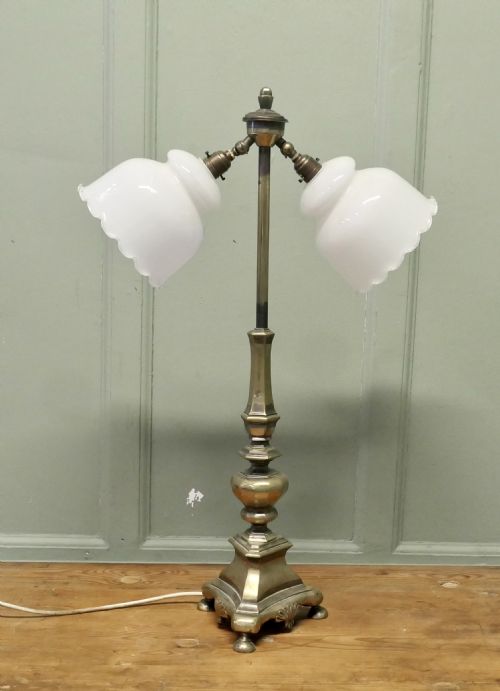
Many examples incorporate specialised fittings such as swan-neck tubes, twin-angled reading joints, and weighted bases to support adjustable shades and burners. Secondary materials include bronze, silver plating, and ceramic or cloisonné inserts depending on the specific revival style.
Traditional Brass Desk Lamp Retail Price Guide 2026
Typical asking prices for traditional brass desk lamp among the pieces listed under this phrase on Sellingantiques today, from the lower quarter to the upper quarter. They describe what is for sale here now, not the wider market.
Listings feature brass combined with oak, cut glass, opaline glass, and toleware across Edwardian and Victorian styles.
Craftsmanship and proportion
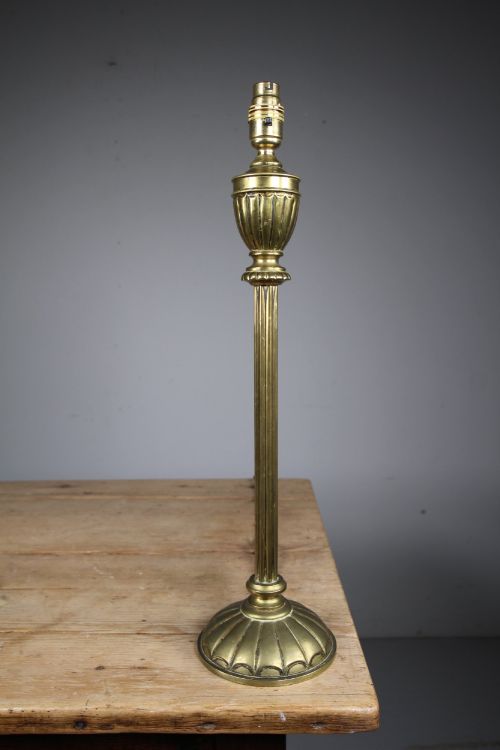
Quality rests in the weight of the cast brass, the crispness of architectural details such as fluted columns and acanthus capitals, and the sturdiness of the articulated joints. Finer pieces demonstrate precise machining and substantial gauge metal that maintains stability during adjustment.
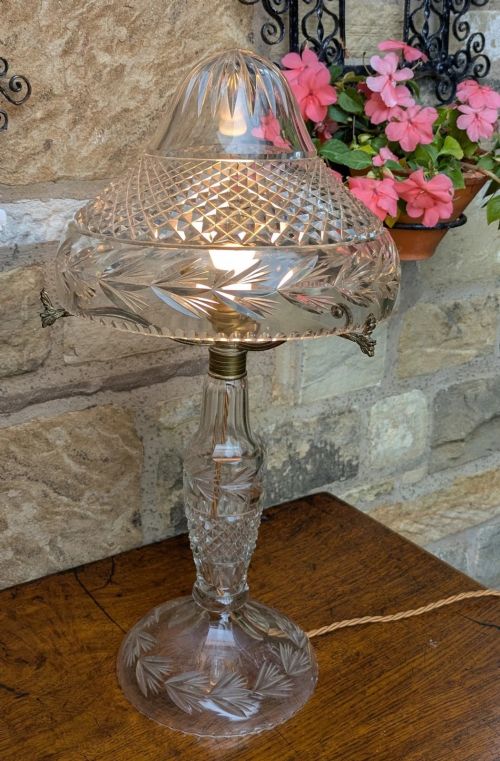
The sophistication of secondary materials, such as heavy hand-formed opaline glass shades, etched cut crystal, or hand-painted toleware drums, elevates the overall execution. Proportion and balance separate standard utilitarian lighting from decorative library pieces.
The Traditional Brass Desk Lamp Glossary
- Bouillotte lamp
- A traditional French table lamp featuring a central metal shaft, a shallow bowl base for holding coins or pens, and an adjustable painted metal or card shade. It was originally designed for the card game of the same name.
- Corinthian column
- An architectural column order characterised by an ornate capital decorated with acanthus leaves and scrolls. This motif frequently appears on classical revival table lamps.
- Opaline glass
- A type of semi-opaque, milky glass popular in the nineteenth century for diffusing light softly. It is commonly found in shades paired with brass desk and oil lamps.
- Newel post lamp
- A large decorative lamp designed to sit atop the starting post of a staircase. These pieces share heavy brass construction with standard desk lighting.
Traditional Brass Desk Lamp: Frequently Asked Questions
How do I date a brass desk lamp?
Dating relies on examining the manufacturing techniques, wiring access points, switch types, and stylistic motifs present in the metalwork. Periods are identified by comparing column orders, base weights, and shade materials against documented nineteenth and early twentieth-century examples.
Changes in screw threads and assembly methods also provide clues to the era of production. Consulting maker marks or patent numbers stamped on the base helps narrow down the decade.
Were these lamps originally electric?
Many traditional desk lamps began as oil-burning student lamps, kerosene lamps, or fitted candlesticks before later conversion to electricity. Conversion work often took place during the mid-twentieth century as homes modernized.
Evidence shows that items such as oil lamps and candelabra frequently transitioned into table lamps while retaining their original brass reservoirs and burner assemblies.
How should I clean antique brass?
Antique brass benefits from gentle dusting with a soft cloth to preserve its natural patina and accumulated age. Harsh chemical polishes should be avoided because they strip away historical surface colour that collectors value.
Light application of microcrystalline wax can protect the metal surface from moisture and further oxidation. Maintaining the original finish preserves the integrity of the piece.
What is a student lamp?
A student lamp is an adjustable lighting fixture designed for reading and writing, typically featuring an offset font or arm that allows the burner and shade to be repositioned. These utilitarian designs provided focused illumination for desks and libraries.
Examples from the nineteenth and early twentieth centuries often utilise twin-angled reading arms or weighted counterbalances. Their sturdy brass construction ensured reliability during daily scholarly use.