


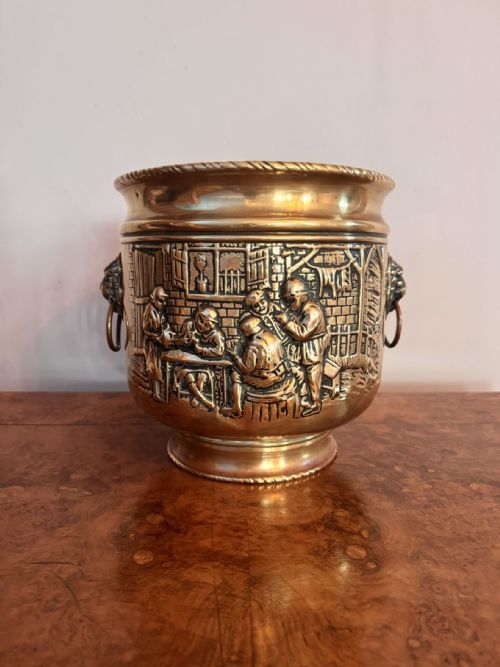
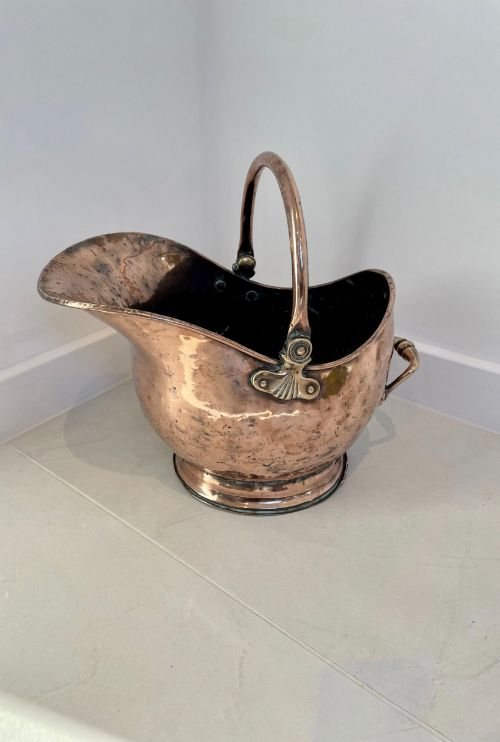
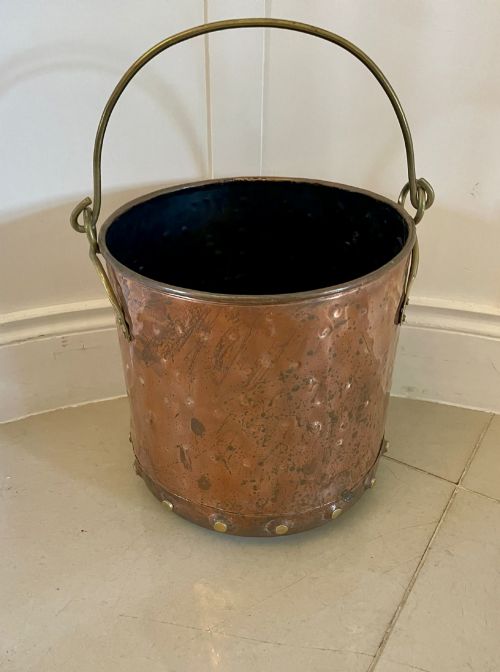


Traditional Brass Ash Bucket
A traditional brass ash bucket brings functional warmth to a hearth, combining polished metal and sturdy construction for daily fireside use.
Traditional Brass Ash Bucket
When searching for a traditional brass ash bucket, buyers encounter hearthside vessels designed for fuel storage and fire maintenance. These pieces originate primarily from the Victorian and Edwardian periods, spanning the latter half of the nineteenth century and the turn of the twentieth century. Examples seen here take the form of helmet-shaped coal scuttles, coal bins, and buckets.
The version most commonly met on this page is the Victorian brass or copper helmet coal scuttle, often dated between eighteen sixty and eighteen eighty. These items combine utilitarian function with decorative metalwork suited to period fireplaces. Alongside all-brass models, mixed-metal pieces incorporating copper and wooden elements appear regularly.
How they were made
These vessels are constructed using sheet brass and copper, frequently paired with wooden handles for lifting. Makers shaped the metal plates into distinct helmet forms and buckets, securing them with structural joints and fixings appropriate to the period.
The manufacturing process combined sheet metal shaping with polished finishes to highlight the metallic surfaces. Accessories such as companion shovels accompanied scuttles, utilising matching brass materials.
Traditional Brass Ash Bucket Retail Price Guide 2026
Typical asking prices for traditional brass ash bucket among the pieces listed under this phrase on Sellingantiques today, from the lower quarter to the upper quarter. They describe what is for sale here now, not the wider market.
Listings feature items exclusively from the Victorian and Edwardian eras, predominantly spanning eighteen sixty to nineteen hundred.
What varies in quality
Quality in these fireside pieces is determined by the weight of the metal and the integrity of the construction. Heavier gauge brass and copper indicate superior durability, whereas lighter sheets yield more flexible vessels.
The refinement of the shaping and the retention of original handles and shovels distinguish the finer examples from standard utility items. Surface finishing and the crispness of form separate the top of the range from simpler utilitarian bins.
The Traditional Brass Ash Bucket Glossary
- Helmet scuttle
- A fireside coal container featuring a flared rim and sloped body resembling a traditional helmet. This shape allowed for controlled pouring of fuel into the grate.
- Coal bucket
- An open or lidded cylindrical vessel used to hold solid fuel beside the fireplace. These items provide generous capacity for storage.
- Victorian
- The period spanning the reign of Queen Victoria, characterised in these listings by mid-to-late nineteenth-century metalwork styles. Pieces from this era often display robust construction.
- Edwardian
- The stylistic period following the Victorian era around nineteen hundred. Items from this time maintain traditional fireside forms with distinct manufacturing details.
Traditional Brass Ash Bucket: Frequently Asked Questions
What is a traditional brass ash bucket used for?
These vessels were designed primarily to hold coal or fuel near the fireplace for convenient refuelling. They also served to clear out ash from the grate.
Today, they function as practical fireside accessories or decorative coal bins that complement period hearths.
How do I date a brass coal scuttle?
Dating relies on stylistic markers, materials, and construction techniques typical of nineteenth-century manufacturing. Victorian and Edwardian pieces exhibit distinct handle attachments and body shapes.
Examining the type of metal forming and fasteners helps place the piece within the eighteen sixty to nineteen hundred timeframe.
Are copper and brass mixed on these buckets?
Many listings show a combination of copper bodies paired with brass trims or handles. This mixed-metal approach was common in nineteenth-century firesideware.
The contrast between the warm red tone of copper and the bright yellow of brass defines many helmet scuttles.
Did these buckets come with shovels?
Certain surviving coal scuttles are accompanied by their original matching shovels designed for handling fuel. These companion pieces utilise the same metal construction.
Finding a complete set adds to the historical utility of the hearth accessory.