
Traditional Bedside Table Lamps
Traditional bedside table lamps unite functional illumination with period character, offering everything from brass columns to carved wooden bases to anchor a room.
Traditional Bedside Table Lamps
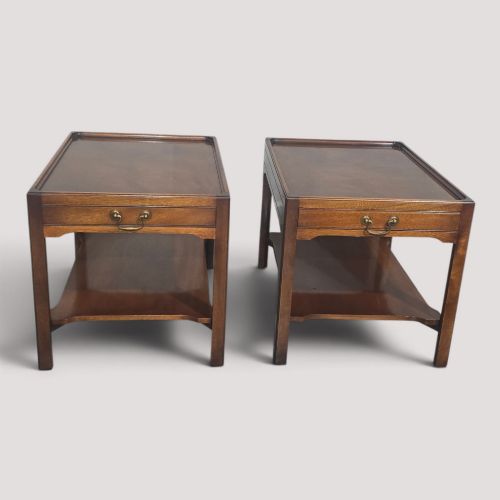
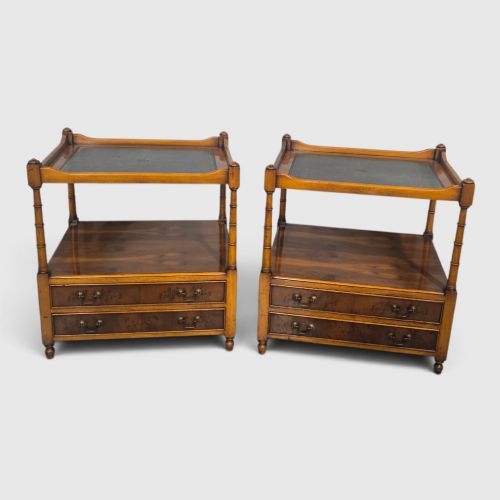
When buyers search for traditional bedside table lamps, they encounter a diverse selection of lighting fixtures alongside occasional tables designated for bedside use. The inventory spans several centuries, drawing heavily from Victorian, Edwardian, and early twentieth-century production.
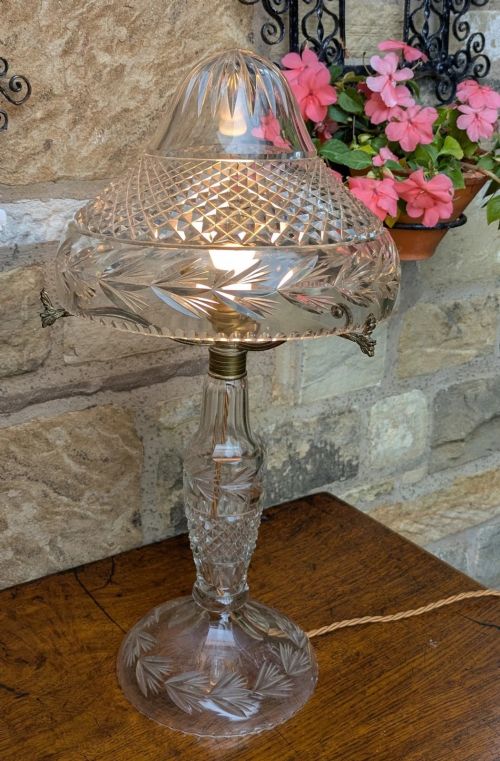
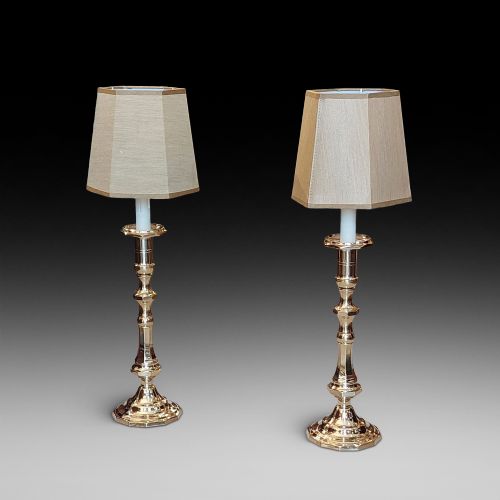
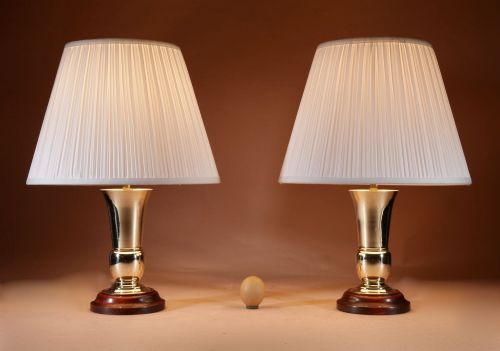
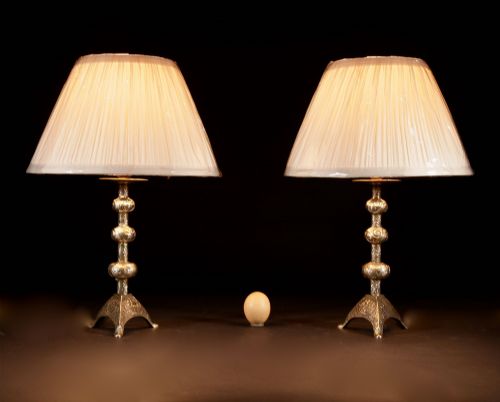
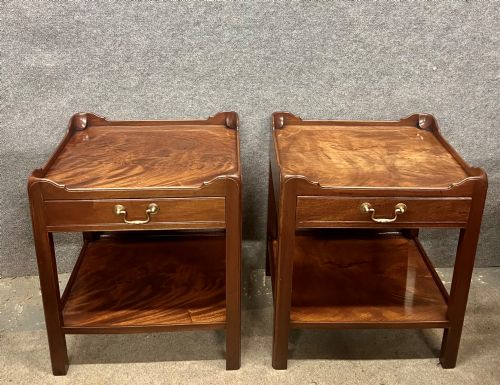
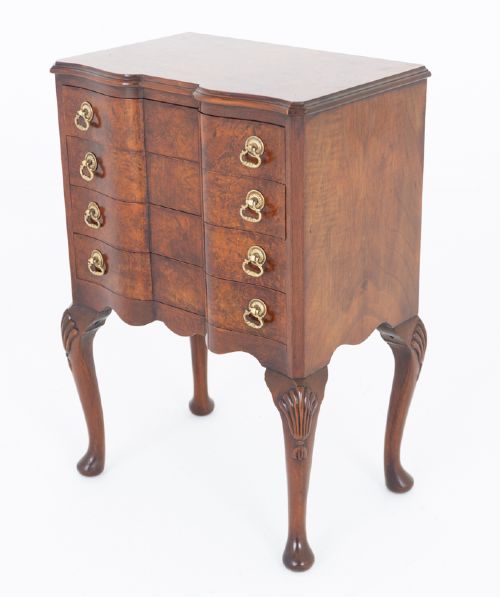
The objects themselves divide broadly into two categories: actual table lamps constructed from metal, glass, ceramic, or timber, and small support tables such as side tables, lamp tables, and bedside chests. Buyers frequently meet brass candlestick conversions, reeded columns, and cut crystal bases alongside mahogany or oak surfaces.
Origins vary across British, European, and Asian workshops, incorporating styles from Neoclassical and Georgian Revival to Chinoiserie and Arts and Crafts. This mix allows a scheme to incorporate anything from a slender silver-plated column to a carved oak base.
Materials and construction methods
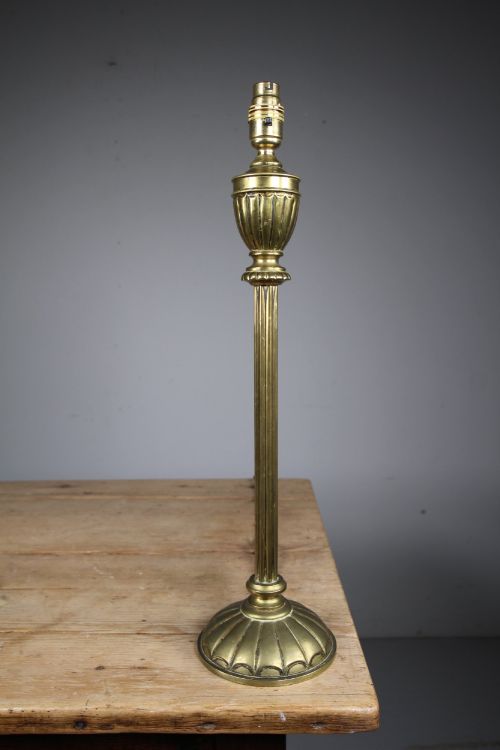
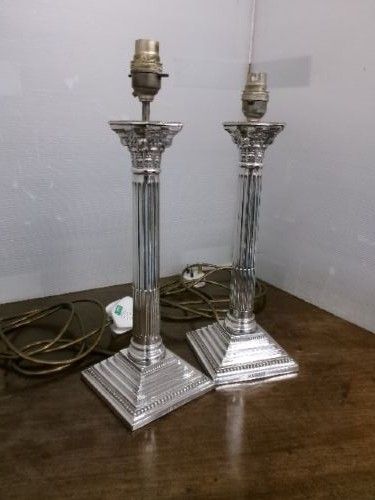
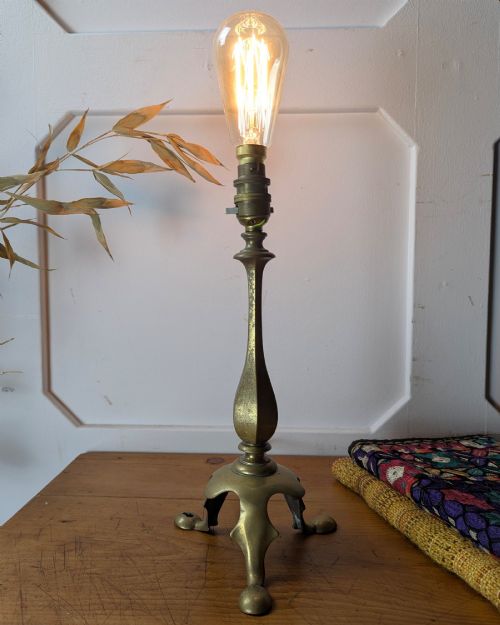
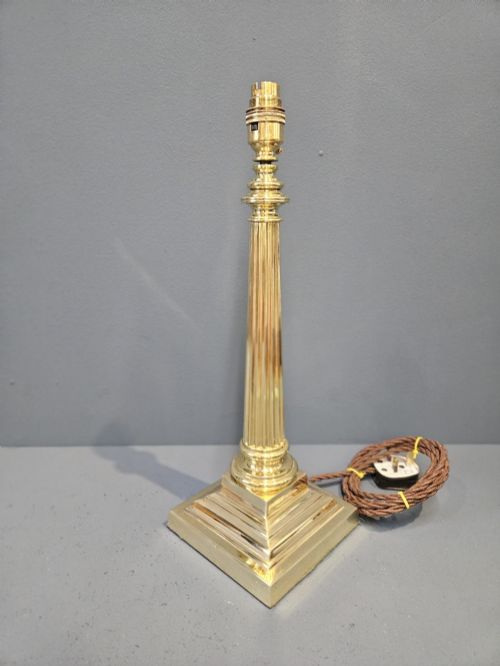
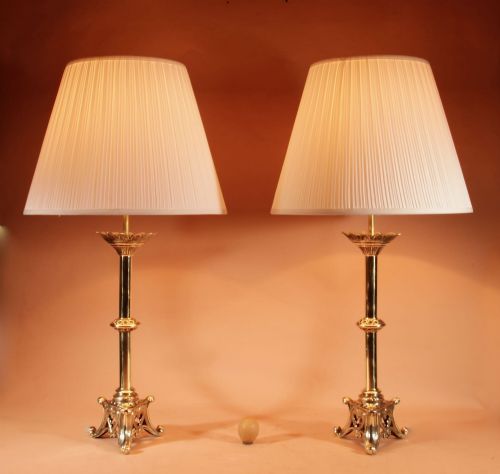
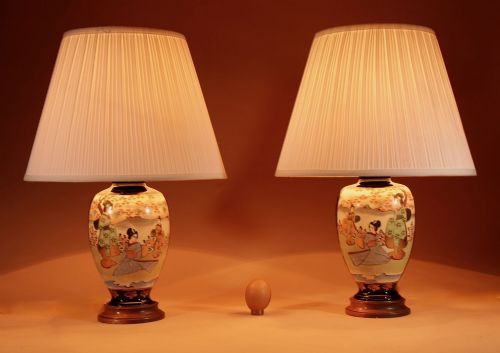
Metalworking dominates the lighting evidence, utilising cast brass, silver plate, bronze, and copper to form sturdy bases, Corinthian columns, and intricate baluster shapes. Makers frequently adapted existing items, turning nineteenth-century brass candlesticks and ceramic vases into wired lamps.
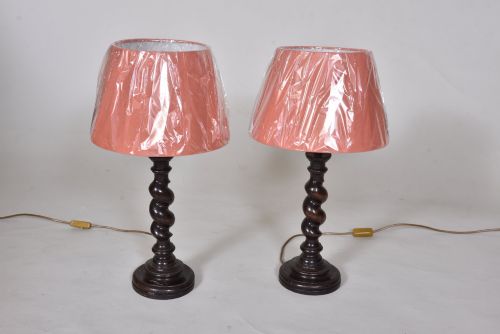
Timber selection ranges from solid mahogany and yew to oak, burr walnut, and limed wood, utilised both for lamp bases and the accompanying side tables. Cabinetmakers employed traditional joinery, turning barley twist supports and carving detailed ornamentation in styles reflecting Georgian or Gothic revivals.
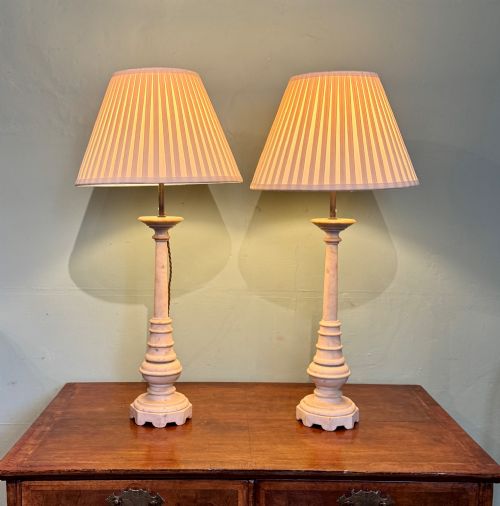
Glass and stone feature prominently through cut crystal, white marble, Italian marble, and alabaster components. These mineral and glass elements provide significant weight to the base, ensuring stability for taller lamps and fabric shades.
Design influences range from Edwardian and Neoclassical to Chinoiserie, Kashmiri, and Arts and Crafts.
Assessing quality in period lighting and tables
Quality reveals itself through the crispness of casting in metalwork and the depth of carving in wooden pieces. Fine cast brass exhibits sharp relief and clean fluting on reeded columns, whereas lesser examples show softened details and visible seam lines from hurried production.
Material selection and substance separate standard items from superior pieces. Heavy cut crystal, genuine marble, and dense hardwoods like mahogany or oak provide structural integrity and a pleasing tactile weight that hollow metals and thin veneers lack.
The Traditional Bedside Table Lamps Glossary
- Corinthian column
- A classical architectural column form featuring an ornate capital decorated with acanthus leaves. This motif appears frequently on Victorian and Edwardian brass and silver-plated table lamps.
- Barley twist
- A woodworking technique creating a spiralling, rope-like column on wooden lamp bases or table legs. It gained popularity during the seventeenth century and saw revivals in later periods.
- Cloisonné
- An ancient technique for decorating metal object surfaces using wire compartments filled with enamel paste. Pieces featuring this method provide rich colour and pattern to table lamp designs.
- Chinoiserie
- European theatrical interpretations of Chinese and East Asian artistic traditions. This style appears on decorative table lamps and painted wooden surfaces.
- Alabaster
- A fine-grained, translucent stone used for carving solid lamp bases. Its natural veining diffuses light and adds subtle texture.
Traditional Bedside Table Lamps: Frequently Asked Questions
How do I choose the right height?
Consider the proportion of the lamp relative to the bedside surface and the height of the mattress. Taller columns and crystal pieces require adequate clearance from headboards and wall art.
Matching the scale ensures the illumination falls comfortably for reading without overwhelming a compact side table or chest.
Can I mix wood finishes with brass?
Mixing materials is characteristic of collected interiors, where mahogany tables pair naturally with brass or bronze lamps. Combining different textures adds depth rather than matching every element.
Allowing oak, walnut, and polished metal to sit together creates a layered, historically grounded aesthetic.
What is the difference between a lamp table and a bedside table?
Lamp tables are generally designed specifically to hold a light source and small items, often featuring open lower shelves or compact square tops. Bedside tables and chests provide enclosed storage like drawers or cupboards for nighttime essentials.
Both serve adjacent functions in a bedroom scheme depending on whether surface area or concealed storage is prioritised.