




Antique Electric Candelabra
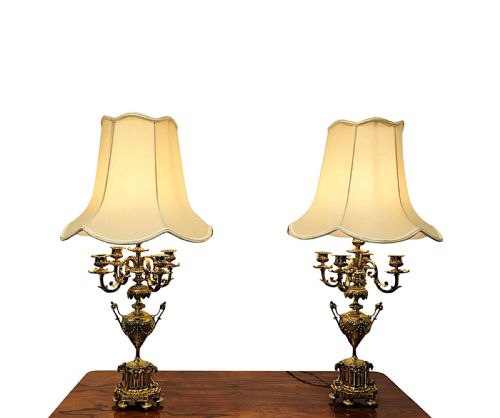
These antique electric candelabra combine traditional lighting frames with fitted wiring to sit as statement pieces on tables or walls.
Antique Electric Candelabra
When someone searches for antique electric candelabra, they are looking at multi-branch lighting fixtures that merge historic metalwork frames with modern electrical wiring. These pieces originate from various periods including the nineteenth century and the nineteen-twenties, incorporating styles such as Neoclassical, Rococo Revival, and Napoleon III.
The versions most commonly met on this page include converted table lamps and wall sconces featuring multiple branches. They often take the form of table chandeliers or candelabra lamps constructed from cast brass, gilt bronze, and crystal.
How they were made
The construction of these lighting fixtures relies heavily on cast brass, bronze, and gilt bronze frames, often shaped with ornate rococo or neoclassical motifs. Artisans assembled these metallic structures by joining multiple arms or branches to central stems.
Many examples incorporate glass and crystal drops or pendants that hang from the arms to catch and refract the light. Fabric elements occasionally appear in the overall design alongside carved giltwood or marble components.
Design styles span French Chateau, Neoclassical, Rococo Revival, and Napoleon III across various table lamps and wall sconces.
What varies in quality
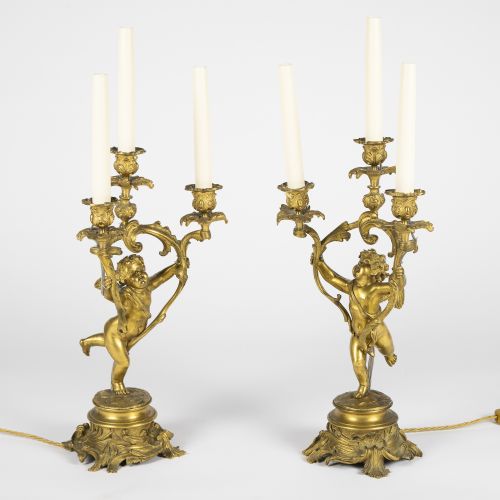
Quality in these pieces rests upon the crispness of the metal casting and the depth of the gilding or silvering on the bronze and brass surfaces. Superior examples display finely chased details on putti, scrollwork, and foliage.
The inclusion of genuine cut crystal drops and solid marble bases separates the higher tier of pieces from simpler utilitarian designs. The structural integrity of the multiple branch arms also dictates the overall standard of the manufacturing.
The Antique Electric Candelabra Glossary
- Ormolu
- A technique of applying finely ground high-carat gold to a bronze object, creating a rich golden finish. This surface treatment is common on nineteenth-century French pieces.
- Candelabra lamp
- A multi-branched lighting fixture fitted with electrical wiring to hold lamps rather than wax candles. These objects function as table lamps or wall sconces.
- Giltwood
- Wood that has been coated with a thin layer of gold leaf or gold paint. This material appears on decorative wall lights from the early twentieth century.
- Napoleon III Style
- A nineteenth-century design aesthetic characterised by an eclectic mix of historical revivals, notably Second Empire extravagance. Pieces in this style often use bronze and crystal.
- Rococo Revival
- A nineteenth-century style drawing on eighteenth-century French design, featuring asymmetric curves, scrolls, and naturalistic motifs. It is frequently seen on brass and gilt bronze candelabra.
Antique Electric Candelabra: Frequently Asked Questions
What are antique electric candelabra?
These items are historic multi-branch lighting fixtures that have been wired for electricity to function as lamps. They combine period metalwork frames with modern fittings.
They appear as table lamps, wall sconces, and table chandeliers designed to provide ambient illumination.
How were they used historically?
Originally created to hold wax candles in grand rooms, many of these metal and crystal frames were later adapted for electrical wiring. They served as primary decorative lighting on side tables and walls.
Over time, numerous examples underwent conversion to hold electrical globes while retaining their original candelabra silhouettes.
How do I live with them?
Placing these statement pieces on sideboards, mantels, or console tables allows their metal and crystal details to catch the light. They work well as focal points in traditional or eclectic interiors.
Ensure they are positioned near suitable power outlets so the cords do not disrupt the display of the base and branches.
How do I tell periods apart?
Nineteenth-century examples often display heavier bronze casting, elaborate ormolu, and classical motifs associated with the Victorian or Napoleon III eras. Later pieces from nineteen-twenty tend to feature distinct French candelabra and wall light designs.
Examining the materials, such as the specific patination of the brass and the cut of the crystal, helps determine the age of the piece.