


Traditional Bedroom Armoire
A traditional bedroom armoire provides substantial storage for clothes and linen, bringing period craftsmanship and rich timber grain directly into the room.
Traditional Bedroom Armoire
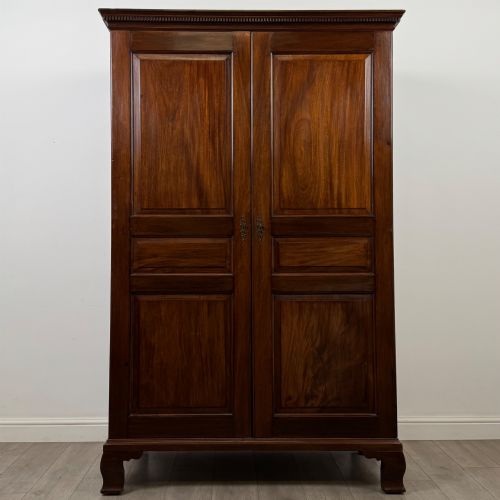
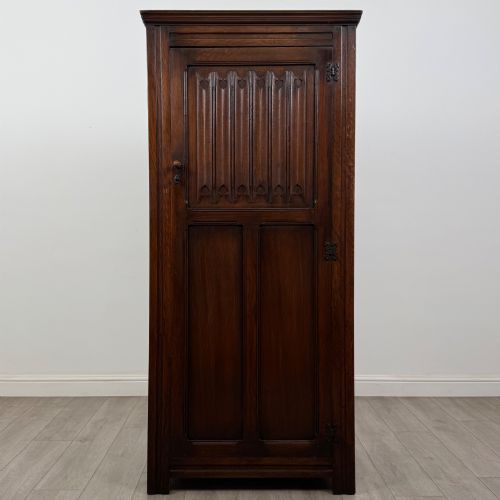
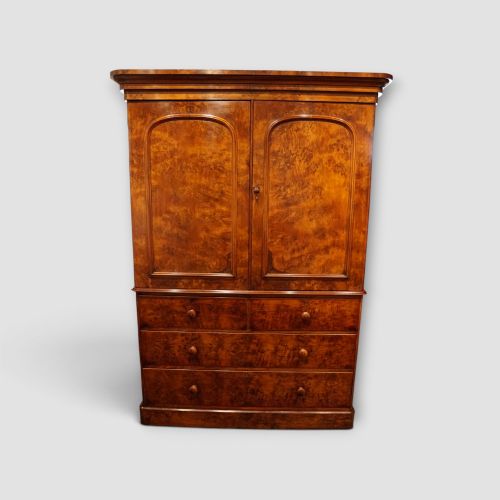
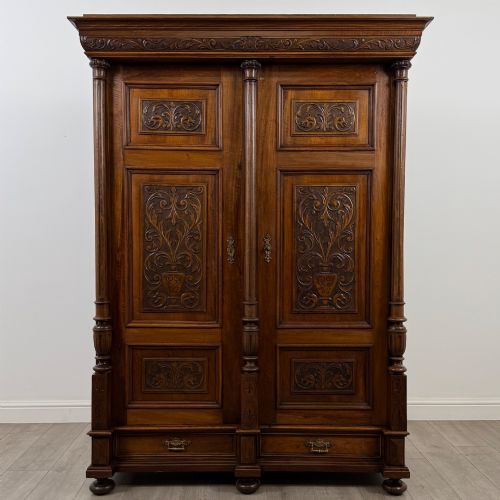
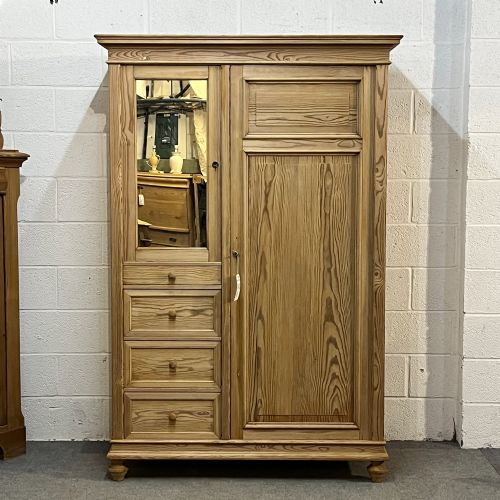
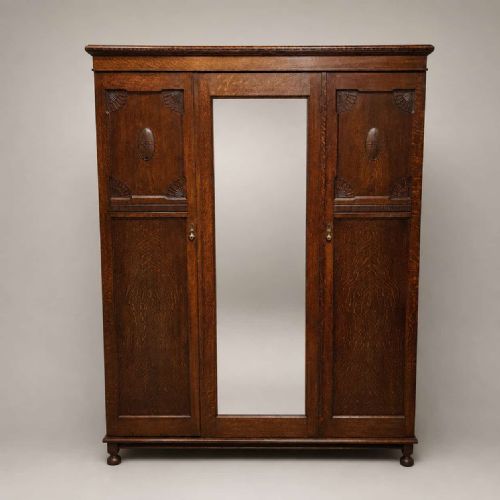
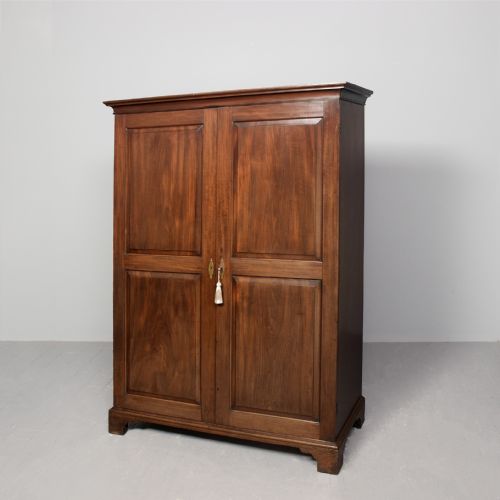
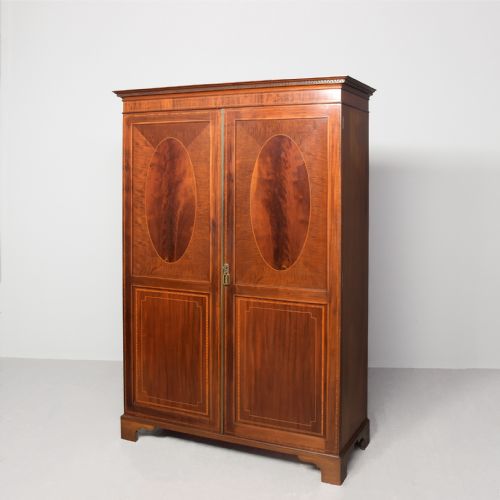
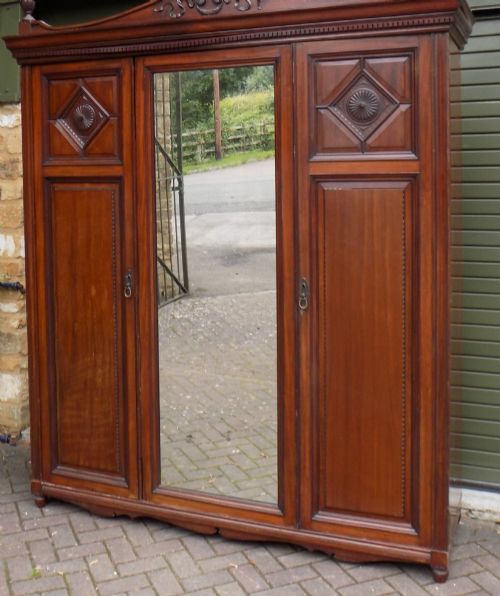
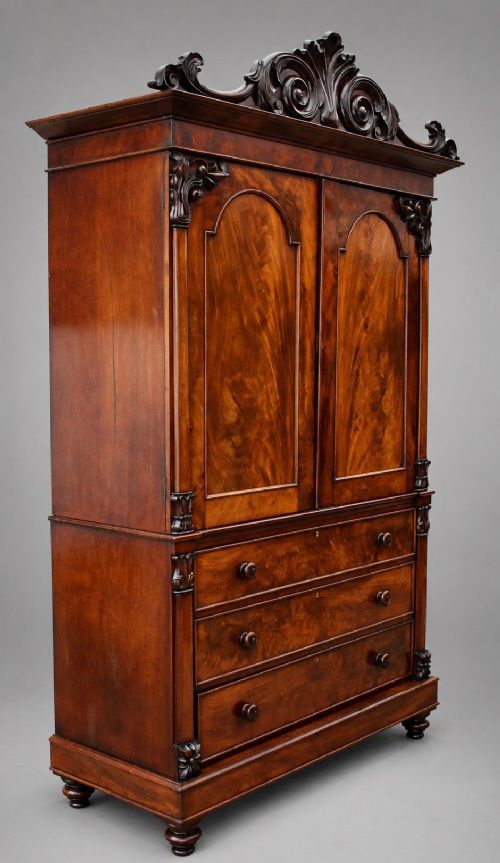
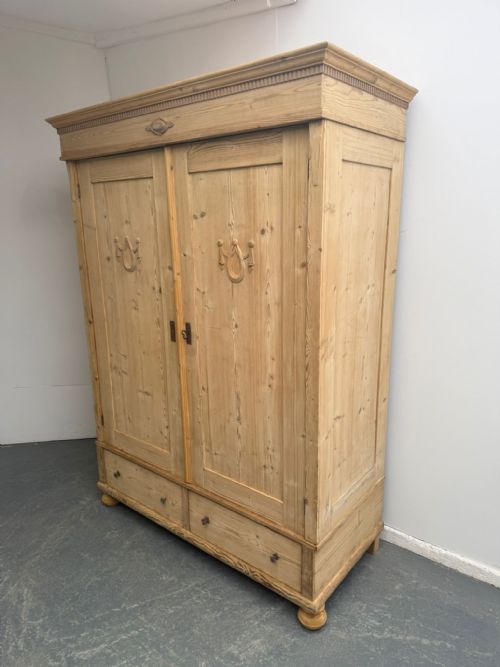
A traditional bedroom armoire encompasses large storage furniture designed for garments and linens, appearing across this page in forms such as wardrobes, linen presses, compactums, and cupboards. Buyers searching for a traditional bedroom armoire will encounter pieces varying from compact pine bedroom cupboards to grand breakfront triple wardrobes.
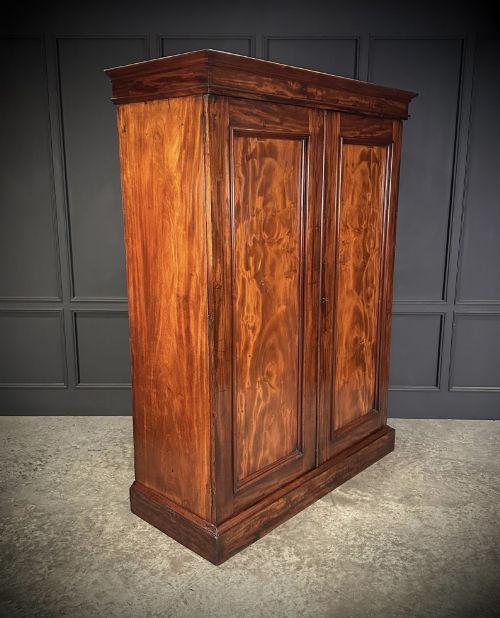
The selection spans centuries of cabinet-making, drawing heavily from Georgian, Victorian, Edwardian, and early twentieth-century periods. Mahogany, pine, and oak dominate the offerings, occasionally finished with flame mahogany veneer, burr walnut, or glass panel details.
Regional and stylistic influences add further variety, ranging from formal Georgian hanging wardrobes to Victorian country pieces and Edwardian Gothic Revival designs. Buyers are most likely to meet substantial two-door or triple-door mahogany and pine examples ready for placement in a bedroom.
How they were made
Cabinet-makers constructed these traditional bedroom armoire pieces using solid timbers like mahogany, oak, and pine, frequently applying flame mahogany veneer or burr walnut for decorative surfaces. Joinery relied on traditional methods including panel construction and dovetailing for internal drawers.
Many large Victorian and Georgian examples utilised knockdown construction, allowing multi-piece wardrobes and linen presses to be dismantled for transport and reassembled in the bedroom. Hardware typically involved brass fittings, handles, and locks secured to heavy wooden doors.
Some antique pine wardrobes arrive bearing traces of bygone travel stickers and handwritten chalk inventory notes tucked inside the lower drawers.
What varies in quality
The selection of timber dictates much of the distinction across these pieces, with figured Cuban mahogany or burr walnut sitting at the upper end of refinement compared to utilitarian pine. Timber selection governs the visual depth of the grain and the stability of large doors over time.
Construction intricacy also separates standard storage from exceptional cabinet-making, evident in breakfront configurations, deep mouldings, panelled doors, and integrated drawer configurations. The precision of the knockdown joints and the retention of original brass hardware contribute further to a piece's standing.
The Traditional Bedroom Armoire Glossary
- Linen Press
- A tall piece of furniture featuring upper sliding trays or shelves enclosed by doors, positioned above a chest of drawers at the base. This format was originally designed to store flat textiles.
- Compactum
- A multi-functional wardrobe that combines hanging space with compartments, shelves, and internal drawers within a single unified cabinet. It offers compartmentalised storage for various clothing types.
- Breakfront
- A cabinet design where the central section projects forward from the flanking outer sections. This architectural arrangement creates shadow lines and visual depth on large triple wardrobes.
- Knockdown Wardrobe
- A piece engineered to dismantle entirely into manageable sections for ease of movement between rooms. These items use internal bolts or slot-together joints rather than fixed glue.
- Flame Mahogany
- A veneer cut from the fork of the mahogany tree where the branches join the trunk, producing a fiery, feather-like grain pattern. Cabinet-makers used it on prominent exterior doors to catch the light.
Traditional Bedroom Armoire: Frequently Asked Questions
How do I assemble a knockdown wardrobe?
Knockdown wardrobes separate into individual panels, cornices, bases, and internal modules to facilitate transport through narrow stairwells and doorways. Assembly typically involves aligning tongue-and-groove joints or tightening internal metal bolts.
It is advisable to check that the floor surface is level before tightening the frame to ensure the doors hang squarely within their apertures.
How do I care for antique pine furniture?
Antique pine responds best to natural beeswax applied sparingly and buffed with a soft cloth to maintain a protective barrier against moisture. Avoid placing pine pieces in direct sunlight or near heat sources to prevent the wood from drying out.
Regular dusting with a dry lint-free cloth preserves the surface patina without stripping the wax finish.
Can I fit modern hangers inside these wardrobes?
Many older wardrobes were built when garments were narrower or stored differently, sometimes resulting in shallow interior depths from back to front. Standard modern coat hangers may occasionally prevent the heavy doors from closing completely.
Checking the internal hanging depth before purchase ensures standard wooden or wire hangers will clear the inner framework.