
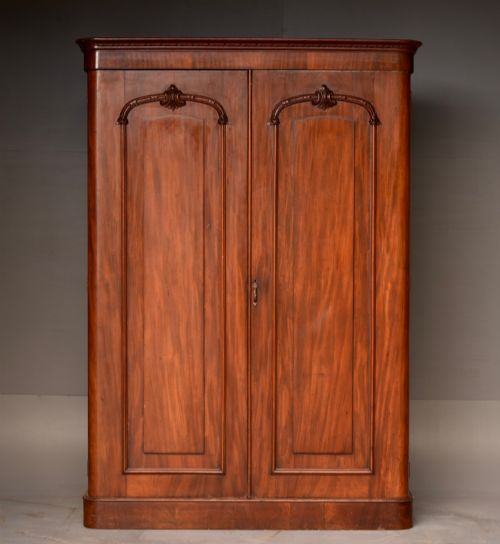
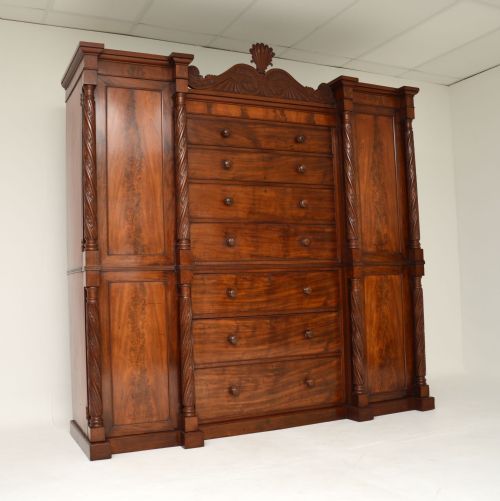
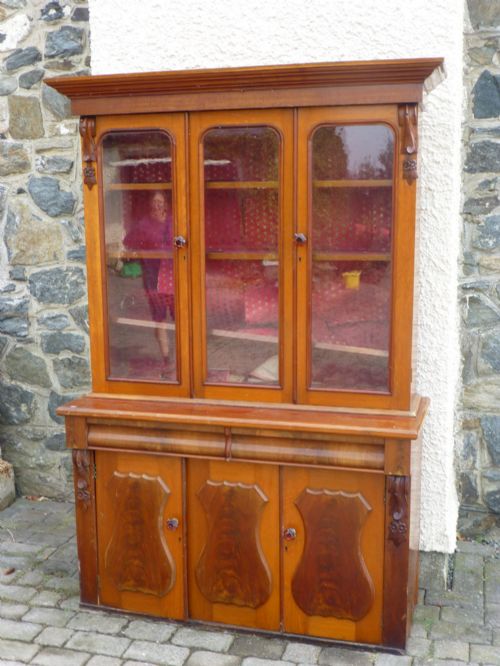
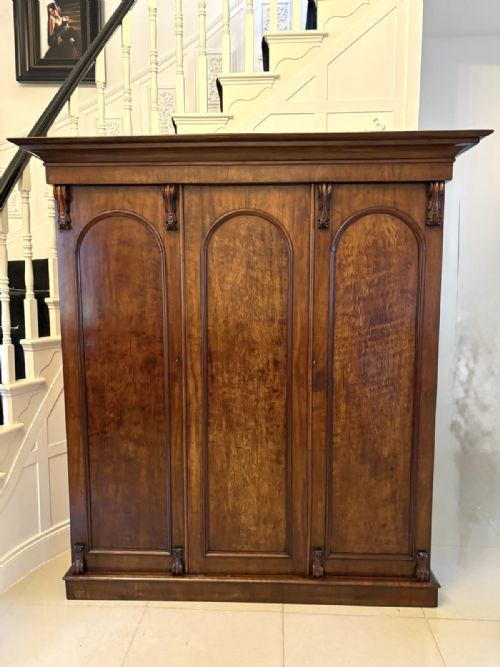




Carved Mahogany Linen Press
A carved mahogany linen press offers architectural presence and generous storage, combining rich timber figure with sliding interior trays.
Carved Mahogany Linen Press
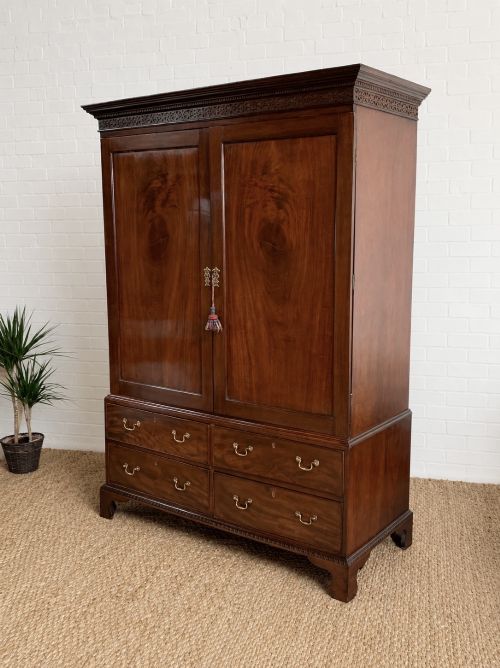
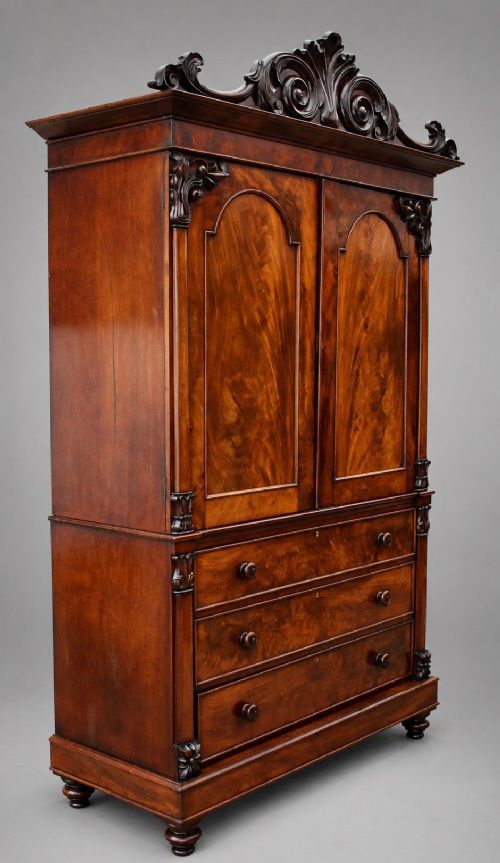
A carved mahogany linen press is a substantial piece of case furniture designed to store folded textiles in upper sliding trays above a chest of lower drawers. When you search for this phrase, the version you are most likely to meet on this page is a nineteenth-century example, often Victorian or William IV, though earlier Georgian pieces and later Edwardian interpretations also appear.
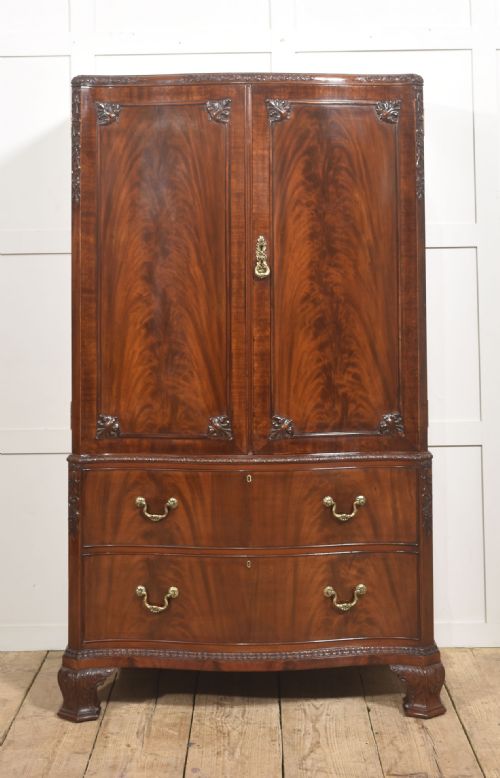
These presses typically combine dense tropical hardwoods with classical detailing such as blind fretwork cornices, carved capitals, and panelled doors. Alongside traditional full-scale examples, related forms such as compactums, tallboys, and miniature furniture occasionally share the inventory.
Originating primarily from British workshops, these cabinets reflect shifting domestic storage needs across the eighteenth, nineteenth, and early twentieth centuries. The upper section originally held household linen before evolving in many homes to accommodate general wardrobe storage.
Materials and construction
Makers built these carcasses using solid timber frames lined with secondary woods like oak, applying selected veneers such as flame mahogany or Cuban mahogany to the primary visible surfaces. Brass hardware, including hinges, drop handles, and escutcheons, secures the doors and drawers.
Joinery techniques relied on pegged mortise and tenon frames for structural integrity, while drawer boxes used hand-cut dovetails. Decorative elements such as blind fretwork and carved mouldings were worked directly into the solid timber components or applied as carved appliqués.
Listings span the eighteenth, nineteenth, and early twentieth centuries, incorporating Georgian, Regency, William IV, Victorian, and Edwardian periods.
Judging quality in a carved mahogany press
The distinction between standard production and the finest work lies in the selection of the timber figure and the crispness of the carved detail. Highly figured flame or Cuban mahogany displays depth and movement that plain sawn boards lack, while hand-carved mouldings remain sharp and well-defined.
Internal configuration also separates pieces, as original sliding linen trays running smoothly on side grooves represent a higher grade of workshop practice. The retention of original brass fittings and harmonious proportions further distinguishes the upper tier of surviving examples.
Maple and Co·Edwards and Roberts·Thomas Chippendale
The Carved Mahogany Linen Press Glossary
- Linen press
- A tall cabinet featuring upper doors enclosing sliding trays for folded textiles, mounted over a base chest of drawers. This form evolved to protect household linens from dust before modern wardrobes became common.
- Compactum
- A multi-compartment wardrobe or press combining hanging space, drawers, and sliding trays within a single unified carcass. These were designed to maximise storage efficiency in Victorian bedrooms.
- Flame mahogany
- A veneer cut from the fork of the mahogany tree where the branch meets the trunk, producing a distinctive flickering, flame-like grain pattern. Cabinetmakers reserved this timber for primary door panels and drawer fronts.
- Blind fretwork
- Carved ornamentation applied to flat wooden surfaces to simulate openwork pierced carving, frequently seen on mid-eighteenth-century and revival cornices. It adds tactile depth without weakening the structural edge.
- Sliding tray
- A shallow internal shelf, often referred to as a slide, designed for stacking folded garments or linen. These pull out independently to allow easy access to the contents.
Carved Mahogany Linen Press: Frequently Asked Questions
What is the difference between a linen press and a wardrobe?
A traditional linen press contains internal sliding trays behind its upper doors for folded garments, whereas a wardrobe relies primarily on vertical hanging space with a rail.
Over time, many presses were converted internally by removing the trays to insert clothes rails for modern dress.
How do I care for mahogany furniture?
Keep mahogany pieces away from direct sunlight and strong heat sources such as radiators, which can dry out the timber and cause veneers to lift.
Apply a traditional beeswax polish sparingly and buff with a soft cloth to maintain the natural sheen of the wood.
Will a linen press fit in a modern bedroom?
These pieces are exceptionally heavy and tall, usually requiring high ceilings and adequate floor space to accommodate their substantial footprint.
Most presses separate into upper and lower sections for transport, which simplifies moving the furniture through standard doorways and up stairs.
How do I identify a Georgian press from a Victorian one?
Georgian presses generally exhibit simpler architectural lines, bracket feet, and paler patinated Cuban mahogany, reflecting eighteenth-century design proportions.
Victorian examples tend to be larger, featuring heavier plinth bases, more exuberant carved detail, and darker figured mahogany veneers.