


Traditional Animal Landscape Painting
Traditional animal landscape painting brings rural life and livestock into the home through oil on canvas.
Traditional Animal Landscape Painting
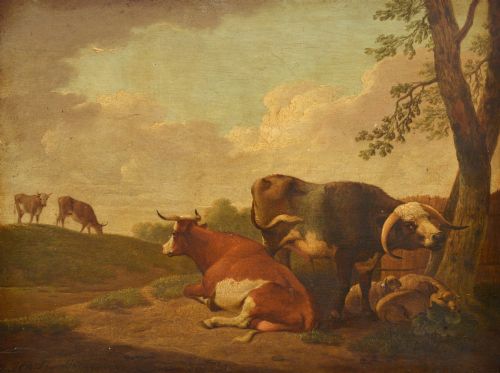
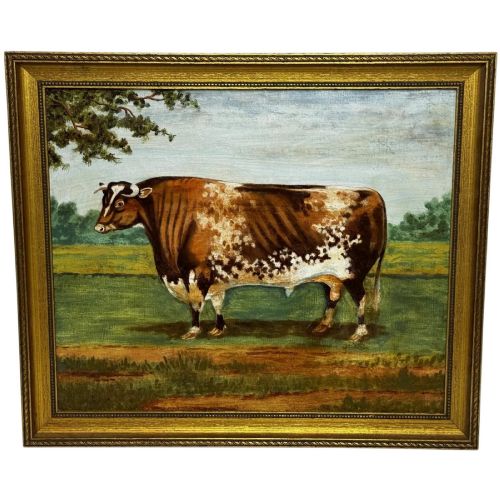
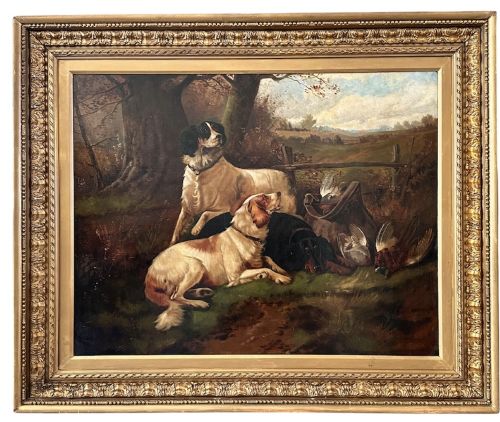
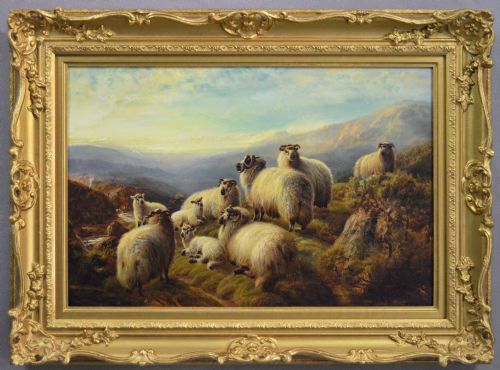
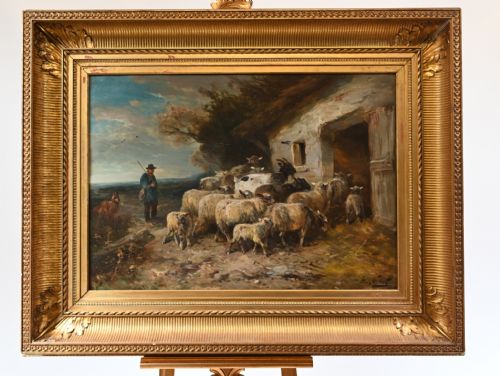
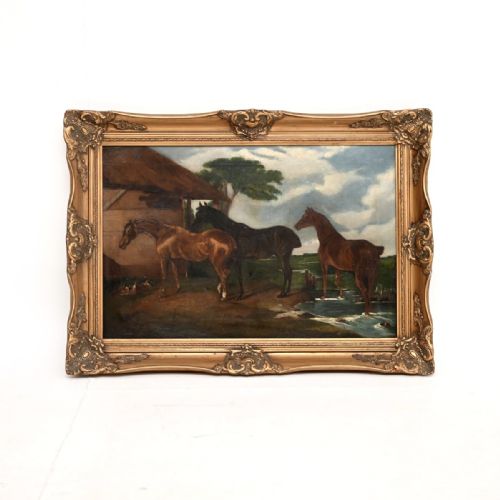
A traditional animal landscape painting places cattle, sheep, horses, and dogs within British, Scottish, and European countryside settings. These works record rural scenes, agricultural life, and sporting subjects across the nineteenth century.
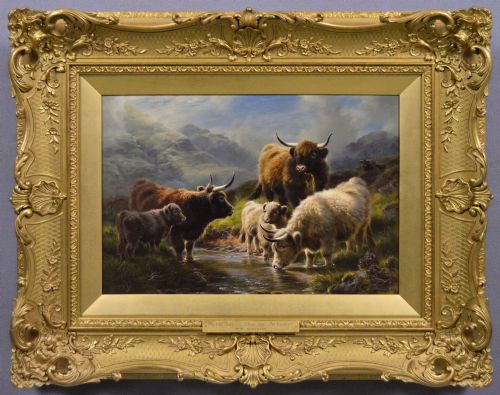
Most pieces on this page date from the Victorian era, spanning decades from eighteen-sixty to nineteen-twenty. They range from intimate portraits of farmyard animals to expansive landscapes featuring Highland cattle near lochs.
The compositions combine topography with animal portraiture, often showing domestic beasts resting by rivers, working in farmyards, or navigating winter snow. Human figures occasionally appear beside cattle and poultry, though animals remain the primary focus.
Materials and technique
Artists painted these works using oil paint applied to canvas, capturing the texture of animal coats and natural light across rural terrain. Many surviving canvases retain their original wood, giltwood, or gesso frames.
The technique relies on layered oil pigments to build depth in landscape backgrounds while rendering specific breeds of cattle, sheep, and hounds with anatomical precision.
Listings feature nineteenth-century oil paintings on canvas, encompassing Victorian pastoral, realist, and sporting art styles by British and European painters.
Distinctions in quality
Quality rests on the precision of animal anatomy and the artist's ability to integrate livestock naturally into the surrounding landscape. Stronger examples show careful attention to light on coats and convincing textures in fur, wool, and feathers.
The strength of the composition dictates the visual impact, separating routine farmyard records from masterly works by established nineteenth-century animal painters.
Hendrik Willem Schweickhardt·John Sargent Noble·William Watson Jnr·Robert Watson·Henry Schouten·Thomas Sidney Cooper·John Frederick Herring Jnr·William Barraud·Samuel Joseph Clark·George Armfield·Eugene Joseph Verboeckhoven·Percival Glenfern·John Frederick Herring·Fannie Moody·Pierre Emmanuel Dielmans·Charles Jones·Claude Cardon·John W Morris·Constant Ludovic Artz·Henry Brittan Willis·J L Van Leemputten·Henry Cheadle·William Sidney Cooper·James Ward
The Traditional Animal Landscape Painting Glossary
- Oil on Canvas
- A traditional medium where oil paint is applied to a woven fabric stretched across a wooden frame. This surface allowed artists to achieve rich colour depth and blended tones.
- Giltwood
- Wood carved and covered with a thin layer of gold leaf, commonly used for framing nineteenth-century paintings. Giltwood frames enhance the warmth of oil landscapes.
- Gesso
- A paint mixture consisting of a neutral binder mixed with chalk, pigment, or gypsum used to prepare wood surfaces or create raised details on frames. It provides a smooth base for gilding.
- Victorian Pastoral
- An artistic style celebrating rural serenity, agricultural labour, and peaceful farm animals. These scenes romanticise the nineteenth-century countryside.
- British School
- A designation for paintings produced by artists trained or working within Britain. It groups together diverse hands sharing national artistic traditions.
Traditional Animal Landscape Painting: Frequently Asked Questions
What animals appear most often?
Cattle, sheep, horses, and dogs dominate these rural scenes, reflecting the agricultural and sporting interests of the nineteenth century. Highland cattle and farmyard poultry also feature frequently across the Scottish and British landscapes.
Artists frequently grouped mixed livestock together near streams, rivers, or farm buildings to create balanced compositions of rural life.
How do I date these paintings?
Dates rely on period styles, artist working spans, and framing techniques typical of the nineteenth century. Victorian works often show specific clothing, agricultural practices, or breed standards popular at the time.
Signatures, exhibition labels, and canvas stamps on the reverse provide further clues for narrowing down the decade of creation.
Where were these scenes painted?
Locations range from Kentish pastures and Welsh valleys to Scottish lochs and continental farmyards. Artists travelled into the countryside to sketch livestock and landscapes from life before finishing canvases in the studio.
Many titles record specific geographical markers, identifying exact regions where pastoral farming and sporting pursuits took place.
How should I display them at home?
These oil paintings suit traditional interiors, studies, or living rooms where their earthy tones complement wood furniture. Proper placement avoids direct sunlight to protect oil pigments and canvas integrity over time.
Matching the painting with an appropriate period frame helps integrate the artwork into traditional wall arrangements.