




Antique Sheep Painting
An antique sheep painting captures pastoral quiet, bringing rural atmosphere and nineteenth-century landscape traditions into a room.
Defining the genre
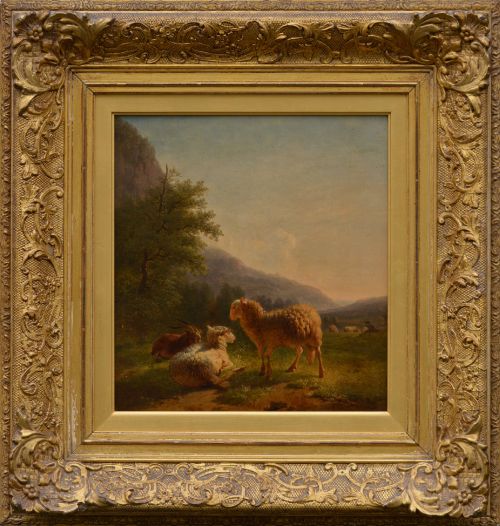
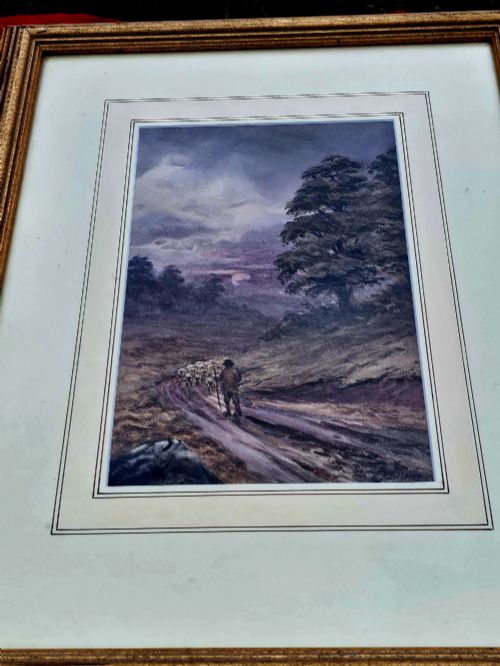
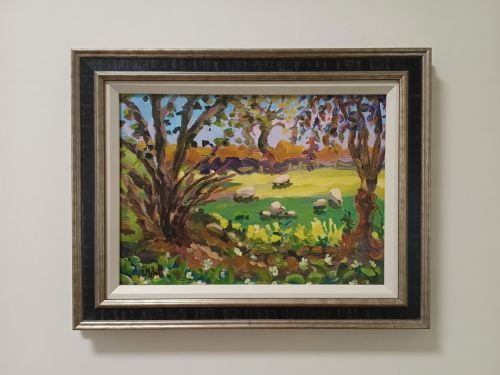
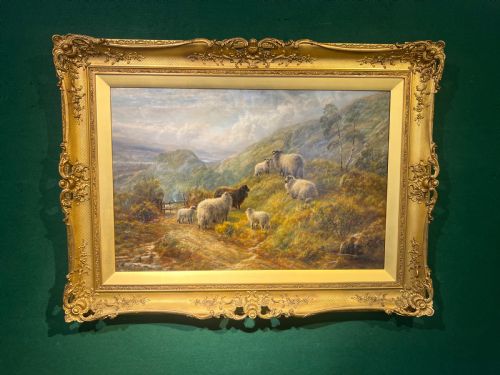
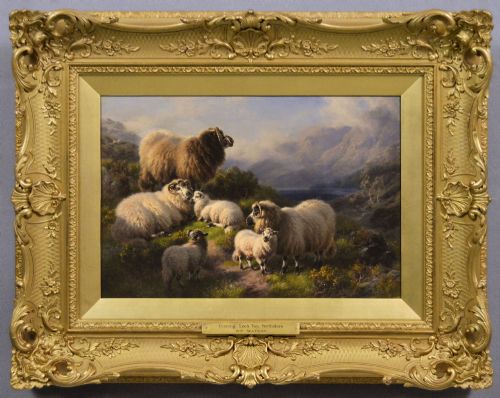
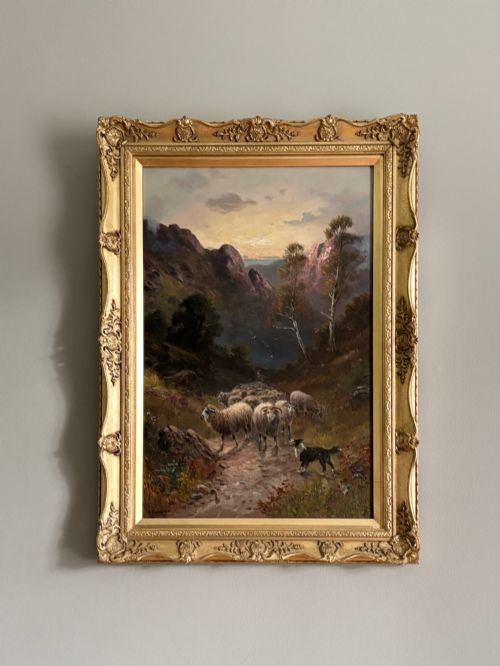
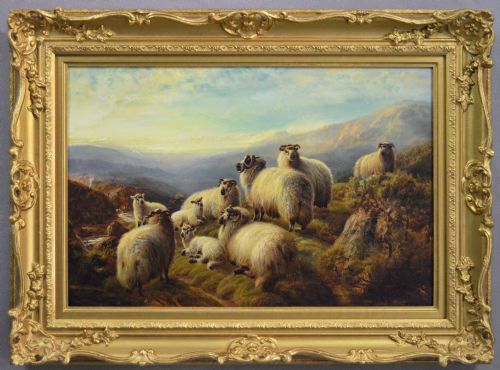
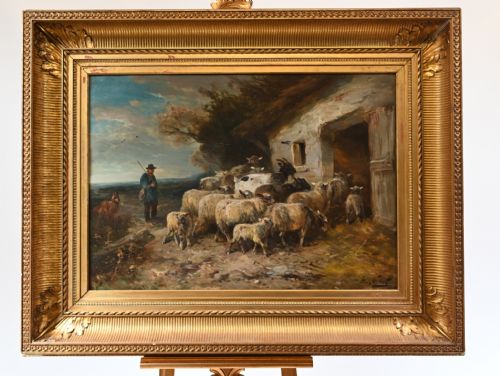
An antique sheep painting depicts flocks grazing across moorlands, resting on hillsides, or being driven along country tracks by shepherds. These works form part of a broader pastoral tradition that flourished across Britain and Europe during the nineteenth and early twentieth centuries.
The versions most commonly met on this page are watercolours on paper and oil paintings on canvas, often housed within period giltwood frames. Scenes range from Scottish highland landscapes to Welsh estuaries and English common land.
Artists focused on the quiet rhythm of rural life, recording sheep against changing weather and seasonal light. The subject allowed painters to explore atmospheric skies, open terrain, and the textured fleece of animals in natural settings.
Materials and technique
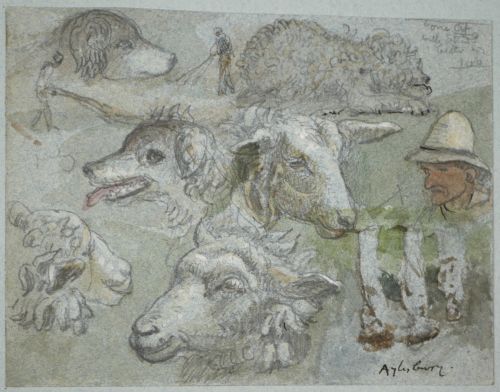
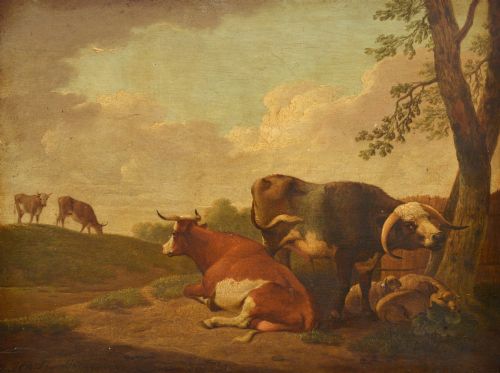
Painters utilised oil on canvas, wood panels, copper panels, and pastel on buff paper, alongside watercolour washes on paper. Canvas supports were occasionally laid onto board for added stability.
Watercolours relied on transparent pigments layered on paper to capture soft atmospheric effects and morning light. Oil paintings employed richer impasto to build texture in heather, wool, and earthy terrain.
Finished works were typically mounted behind glass and set into carved, gilt wooden frames that complemented the tonal palette of the landscape.
Retail Price Guide 2026
Typical UK retail prices for sheep painting, calculated from the Sellingantiques database of over a million retail prices indexed since 2003. This retail price guide relies exclusively on Sellingantiques data; no external sources or auction records are used, so the figures do not describe the wider market.
Listings feature works executed in watercolour, oil on canvas, oil on wood panel, and pastel on paper.
Distinctions in execution
Quality rests upon the artist's command of anatomy, light, and spatial depth within the landscape. Superior works capture the weight and wool texture of the animals convincingly while integrating them into a balanced composition.
Lesser examples rely on formulaic repetition, stiff animal forms, and flat backgrounds devoid of atmospheric perspective. The handling of the surrounding sky and terrain often separates a hasty sketch from a considered exhibition piece.
Robert Watson·Henry Charles Fox·Cornelius Pearson·Charles James Adams·Thomas Sidney Cooper·John Syer·James Stark·Alfred Augustus Glendening·Owen Bowen·William Langley
The Antique Sheep Painting Glossary
- Pastoral
- A style of art concerning itself with rural life, shepherds, and domesticated animals in natural landscapes. These scenes emphasise tranquility and traditional agrarian routines.
- Impasto
- Paint applied thickly to a canvas or panel, standing proud of the surface. This technique creates physical texture and catches light on wool or rough ground.
- Giltwood
- Wood carved and covered with a thin layer of gold leaf or gilt powder. Antique frames often utilise this finish to enhance the warmth of oil paintings.
- Provenance
- The documented history of ownership surrounding a painting. Tracing previous collections confirms authenticity and tracks the journey of the artwork.
Frequently Asked Questions
How should I hang an antique sheep painting?
Keep watercolours away from direct sunlight to prevent the pigments from fading over time. Oil paintings benefit from stable indoor humidity away from heat sources.
Ensure the wall fixings match the weight of the original giltwood frame. Hang the piece at eye level where the lighting enhances the depth of the landscape.
How do I distinguish watercolours from oil paintings?
Watercolours are painted on paper, require protection beneath glass, and display translucent washes of colour. Oils are executed on canvas, wood, or copper, showing a heavier surface texture.
Close inspection reveals whether the pigment sits flat within paper fibres or rests thickly on top of a prepared ground.
What periods do these paintings typically date from?
The majority originate from the nineteenth century and the Edwardian era. Stylistic traits often align with Victorian pastoral art popular between eighteen-fifty and nineteen-twenty.
Signatures, framing styles, and artist exhibition records help narrow down the exact decade of creation.
Why do sheep feature so prominently in these landscapes?
Sheep farming defined much of the British and European rural economy during the nineteenth century. Artists used flocks to introduce a sense of scale, movement, and domestic quiet into vast moorland views.
The animals also allowed painters to study shifting light across wool and open pasture.