


19th Century Livestock Art
These 19th century livestock art works capture sheep, cattle, and farm animals within pastoral landscapes, offering collectors a window into rural history.
19th Century Livestock Art
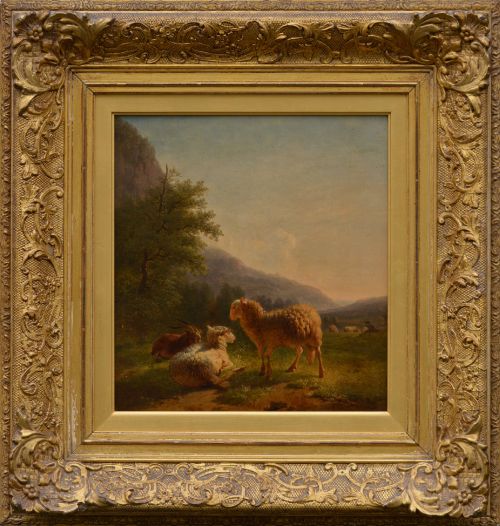
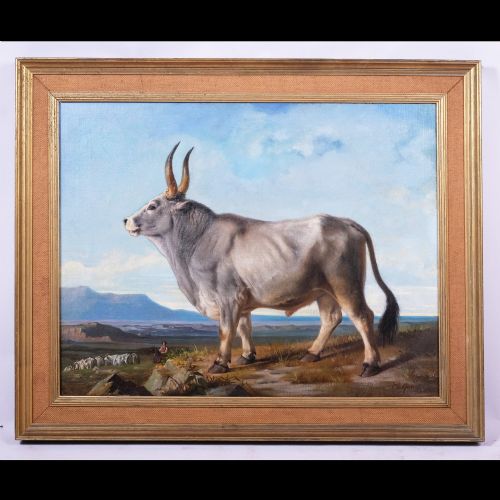
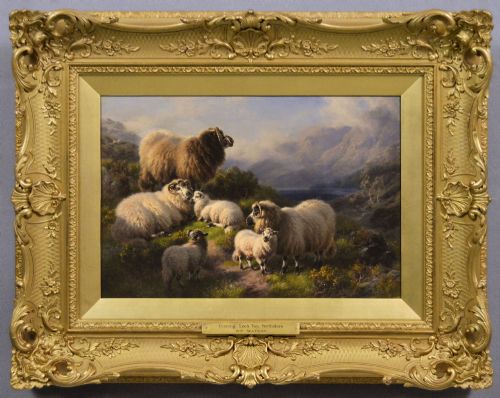
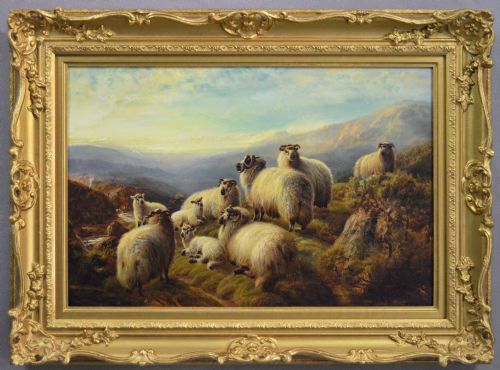
19th century livestock art encompasses oil paintings and watercolours depicting farm animals, sheep, cattle, and horses set in rural, pastoral, and highland landscapes. You will most frequently meet oil on canvas works from the Victorian period, often featuring detailed animal portraits or wider farming scenes.
The pieces range from intimate watercolours on paper to large canvas compositions created by British and European artists. Common subjects include Highland cattle in snowy glens, sheep resting near coasts, and bulls in farmyards.
Materials and technique
Artists of this era predominantly utilised oil paint on canvas, applying layers of pigment to build texture in animal coats and atmospheric depth in skies. Giltwood and gesso frames frequently house these works, providing ornate borders that complement the pastoral subjects.
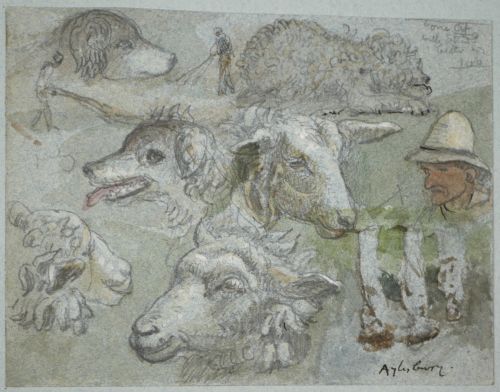
Watercolour on paper also appears across the selection, often combined with mixed media to capture lighter, more fluid rural vignettes. Canvases are stretched over wooden frames, occasionally accompanied by gold leaf detailing on the surrounding mouldings.
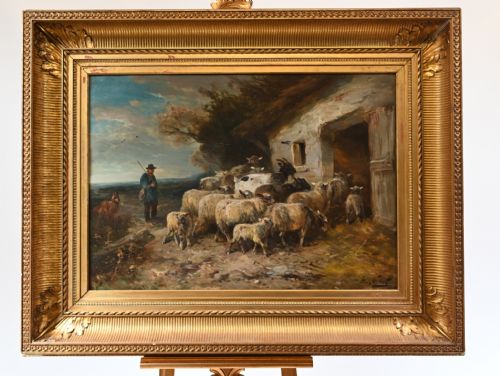
Several canvases squeeze sleepy sheep, curious bulls, and stray cockerels into the same crowded farmyard frame.
Quality variations in the work
The standard of 19th century livestock art depends on the precision of animal anatomy, brushwork dexterity, and the rendering of light within the landscape. Master works achieve lifelike textures in wool and hide, whereas lesser examples show stiffer handling of figures and repetitive background foliage.
Compositional balance also dictates distinction, with superior pieces integrating the livestock naturally into expansive scenery rather than treating animals and landscapes as separate elements. The integration of signed attribution and original framing further elevates individual pieces.
Eugène Verboeckhoven·James Smetham·William Watson Jnr·Robert Watson·Henry Schouten·A M Gauci·William Henry Mander·Thomas Sidney Cooper·Franz van Severdonck·Ernest Pile Bucknall·Eugene Joseph Verboeckhoven·Heinrich Harder·James de Rijk·C Lainé·Charles Jones·Arthur Charles Dodd·John W Morris·Frederick Richard Lee·Henry Brittan Willis·Edgar Hunt·Henry Cheadle·William Sidney Cooper
The 19th Century Livestock Art Glossary
- Oil on Canvas
- Pigment mixed with drying oil applied to a stretched woven fabric support. This traditional medium allows for rich colour blending and textured brushwork.
- Giltwood
- Wood carved and coated with gold leaf or gold paint. It frequently forms the decorative frames enclosing Victorian paintings.
- Watercolour
- Paint consisting of colour pigments suspended in a water-soluble vehicle. It is typically applied to paper to create luminous, transparent washes.
- Gesso
- A paint mixture consisting of a binder mixed with chalk, pigment, or plaster. It is applied to wooden frames as a base before gilding.
- Pastoral
- A genre of art depicting rural life and domesticated animals in idealized country settings. These scenes often emphasise peaceful harmony between herds and nature.
19th Century Livestock Art: Frequently Asked Questions
How do I care for an antique oil painting?
Keep the canvas away from direct sunlight and dramatic temperature fluctuations to prevent cracking in the paint layers. Dust the surface gently with a soft, dry brush without applying moisture.
Avoid using chemical cleaners on the canvas or the original giltwood frame. Professional conservation is recommended for any deeper cleaning or canvas repairs.
What subjects are most common in pastoral art?
Sheep and cattle dominate these rural compositions, often shown grazing in Scottish highlands, resting by rivers, or sheltering in barns. Horses and poultry also appear within broader farmyard scenes.
Artists frequently placed these animals within recognisable British and European countryside settings. The focus remained on celebrating agrarian life and domesticated livestock.
How can I tell a Victorian painting's period?
Examine the stretcher frames, canvas type, and framing materials for period-appropriate manufacture. Handwritten inscriptions on the reverse often provide dates or artist attribution.
Stylistic cues such as 19th Century Realism or Victorian Pastoralism also help date the work. Pigment analysis and canvas stamps can further confirm the era of creation.
Are watercolours framed differently than oils?
Watercolour paintings on paper require protective glass and mount boards to prevent environmental damage. They are generally housed in lighter frames compared to heavy oil canvases.
Oil paintings on canvas remain unglazed to let the textured brushwork breathe. Giltwood frames for oils are typically deeper and structurally heavier to support stretched fabric.