

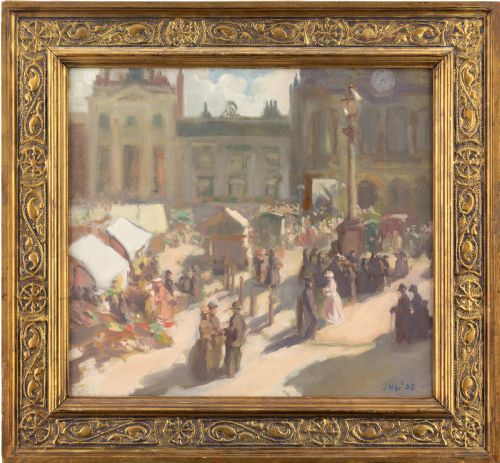
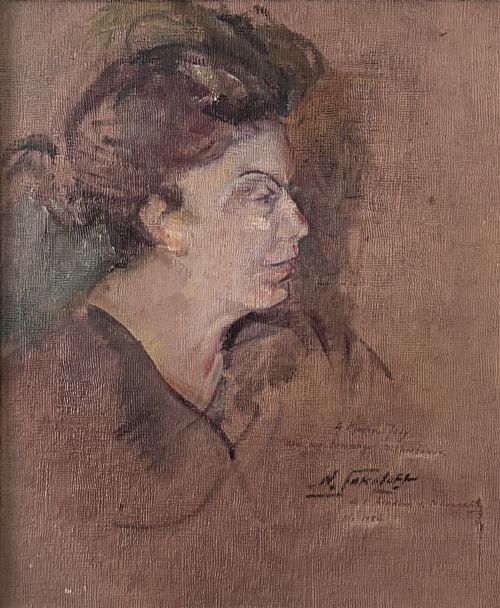
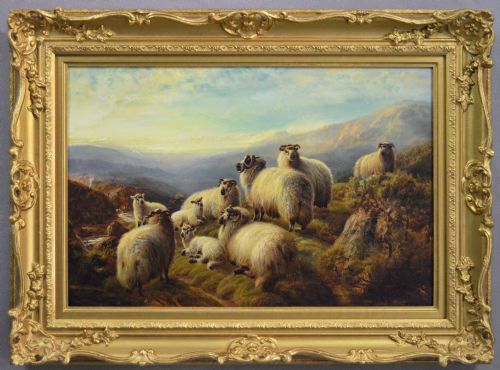


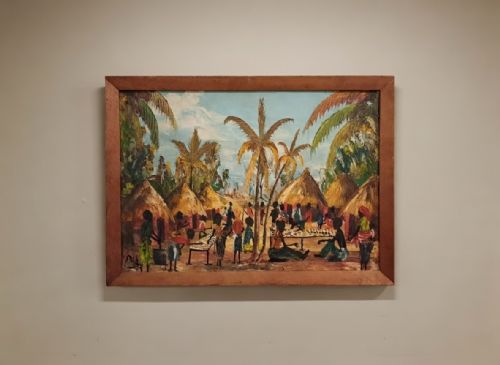
Earthy Oil Canvas Painting
An earthy oil canvas painting brings rich, muted tones and textured brushwork straight to your wall, capturing pastoral scenes and quiet rural life.
Earthy Oil Canvas Painting
An earthy oil canvas painting draws the eye to natural pigments, subdued greens, warm browns, and muted ochres that capture landscapes, farmyards, and rural vistas. You will encounter works spanning the nineteenth century through to the mid-twentieth century, rooted in British Impressionism, the Barbizon School, and French Provincial traditions.
The subjects on this page lean heavily toward pastoral views, working horses, cattle in woodland, and river scenes painted on canvas, board, or wood. Artists from this broad span of periods applied oil paint to build up textured surfaces that give depth to foliage, earth, and stone.
Many of these pieces bear signatures from regional painters and notable figures working within British and European landscapes. The selection offers a direct window into the changing rural idyll recorded by painters across successive decades.
Materials and construction
Painters relied upon traditional oil paint applied to woven canvas stretched over wooden frames, occasionally utilising wooden boards as a firm support. The combination of slow-drying oil mediums allowed artists to blend pigments directly on the support or build thick impasto layers for texture.
Gilt frames frequently house these works, providing a decorative border that complements the deep, earthy tones of the compositions. Stretchers and canvas grounds show the hand of the artist or period framer, anchoring each piece in its specific era of production.
Judgement of quality
Quality rests upon the handling of light and the sureness of the brushwork, where confident strokes bring a landscape or animal study to life. Superior pieces demonstrate a harmonious balance of earthy tones that create genuine atmospheric depth without relying on excessive detail.
The strength of the composition and the artist's ability to render movement in figures, livestock, or water elevate certain works above standard decorative pieces. The relationship between the painted surface and the original or period framing further distinguishes the finer examples.
William H Myers·John Hodgson Lobley·Raimond Louis Lecourt·Herbert Royle·Reginald Grange Brundrit·Vincenzo Irolli·John Frederick Herring·Robert Finley McIntyre·Paul Jones·Thomas Creswick·Owen Bowen·William Traies·Ernest Higgins Rigg·Alfred Banner·J L Van Leemputten·Frederick William Jackson·Kershaw Schofield·Alois Arnegger·George F Wetherbee·William Greaves·T B Garvie·Maurice Wagermans
The Earthy Oil Canvas Painting Glossary
- Canvas
- A heavy woven fabric stretched across a wooden frame to serve as a sturdy foundation for oil paint. This textile base has remained a primary support for centuries of painters.
- Impasto
- Paint applied thickly to a canvas, standing out in relief from the surface. This technique allows brush marks and knife strokes to catch the light.
- Barbizon School
- A nineteenth-century French movement focused on realistic, tonal landscape painting en plein air. Artists in this circle favoured earthy palettes and naturalistic rural views.
- Stretcher
- The internal wooden framework that holds a painted canvas taut. In older works, inspection of this wooden structure helps determine the age of the piece.
- Gilt
- A thin layer of gold leaf applied to wooden picture frames. This decorative finish was widely used to enhance nineteenth and early twentieth-century fine art.
Earthy Oil Canvas Painting: Frequently Asked Questions
What subjects appear in these paintings?
The works focus primarily on rural landscapes, farmyards, woodland paths, and agricultural scenes. Cattle, working horses, and figures near rivers recur frequently across the selection.
Artists captured these rustic subjects outdoors or rendered them from studies in the studio. The resulting canvases reflect a deep engagement with the countryside during the nineteenth and early twentieth centuries.
How should I hang an oil painting?
Choose a wall away from direct sunlight and sudden temperature shifts to protect both the canvas and the oil pigments. Hang the piece securely from a sturdy picture hook matched to the weight of the frame.
Keep the painting at eye level where the texture of the brushwork can be appreciated. Adequate indirect lighting will help bring out the subtle earthy tones within the composition.
Were these painted outdoors?
Many artists of this era embraced plein air painting, taking their canvases and oil paints directly into fields, woodland, and farmyards. This direct observation helped them capture natural light and atmospheric weather conditions accurately.
Other works were composed in studios using field sketches and preparatory drawings gathered during travels. Both methods resulted in the textured, grounded landscapes seen in these listings.