




Tortoiseshell Boulle Desk
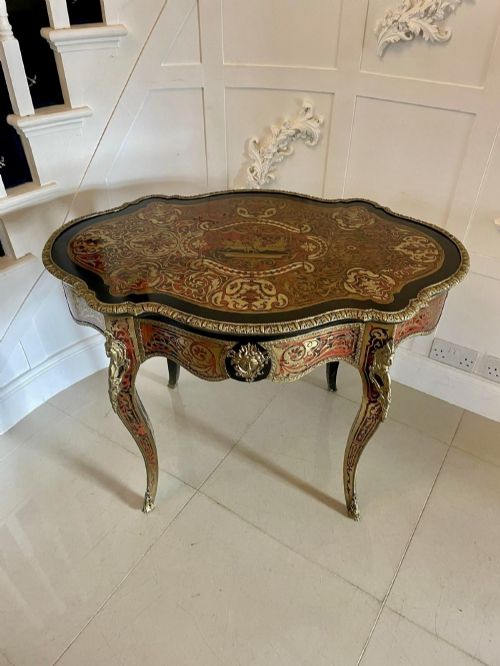
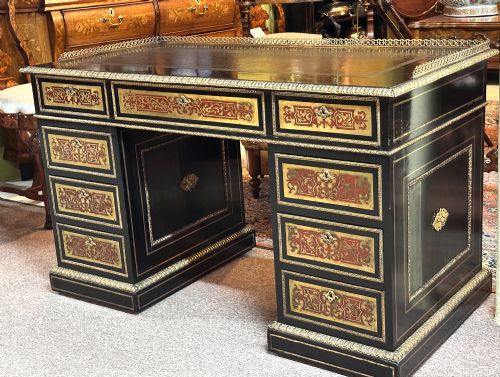
These tortoiseshell boulle desk pieces bring together brass inlay, tortoiseshell veneer and ormolu mounts to define a grand writing space.
Tortoiseshell Boulle Desk
A tortoiseshell boulle desk brings together intricate brass marquetry, tortoiseshell veneer and gilt bronze mounts to create a striking surface for correspondence. These pieces include writing desks, bureau plats and smaller desk stands with inkwells, originating largely from nineteenth century French and English workshops.
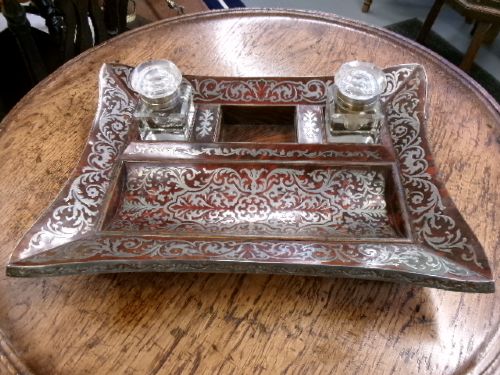
The version most commonly met on this page is the nineteenth century French writing desk or bureau plat, often styled in the Napoleon III or Louis XV manner. Alongside these complete desks, collectors encounter smaller desk accessories and writing boxes displaying the same characteristic red or dark tortoiseshell ground inlaid with brass scrolls.
Materials and technique
The technique relies on cutting opposing sheets of brass and tortoiseshell simultaneously, a process known as première partie and contre-partie. This allows the artisan to create intricate floral and scroll marquetry patterns that fit together precisely.
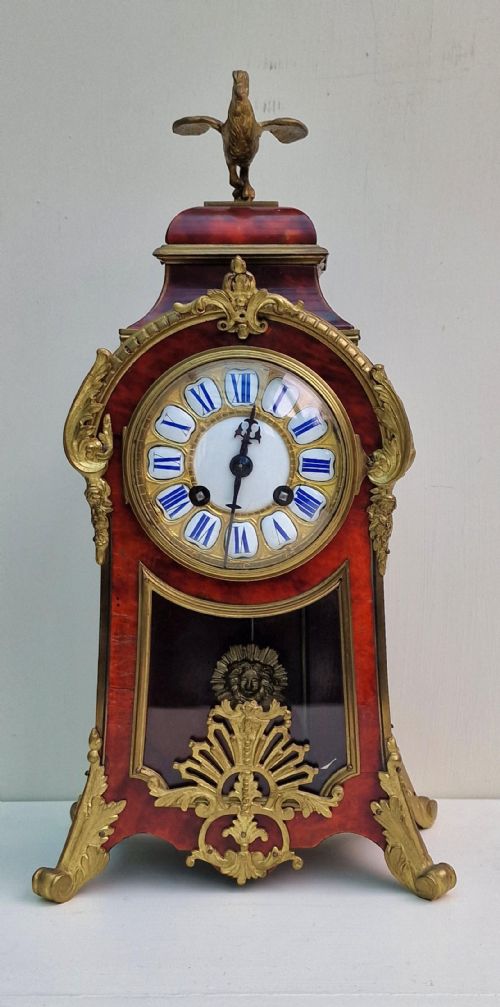
Makers laid these delicate veneers over ebonised wood carcases, finishing the edges and corners with cast ormolu mounts. Glass inkwells, leather writing inserts and enamel clock dials often complement the brass and tortoiseshell surface.
Tortoiseshell Boulle Desk Retail Price Guide 2026
Typical asking prices for tortoiseshell boulle desk among the pieces listed under this phrase on Sellingantiques today, from the lower quarter to the upper quarter. They describe what is for sale here now, not the wider market.
Even a small desk accessory might hide a tiny inkwell lid that still snaps shut after more than a century.
Judgement of quality
Quality rests on the crispness of the brass cutting and the depth of the tortoiseshell beneath. The finest examples show tightly controlled scrolls without excessive filler in the joints.
The execution of the ormolu mounts separates standard production from exceptional work. Castings with sharp chased details and secure placement elevate the entire piece.
The Tortoiseshell Boulle Desk Glossary
- Boulle
- A style of marquetry using brass and tortoiseshell, named after André Charles Boulle. It creates a rich contrast of metallic shine and mottled organic warmth.
- Ormolu
- Gilt bronze mounts applied to furniture and clocks. This technique adds architectural definition and protects vulnerable corners.
- Bureau plat
- A flat-topped writing desk finished on all sides. These pieces often feature drawers and elaborate brass inlay across the top.
- Bonheur du jour
- A light lady writing cabinet with a small tiered superstructure above the desk surface. This form appeared in nineteenth century iterations of the style.
- Ebonised wood
- Timber stained or painted black to imitate ebony. This dark ground provides a stark contrast for the glowing tortoiseshell and brass marquetry.
Tortoiseshell Boulle Desk: Frequently Asked Questions
What is a boulle desk?
A boulle desk is a nineteenth century writing surface decorated with inlaid brass and tortoiseshell marquetry. These pieces often display French revival styles such as Louis XV or Napoleon III.
They serve as both functional writing furniture and decorative centerpieces, combining warm organic shells with bright metallic patterns.
How do I date a boulle desk?
Dating relies on examining the construction methods, secondary woods and mounting styles. Nineteenth century pieces frequently employ ebonised carcases and machine-assisted brass cutting.
Comparing the specific floral motifs and ormolu casting styles helps place the object within Victorian or continental periods.
Where were boulle desks made?
Many boulle desks originated in French workshops during the nineteenth century, responding to a strong revival of earlier court aesthetics. English makers also produced comparable pieces.
Craftsmen in London and Paris utilised imported tortoiseshell and brass to satisfy demand for elaborate salon furniture.
How do I care for tortoiseshell?
Tortoiseshell requires stable humidity and protection from direct sunlight to prevent warping and fading. Gentle dusting with a dry cloth keeps the surface clean without damaging the delicate brass inlay.
Avoid chemical polishes and abrasive cleaners which can scratch the soft shell and loosen the fine marquetry pins.