




Topographical Watercolour Painting
A topographical watercolour painting captures a specific place with precision, offering a direct window into landscapes and townscapes of past centuries.
Topographical Watercolour Painting
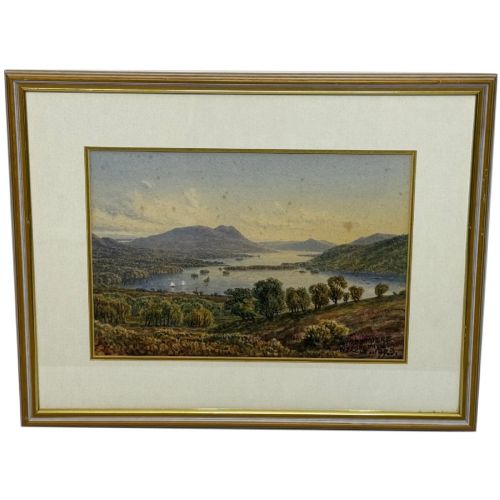
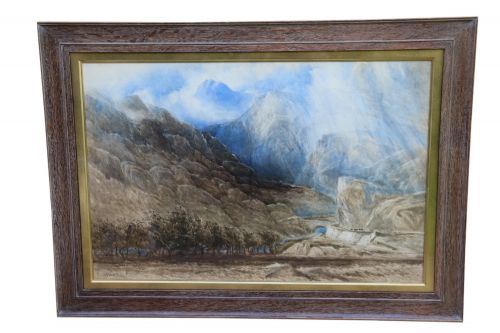
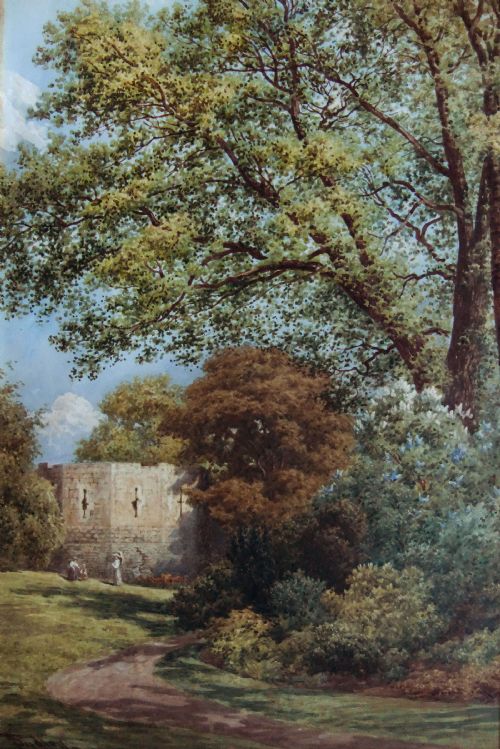
A topographical watercolour painting records actual locations, buildings, and natural landmarks with careful attention to geographical detail rather than purely imaginative composition. When exploring topographical watercolour painting options, buyers encounter works ranging from early nineteenth-century Welsh passes and military scenes to twentieth-century cityscapes along the Thames.
The pieces on this page span several periods, with a strong representation of nineteenth-century and Edwardian works alongside twentieth-century interpretations. Common subjects include British rivers, northern towns, cathedral cities, and occasional overseas scenes such as Middle Eastern views.
Framed artwork dominates the selection, often presented behind glass in wood or gilt frames that complement the delicate nature of works on paper. These paintings function primarily as historical records and wall art, preserving local history through the eyes of period artists.
How They Were Made
Artists typically applied watercolour pigment onto paper or board, sometimes combining the medium with ink lines to define architectural and topographical contours. This technique allowed painters to build up translucent washes of colour alongside precise linear details.
Protection and presentation relied on traditional framing methods involving glass and wooden mouldings, occasionally finished with gilt. These materials sheltered the delicate watercolours from environmental moisture and handling damage.
Seagulls gather noisily above the Thames before the Houses of Parliament in one mid-century watercolour, forever frozen in mid-flight.
What Varies In Quality
Quality rests upon the artist's ability to balance technical precision in architectural or geographical rendering with atmospheric depth in the landscape. Stronger examples display confident brushwork and accurate perspective that bring the recorded location to life.
The condition of the paper pigment and the quality of the surrounding frame also influence the overall standing of a piece. Works that retain their original vibrancy without excessive fading or discoloration represent the higher end of the medium.
William Taylor Longmire·Henry Martin Pope·Thomas Cooper Moore·A. G. Hayward·H. E. Tidmarsh·Amos Green·Tom Dudley·Claude Muncaster·William A. Macdonald·George De Paris·Herbert John Finn·J. D. Walker·Joseph William Carey·T Fairfax
The Topographical Watercolour Painting Glossary
- Monochrome ink
- Drawing executed in a single colour of ink, often black or brown, to establish strong outlines and shadows before the application of washes. Artists frequently used this combination for architectural clarity.
- Gilt wood
- Wood framing finished with a thin layer of gold leaf or metallic paint. This treatment added traditional decorative weight to the presentation of works on paper.
- Watercolour pigment
- Finely ground colour particles suspended in a water-soluble binder. It produces translucent effects when thinned with water.
Topographical Watercolour Painting: Frequently Asked Questions
What is a topographical watercolour painting?
A topographical watercolour painting is a work on paper that depicts a real, identifiable place such as a specific building, town, or landscape. These pieces served as visual records before the widespread use of photography.
Artists focused on accurate representation of the scene, combining precise drawing with watercolour washes to document architecture and terrain.
How should I hang these watercolours?
Watercolours are sensitive to light and require careful placement away from direct sunlight to prevent the pigments from fading. Hanging them on interior walls with controlled lighting helps preserve the paper.
Ensure the room humidity remains stable, as fluctuations can affect both the paper support and the wooden framing materials.
How do I date a watercolour painting?
Dating often relies on artist signatures, framing clues, historical clothing styles visible in the scene, or written inscriptions on the reverse of the work. Period styles from the Georgian, Victorian, and Edwardian eras offer strong chronological markers.
Paper characteristics and watermark evidence can also help narrow down the production decade.
Are these paintings original works?
The pieces listed are original painted artworks rather than mass-produced reproductions or prints. Each watercolour shows individual brushstrokes and the unique hand of the artist.
Some may incorporate ink underdrawing, but every composition is applied directly to the paper or board by hand.