




Victorian Architectural Watercolour
These Victorian architectural watercolour paintings record churches, castles, and grand interiors through the precise hand of nineteenth-century artists.
Victorian Architectural Watercolour
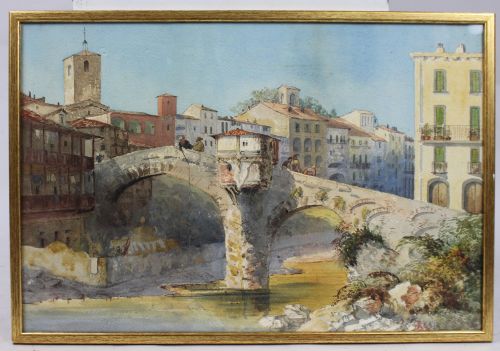
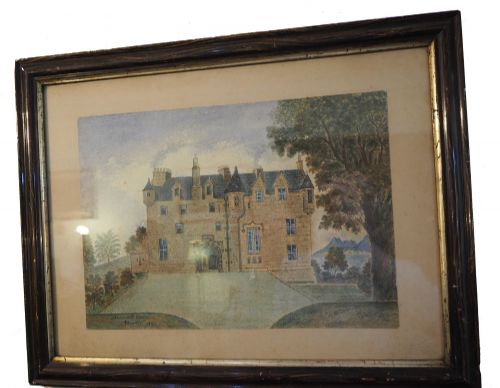
A Victorian architectural watercolour captures specific buildings, ruins, and street scenes across Britain and continental Europe using paper and pigmented paint. These works range from intimate studies of English abbeys and country houses to grand Italianate views of Venice and Rome.
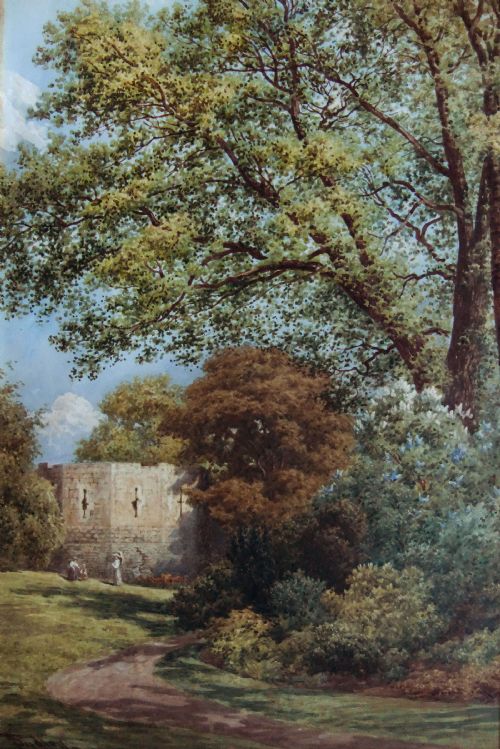
Buyers will encounter framed paintings depicting recognizable landmarks such as York Minster, Kew Gardens, and foreign cathedrals. The selections often span the nineteenth century, extending into the early twentieth century with topographical and fine art styles.
Many pieces present detailed elevations and interiors of historic properties, recording domestic and ecclesiastical spaces with careful perspective. Artists frequently signed their works or attributed them to specific schools, documenting both grand architecture and everyday streetscapes.
Materials and Technique
Artists painted these works on paper using watercolour pigment and wash techniques to build transparency and fine linear detail. The application requires steady precision to delineate stone facades, roof tiles, and intricate window tracery without relying on heavy bodycolour.
Completed watercolours typically sat behind glass within wood or gilt wood frames to protect the delicate pigments from moisture and light. Original mountings and gold leaf accents often complement the period aesthetic of the framed paintings.
Listings feature paper, glass, wood, and gold leaf alongside watercolour pigment across nineteenth-century and early twentieth-century periods.
Judging Quality
The distinction between ordinary topographical records and superior works rests on the surety of the draughtsmanship and the handling of light. Skilled artists render perspective and shadow with a confident wash that brings stone and masonry to life.
Composition and historical provenance also elevate a piece, particularly when named artists or notable locations are documented. A well-preserved sheet retains vibrant pigment strength and clean paper margins beneath its glass and frame.
Sir Thomas Newenham Dean·Benedetto Salviati·Hercules Brabazon Brabazon·David Small·John Sowden·Tom Dudley·David Law·Peter Toft·George De Paris·William Crouch·Margaret Thompson
The Victorian Architectural Watercolour Glossary
- Watercolour paint
- A medium consisting of finely ground pigment suspended in a water-soluble binder, applied to paper surfaces in washes. It allows for translucent layers that capture atmospheric light.
- Gilt wood
- Timber frames finished with a thin layer of gold leaf or metallic powder, commonly used to frame nineteenth-century art. This finish adds warmth and a formal presentation to the framed picture.
- Topographical
- Pertaining to the accurate representation of specific places, buildings, or landscapes. In these works, architectural fidelity takes precedence over imaginative composition.
- Diptych
- A painting comprising two distinct panels hinged or presented as a pair. This format allows artists to display complementary architectural views side by side.
- Wash
- A technique involving diluted watercolour pigment spread evenly across paper to create smooth skies, water, or large expanses of stone.
Victorian Architectural Watercolour: Frequently Asked Questions
What subjects do these watercolours show?
These paintings depict historic churches, abbeys, castles, street scenes, and grand domestic interiors from Britain and continental Europe. Artists recorded specific buildings with careful attention to architectural detail and surroundings.
Subjects range from Yorkshire abbeys and Hampshire churches to Venetian canals and Italian ruins, reflecting both home travels and the Grand Tour.
How should I hang and care for them?
Keep these works away from direct sunlight to prevent the watercolour pigments from fading over time. Maintaining stable room temperature and low humidity protects both the antique paper and the original wood or gilt framing.
Glazing should remain intact to shield the delicate painted surface from dust and atmospheric pollutants.
How do I identify the period?
Dating relies on stylistic clues within the architecture depicted, artist signatures, period framing materials, and sometimes handwritten inscriptions on the reverse of the paper. Many works carry specific dates or reflect the reigning aesthetic of the nineteenth century.
Costume details in accompanying figures or the specific technique of the pigment wash also help narrow the decade of creation.
Were these painted on site?
Many artists created initial pencil sketches or watercolour studies outdoors before completing finished paintings in the studio. Travelling painters captured direct observations during tours of Europe and Britain.
Some larger gallery watercolours required significant studio work to achieve their detailed architectural perspective.