


Antique Cathedral Painting
An antique cathedral painting captures towering spires and sacred interiors through the skilled hands of artists across centuries.
Antique Cathedral Painting
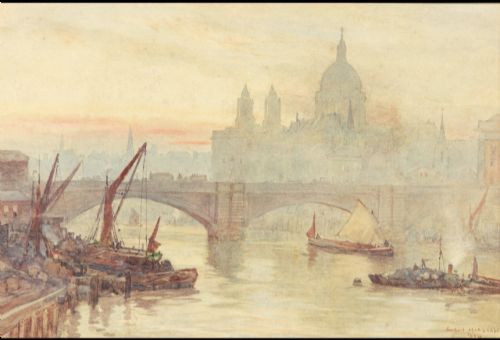
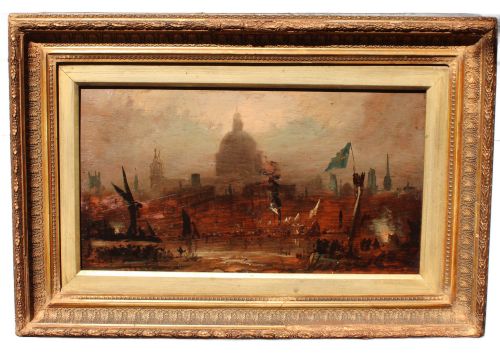
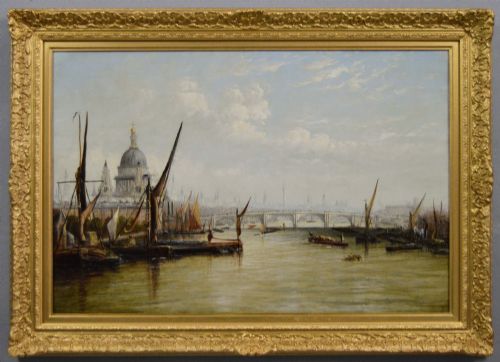
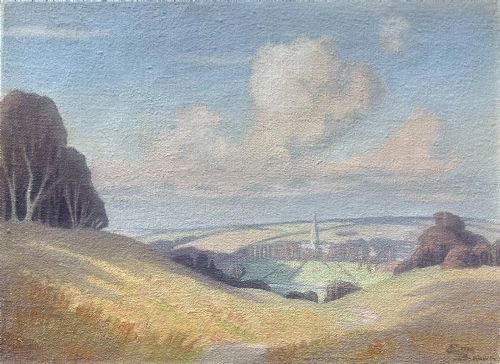
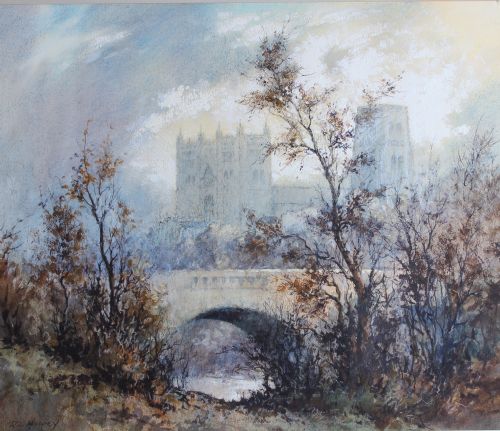
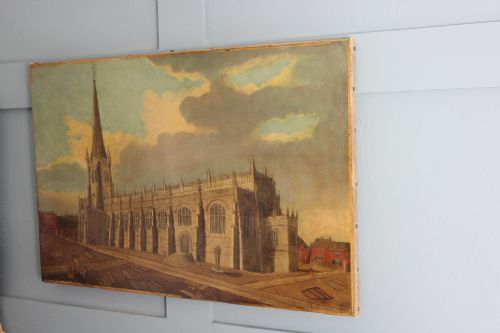
When you search for an antique cathedral painting, you encounter works spanning from the eighteenth century through the mid-twentieth century, capturing sacred architecture across Britain and continental Europe. These pieces take the form of detailed architectural watercolours and robust oil paintings on canvas or board.
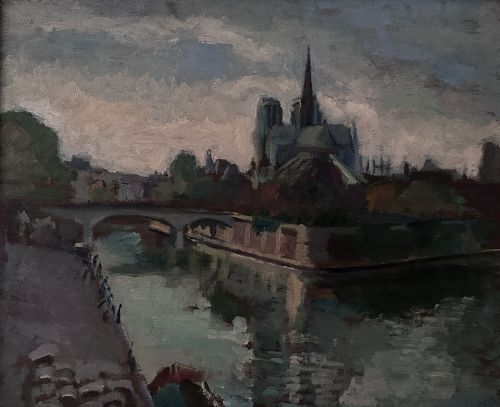
The most common examples you meet on this page are nineteenth-century watercolours depicting English and French cathedrals, alongside twentieth-century oils focusing on townscapes with prominent ecclesiastical landmarks.
Materials and methods
Artists relied primarily on paper for watercolours and canvas or wood panels for oil paintings, often incorporating gesso frames and gold leaf detailing to finish the pieces. Technique shifted from precise topographical studies in the nineteenth century toward post-impressionist and modern brushwork by the nineteen-thirties.
Watercolours utilised transparent washes over pencil sketches to define stone vaulting and stained glass, while oils built up texture with thick pigments to render the dramatic light inside church interiors and across city river views.
The listings combine nineteenth-century architectural watercolours with twentieth-century oil paintings on canvas, paper, and wood.
Markers of distinction
Quality rests in the precision of the architectural perspective and the artist's command of light, separating hurried topographical records from deeply atmospheric compositions. Superior works capture the monumental scale of stone facades and interior vaulting with confident brushstrokes rather than rigid mechanical lines.
The depth of the palette and the condition of the original surface material, whether delicate paper or textured canvas, dictate the enduring strength of each piece.
Francis Moltino·Robert Leslie Howey·Fred Lawson·Henry John Kinnaird·Edward Fletcher·David Roberts·William Callow·Paul Marny
The Antique Cathedral Painting Glossary
- Watercolour
- A painting method where fine pigment is suspended in water-based solution applied to paper. This medium allows for luminous washes that suit detailed architectural studies.
- Gesso
- A plaster-like mixture applied to wood or canvas as a base for painting or used in decorative frames. It provides a smooth surface for gilding.
- Topographical
- A style of art focused on the accurate representation of specific places and buildings. These works served as visual records before the widespread use of photography.
- Post-Impressionism
- An art movement extending from the late nineteenth century that rejected naturalistic depiction in favour of expressive colours and forms. Artists explored structural themes rather than strict optical realism.
Antique Cathedral Painting: Frequently Asked Questions
How do I date an antique cathedral painting?
Dating relies on stylistic clues, framing materials, and the costume of any figures present in the foreground of the scene. Paper watercolours from the early nineteenth century often exhibit distinct watermark traces and hand-laid textures.
Signatures, inscriptions on the reverse, and recorded exhibition histories help narrow the decade of creation alongside the prevailing artistic movement visible in the brushwork.
Where should I hang these watercolours?
Paper watercolours require protection from direct sunlight to prevent the pigments from fading over time. Position them on interior walls away from moisture-heavy rooms like kitchens or bathrooms.
Pairing framed works with subdued lighting preserves the delicate washes and highlights the architectural details without causing degradation to the paper support.
How do I tell watercolours apart from oils?
Watercolours are worked on paper under glass, showing translucent washes where the white of the paper illuminates the pigment. They emphasise linear precision and subtle atmospheric effects.
Oil paintings utilise heavier pigments on canvas or wood boards, offering thick impasto textures and opaque colour layering that reflects light differently than paper.
What subjects appear besides cathedral facades?
Artists frequently painted the bustling street scenes, markets, and rivers surrounding these monumental buildings. Views often incorporate bridges, passing boats, and local citizens or surveyors to establish scale.
Interiors are also common, focusing on choir stalls, stained glass windows, vaulted ceilings, and ceremonies like midnight mass.