




Gilt Frame Cathedral Art
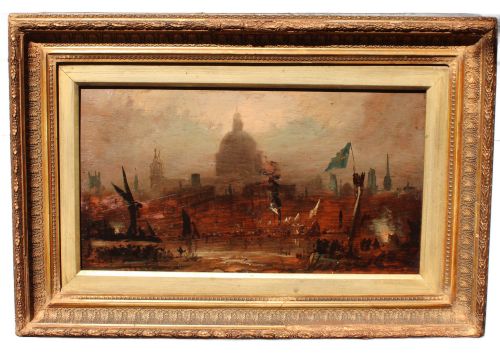
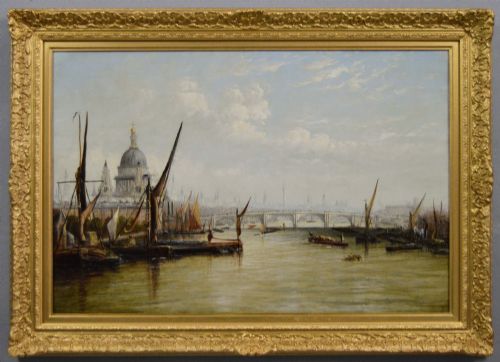
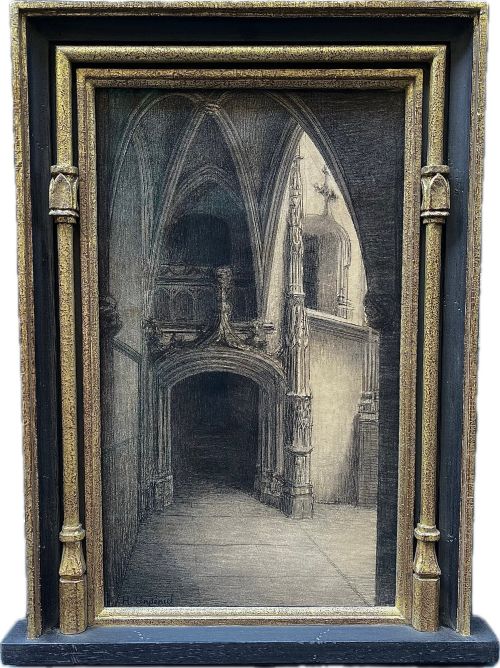
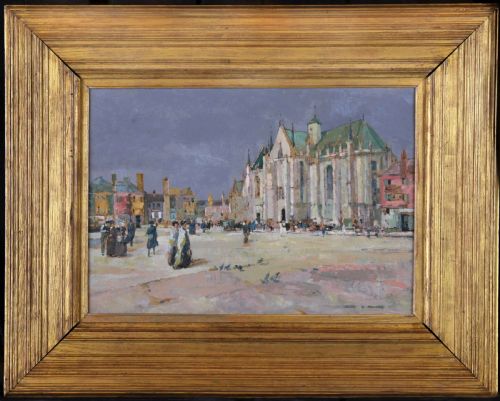
These gilt frame cathedral art pieces capture grand ecclesiastical architecture and river views, offering buyers timeless historic scenes framed in gold.
Gilt Frame Cathedral Art
When searching for gilt frame cathedral art, collectors encounter framed oil paintings, watercolours, and etchings depicting European townscapes, Gothic churches, and monumental bridges alongside rivers. These works span from the early nineteenth century through to the early twentieth century, encompassing Romanticism, Gothic Revival, and Victorian pastoral styles.
The most frequent examples on this page are nineteenth-century oil paintings and watercolours featuring British and continental cathedrals, townscapes, and river scenes with St Pauls or Canterbury Cathedral. Such works combine architectural precision with atmospheric landscapes.
Framed artwork in this category relies heavily on period wooden and gesso mouldings covered in gold leaf to complement the painted or printed imagery within. These frames form an integral part of the visual presentation, often reflecting the specific aesthetic movements of their originating era.
How they were made
Makers constructed these works using canvas, paper, and wood panels as supports for oil paint, watercolour, and drypoint etching techniques. Artists applied oil paint and watercolour to build detailed architectural views and atmospheric river landscapes.
The frames accompanying these artworks consist of wood and gesso substrates finished with applied gold leaf to create the characteristic gilt appearance. This traditional framing process protects the perimeter while providing a reflective border that enhances the tones of the artwork.
Listings feature works from the nineteenth century up to 1930, utilising oil paint, watercolour, and canvas.
What varies in quality
Quality in these pieces rests upon the precision of the architectural draughtsmanship and the handling of light within the townscape or river setting. Works by recorded artists command greater attention for their accomplished brushwork and compositional balance.
The integrity and original finish of the gilt wood and gesso frames also dictate the overall standard of the piece. Frames retaining their original gilding without excessive modern restoration contribute significantly to the historical coherence of the artwork.
Francis Moltino·Henri Charles Angeniol·Lewis J Wood·Francis Dodd·William Sidney Cooper·Edward Fletcher·Allan Douglass Mainds·Henry Schafer
The Gilt Frame Cathedral Art Glossary
- Gesso
- A plaster-like mixture applied to wood frames to create a smooth surface for receiving gold leaf. This ground layer is frequently moulded into decorative patterns before gilding.
- Drypoint
- A printmaking technique where an artist scratches an image directly onto a metal plate with a sharp needle. This process produces characteristically soft, velvety lines when printed.
- Gothic Revival
- An architectural and artistic style originating in the mid-eighteenth century and flourishing in the nineteenth century. It draws inspiration from medieval ecclesiastical design and pointed arches.
- Romanticism
- An artistic movement emphasising emotion, individualism, and awe of nature or historic architecture. Works in this style often feature dramatic lighting and atmospheric weather conditions.
Gilt Frame Cathedral Art: Frequently Asked Questions
What periods do these artworks cover?
The selection spans from the early nineteenth century through to the early twentieth century, capturing distinct aesthetic movements such as Romanticism and Gothic Revival.
Artists during this broader span focused heavily on architectural precision, recording cathedrals and townscapes across Britain and continental Europe.
Are the frames original to the art?
Many pieces retain their period wooden and gesso frames finished in gold leaf, which match the stylistic conventions of the nineteenth and early twentieth centuries.
These frames were specifically chosen or made to complement the tonal qualities and historical context of the paintings and prints they enclose.
What mediums are used in these pieces?
The inventory encompasses oil paintings on canvas and wood panels, alongside watercolours and drypoint etchings on paper. Each medium offers a distinct textural quality and level of detail.
Painters utilised rich oil pigments to capture river atmospheres and stone cathedrals, while printmakers employed fine lines for architectural views.
How should I display gilt frame art?
These framed works suit traditional or eclectic interiors where the warm tones of gold leaf can interact with natural light. Placing them away from direct sunlight protects the canvas and paper components.
Allowance should be made for the substantial nature of nineteenth-century gilt wood mouldings when planning wall space.