
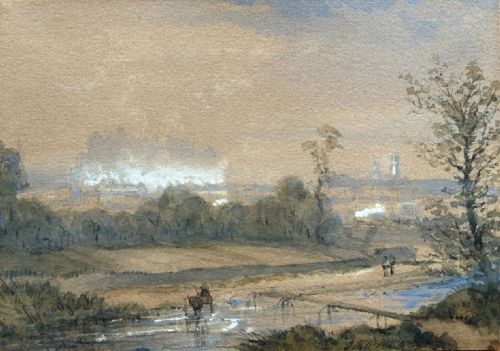


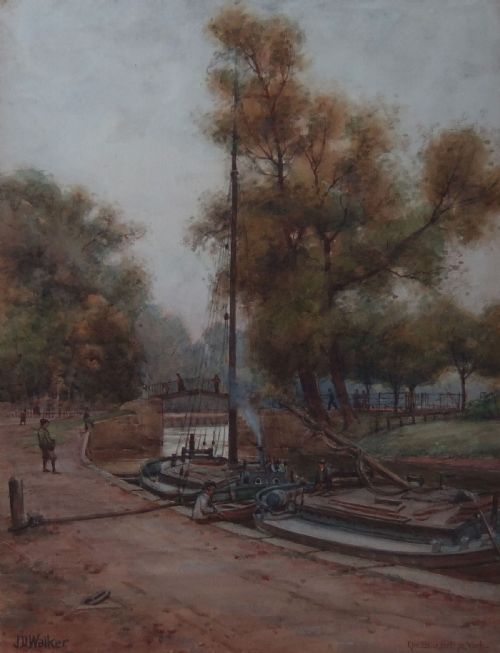

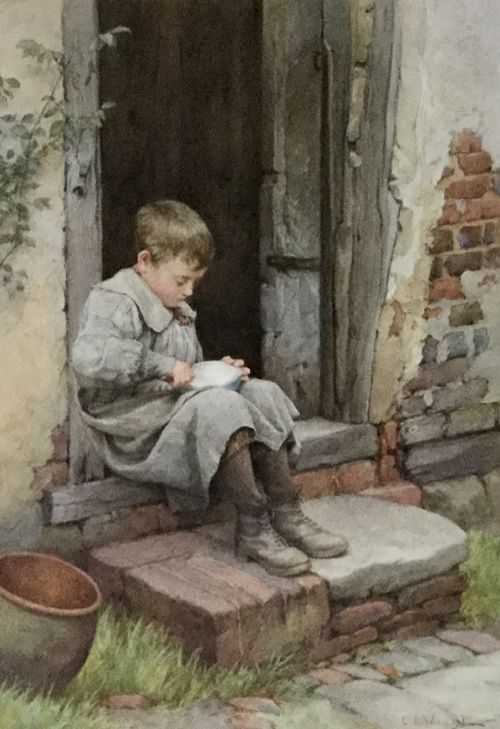

Muted Brown Watercolour Picture
These muted brown watercolour picture works bring quiet architectural views and atmospheric landscapes into a room through subtle, earthy tones.
Muted Brown Watercolour Picture
A muted brown watercolour picture is a painted work on paper or board, captured through watercolour pigment rather than oils. These pieces span periods from the nineteenth century through the Victorian, Edwardian, and mid-century eras.
The subjects range from Scottish landscapes and historic dockyards to rural Suffolk streets and genre scenes. Buyers most frequently encounter nineteenth-century and early twentieth-century examples showing gentle architectural and landscape views.
Framed beneath glass within wood or gilt wood surrounds, these works rely on restrained tonal palettes. They offer a window into historic British and continental settings without the bright glare of modern synthetic pigments.
How they were made
Artists painted these works using water-soluble pigments applied to paper or prepared board surfaces. The technique depends on thin washes of watercolour paint to build transparency and delicate tonal shifts.
Framing typically involves wood or gilt wood enclosures designed to protect the fragile paper substrate beneath glass. This traditional mounting method preserves the delicate pigment layers from atmospheric moisture and handling.
Listings feature paper, board, glass, and wood across periods from nineteenth-century Victorian to mid-century modern British styles.
What varies in quality
Quality rests in the precision of the brushwork and the artist's command over tone and shadow. Stronger compositions reveal confident handling of architectural perspective and natural light.
The depth of the paper and the preservation of the original pigment influence the visual impact. Finer works retain their subtle earthy palette without excessive fading or discoloration from light exposure.
John R Prentice·Alfred George Morgan·Sir Thomas Newenham Dean·James Orrock·Louie Stanley Maurice Prince·William Stephen Coleman·Fred Lawson·John D Walker·George Goodwin Kilburne·Charles Edward Wilson
The Muted Brown Watercolour Picture Glossary
- Watercolour paint
- A medium consisting of colour pigments suspended in a water-based solution. It produces translucent washes that allow the white of the paper to reflect light back through the pigment.
- Board
- A rigid substrate used instead of paper for painting support. It provides stability for watercolour works.
- Gilt wood
- Wood frames finished with a thin layer of gold leaf or metallic gilding. They frequently surround nineteenth-century and Edwardian pictures.
- Genre painting
- Artwork depicting scenes from everyday life, involving ordinary people engaged in domestic or social activities. These contrast with pure landscape or architectural subjects.
Muted Brown Watercolour Picture: Frequently Asked Questions
How do I care for a watercolour?
Keep the picture away from direct sunlight to prevent the watercolour pigments from fading over time. Maintaining a stable indoor humidity protects the paper and the wooden frame.
Ensure the glass remains intact to shield the delicate paper surface from dust and atmospheric pollutants.
What periods do these pictures span?
The available works cover the nineteenth century, including Victorian and Edwardian examples, alongside mid-century pieces up to the nineteen-sixties.
Earlier nineteenth-century works often focus on traditional landscapes and genre scenes, while later twentieth-century pieces lean towards modern British realism.
Are these pictures always framed?
Most works arrive protected beneath glass within their original or period wood and gilt wood frames. Framing protects the fragile paper base from physical damage.
Some buyers choose to retain the historic framing while others update the mount to suit modern interiors.
What subjects are most common?
Common subjects include historic British streetscapes, rural landscapes, windmills, and coastal dockyards. Continental street views with cathedrals also appear among the selections.
Genre scenes depicting domestic life or figures resting provide a narrative element alongside the architectural views.