
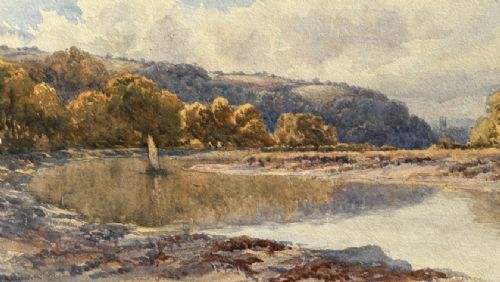
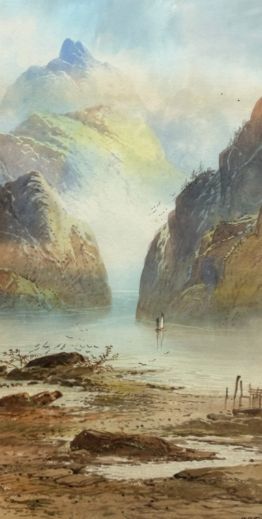
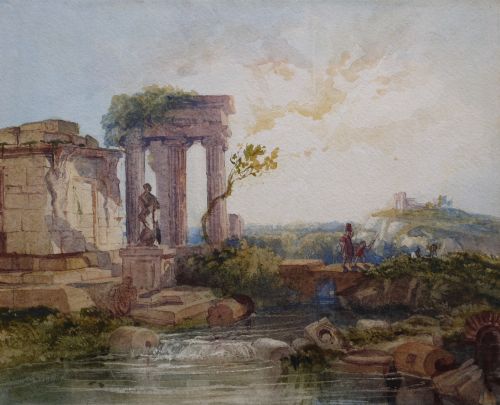
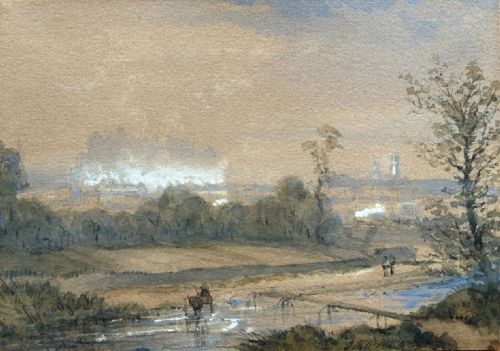

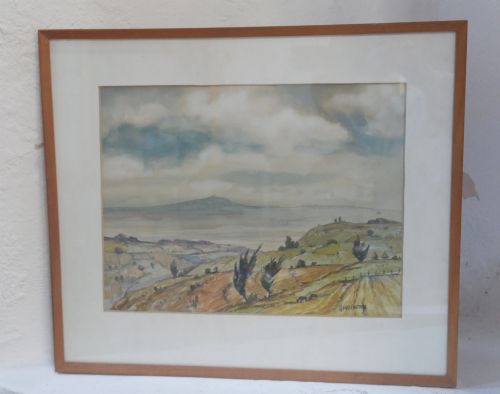


Toned Paper Watercolour Painting
A toned paper watercolour painting brings depth and atmosphere to a room through the interplay of tinted grounds and fluid pigments.
Toned Paper Watercolour Painting
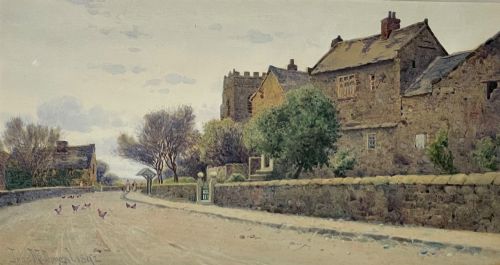
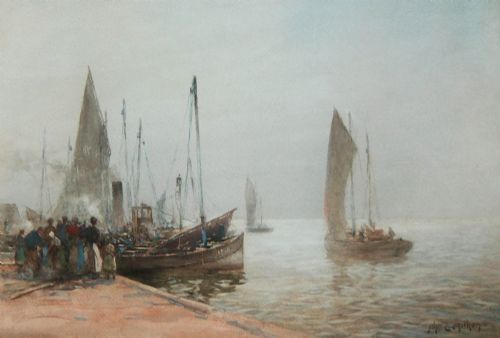
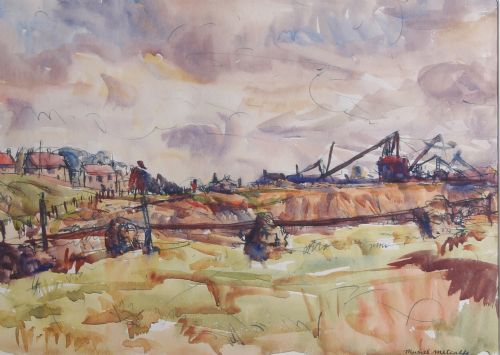
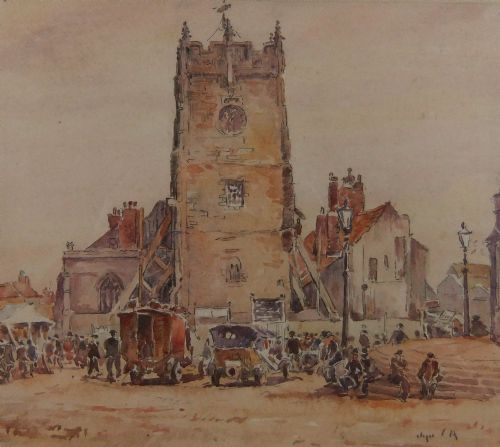
A toned paper watercolour painting uses tinted or grey paper as a foundational mid-tone, allowing artists to build highlights with body colour and shadows with transparent washes. You are most likely to meet Victorian and Edwardian examples on this page, alongside mid-century British landscapes and still lifes.
The subjects span British and European landscapes, coastal scenes, architectural views, and figurative interiors. These works record topographies from Scotland to Italy, capturing changing light on tinted supports.
Materials and Technique
Artists painted on tinted or prepared paper using watercolour pigment, body colour, and ink to create contrast. The coloured ground sets the overall tone, reducing the need to cover every millimetre of the sheet.
Works are typically mounted under glass and set within wood frames to protect the delicate paper surface and water-soluble pigments from moisture and light damage.
Several Victorian ducks successfully commandeer the attention in fields across Yorkshire.
Factors of Quality
Quality rests on the handling of the tinted ground and the surety of the brushwork. A master painter uses the tone of the paper as a deliberate light source rather than merely painting over it.
The strength of the composition and the preservation of the pigment also define the upper tier. Freshness of colour and minimal fading distinguish a superior sheet from a dull or over-worked study.
William Henry Earp·Richard Principal Leitch·John R Prentice·John McDougal·James E. Aitken·Muriel Metcalfe·John Smith Atherton·Alfred George Morgan·James Tower·Anne Dorrien Smith·Charles James Lauder·James Orrock·James Hardy Junior·John Atkinson·Louie Stanley Maurice Prince·John Syer·John Edward Bale·Kate E Booth·Adrian Jones·Henry Charles Fox·Stephen John Batchelder·Percy Brooke·Leonardo Morello·Albert Robert Quinton·John Sowden
The Toned Paper Watercolour Painting Glossary
- Body colour
- Watercolour paint mixed with white pigment to make it opaque. This technique allows artists to paint highlights directly onto dark or toned paper.
- Toned paper
- Paper that has a natural tint, grey hue, or applied wash before painting begins. It provides a unifying mid-tone for the entire composition.
- Wash
- A thin, fluid layer of watercolour pigment spread across the paper. It creates translucent areas of colour and sky effects.
- Provenance
- The documented history of ownership of an artwork. It helps establish authenticity and attribution.
- Gouache
- An opaque water-based medium often used alongside traditional transparent watercolour on tinted supports.
Toned Paper Watercolour Painting: Frequently Asked Questions
How do I hang a toned paper watercolour painting safely?
Keep watercolours away from direct sunlight to prevent the pigments and tinted paper from fading over time. Museum glass or UV-filtering glazing offers essential protection against light damage.
Ensure the room maintains stable humidity levels to protect the historic paper support and wooden frame from warping or mould growth.
What is the difference between watercolour and body colour?
Traditional watercolour is transparent, relying on the white of the paper to shine through the washes for highlights. Painters using toned paper often incorporate body colour to add opaque, chalky highlights.
Body colour uses white pigment mixed with watercolours, allowing artists to paint light details directly onto darker or tinted surfaces.
How can I tell a Victorian watercolour from a later piece?
Victorian watercolours frequently employ elaborate tonal layering, precise architectural detail, and rich narrative or pastoral subjects. Paper stocks from this era often carry period watermarks.
Later twentieth-century works lean towards freer brushwork, simplified forms, and modernist palettes influenced by British Impressionism and mid-century movements.
Why did artists choose toned paper?
Toned paper provides an immediate mid-tone atmosphere, sparing the artist from covering every inch of plain white paper. This allows for rapid sketching outdoors.
It also lets highlights stand out dramatically when applied with opaque white paint, creating a strong sense of depth and illumination.