





Boating River Scene
When you search for a boating river scene, you encounter framed paintings capturing vessels upon water across the nineteenth and twentieth centuries.
Boating River Scene
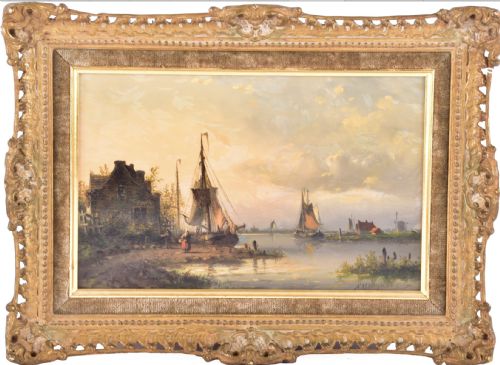
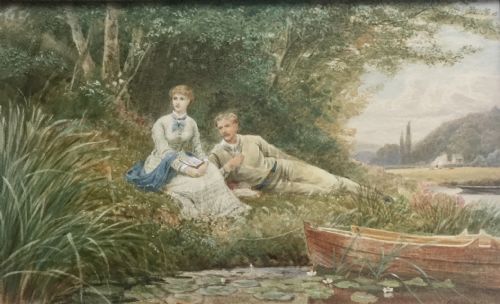
A boating river scene brings together marine vessels and waterways, appearing on this page as oil paintings and watercolour paintings framed for wall art. These works span the nineteenth century, the Edwardian period, and the mid-twentieth century.
The subjects range from commercial barges on rivers like the Thames, Tees, Medway, and Seine to figures in small boats and anglers resting by the riverside. British and French artists created these pieces in Victorian, Impressionist, and post-war styles.
You will find works executed on paper, canvas, and board, often retained in gilt or gilded wood frames behind glass. The compositions record harbours, bridges, and urban waterfronts from London to Holland and France.
Distinctions in execution
The success of a river painting rests upon the handling of light on water and the surety of the drawn vessel lines. Skilled brushwork conveys movement in the tide and atmosphere in the sky.
Condition of the pigment and the integrity of the original paper, canvas, or board dictate the longevity of the piece. Frames with original gilding complement the presentation of the artwork.
An angler's assistant joins children boating and barge crews on the water.
Kenneth Cozens·Thomas Bush Hardy·Edward Henry Eugene Fletcher·Frederick Waters Watts·Armand Guillaumin·Walter Duncan·Paul H Ellis·Ebenezer Wake Cook·Hubert Thornley·Fred Lawson·William Stephen Coleman·Carleton Grant·Frank William Scarbrough·Stuart Lloyd·R Goodhind
The Boating River Scene Glossary
- Oil on canvas
- Pigment suspended in drying oil applied to a woven fabric support stretched over a wooden frame. This medium allows for rich colour blending and textured brushwork.
- Watercolour
- Water-soluble pigment paint applied to paper surfaces. It produces transparent washes of colour suited to capturing bright river light.
- Gilt
- A thin layer of gold leaf or gold paint applied to wooden frames. It provides a decorative metallic border that frames the artwork.
- Impressionist
- A style characterised by relatively small, thin yet visible brush strokes and an open composition. It emphasises accurate depiction of light in its changing qualities.
Boating River Scene: Frequently Asked Questions
What periods do these river scenes cover?
The listings span from the nineteenth century through the Edwardian era into the mid-twentieth century.
Works from the Victorian period sit alongside mid-century modern and post-war British pieces.
Are these works painted on canvas or paper?
Artists utilised oil on canvas or board for heavier painted textures.
Watercolour pigments appear on paper supports, typically displayed beneath protective glass.
Where are the locations depicted?
Scenes capture English rivers including the Thames, Tees, and Medway alongside foreign waterways.
Views extend to French canals, Parisian scenes on the Seine, and harbours in Holland.
How are these paintings framed?
Many works retain wooden frames, some finished with gilt or gilded surfaces.
Watercolour paintings on paper generally feature glass protection within their frames.