


Victorian River Art
Victorian river art captures nineteenth-century waterways through delicate watercolours and rich oil paintings, offering collectors a window into historical landscapes.
Victorian River Art
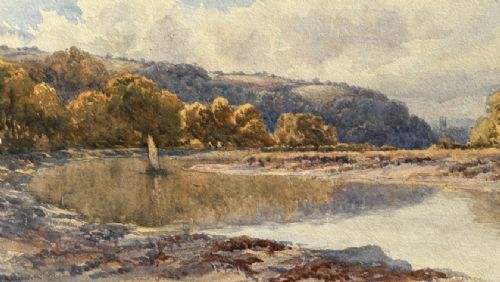
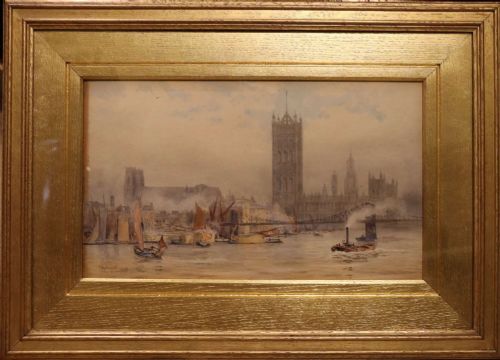
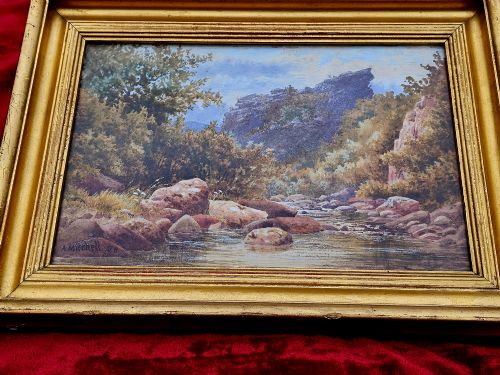
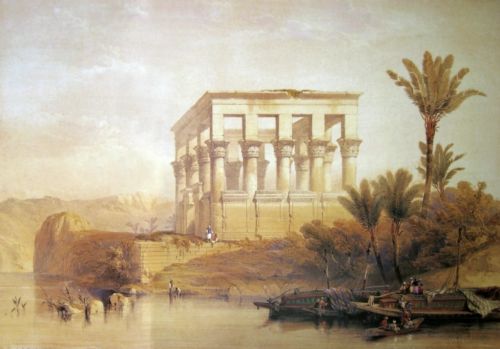
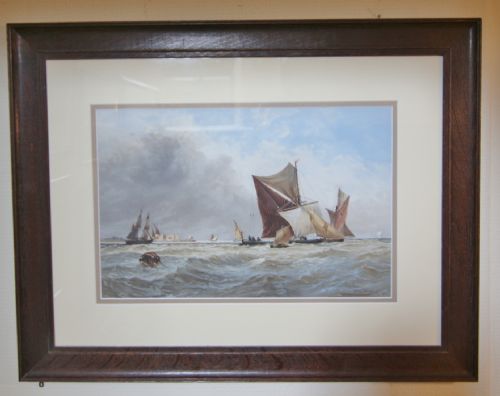
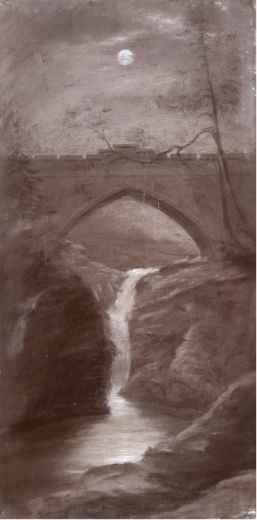
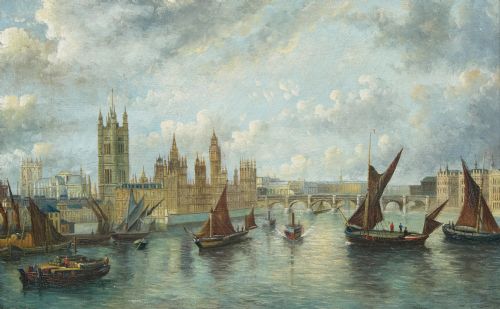
Victorian river art encompasses paintings and drawings created during the nineteenth century, focusing specifically on waterways, estuaries, and riverbanks. These works capture the changing light of rural streams, busy urban anchorages on the Thames, and dramatic coastal tides.
Most pieces encountered in this category date from the mid-nineteenth century through to the Edwardian transition. They take the form of framed oil paintings on canvas or board, alongside detailed watercolours and charcoal drawings on paper.
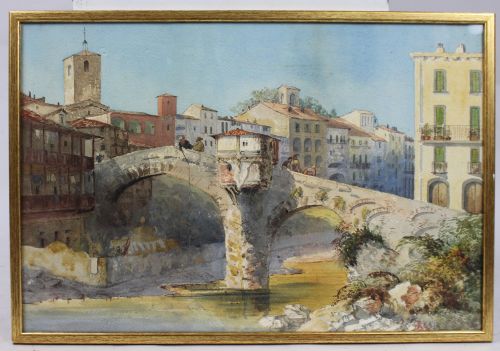
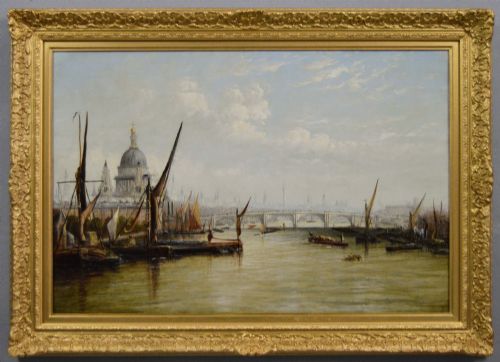
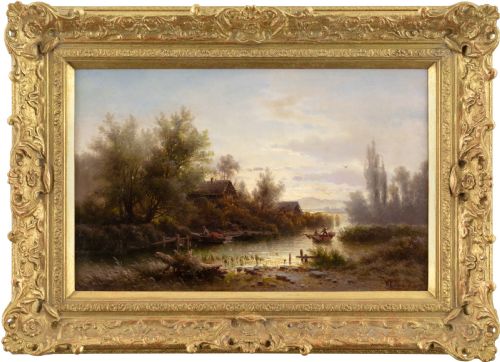
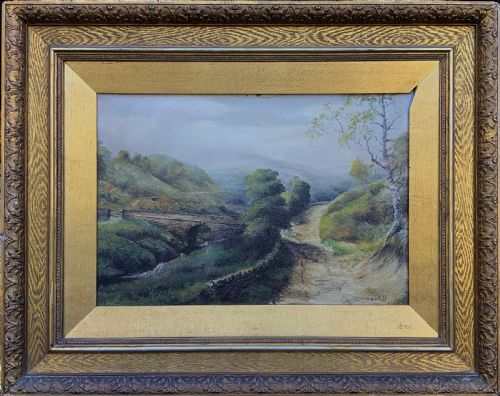
The subjects range from tranquil pastoral scenes with figures fishing to industrial shipping routes animated by sailing ships and historic bridges. British and European landscapes predominate, reflecting the period's fascination with naturalism and topographical accuracy.
Materials and Techniques
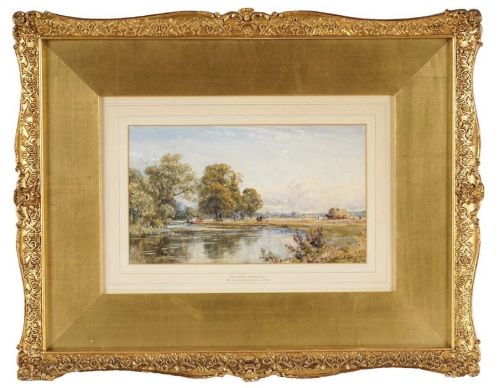
Artists relied primarily on oil paint applied to stretched canvas or wooden panels, often building up rich textures to render the reflective surfaces of water. Watercolours on paper offered a lighter medium for capturing atmospheric effects and subtle weather shifts along river valleys.
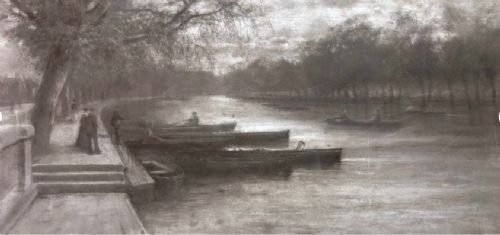
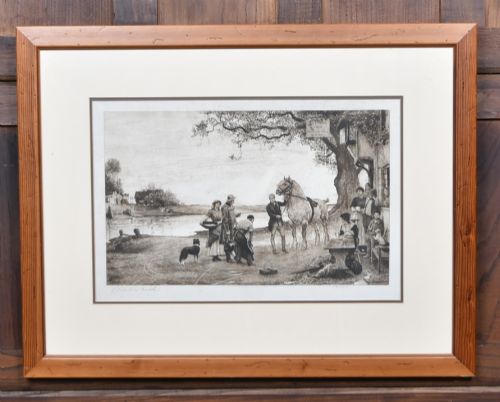
Support materials include traditional woven canvas, heavy paper, and occasionally board, framed in period giltwood or gesso mouldings. Charcoal and etching techniques also appear, demonstrating how draftsmen utilised monochrome shading to depict river embankments and bridges.
The listings span the nineteenth century into the Edwardian era, featuring oils, watercolours, and charcoal drawings on paper and canvas.
Evaluating Quality and Execution
Quality in these works rests upon the artist's handling of light, perspective, and the fluid movement of water. Superior examples demonstrate a secure command of tone and atmosphere, capturing specific weather conditions rather than generic scenery.
The relationship between the painted subject and its original frame matters significantly. Works housed in period giltwood and gesso frames retain greater integrity, whereas later reframing can alter the historical context of the piece.
Alfred Young Nutt·Frederick Marriott·Robert W. Macbeth·Francis Moltino·David Roberts·TB Hardy·Albert Rieger·Henry H Parker·Sydney Yates Johnson·John Ferneley Senior·William Frederick Settle·Charles William Wyllie·Cornelius Pearson·Alexandre Le Bihan·Edwin Lord Weeks·Thomas Baker·James Edward Grace·Julius Hare
The Victorian River Art Glossary
- Watercolour painting
- A work executed with water-soluble pigments on paper, allowing for translucent washes of colour that capture light and moisture.
- Oil on canvas
- A traditional painting method utilising pigments bound in drying oil applied to a woven fabric support, offering depth and rich texture.
- Giltwood
- Wood carved and coated with a thin layer of gold leaf, commonly used for nineteenth-century picture frames.
- Gesso
- A plaster-like mixture applied to wood or canvas as a base for paint or moulded into decorative relief patterns on frames.
- Etching
- A printmaking process where lines are incised into a metal plate with acid before being inked and pressed onto paper.
Victorian River Art: Frequently Asked Questions
What subjects appear in Victorian river art?
These works primarily depict British and European waterways, ranging from quiet rural streams and locks to bustling urban rivers like the Thames. Scenes often feature sailing ships, bridges, figures fishing, and pastoral riverbanks.
Artists documented both natural landscapes and industrial ports, capturing the changing moods of water under various atmospheric conditions.
How do I care for antique watercolours?
Watercolours on paper are sensitive to direct sunlight and high humidity, which can cause fading and paper degradation. They should be hung away from direct daylight and protected behind glass with acid-free mounts.
Maintaining a stable indoor climate helps preserve both the delicate pigments and the original framing materials.
Are these paintings signed by the artists?
Many pieces carry visible artist signatures, monograms, or contemporary inscriptions identifying the specific river or location depicted. Some works originate from known Royal Academy exhibitors or recognised regional schools.
Unsigned pieces often reflect the broader British or continental artistic movements of the nineteenth century.
What framing is typical for these artworks?
Period pieces frequently retain their original gesso or giltwood frames, which contribute to the historical character of the artwork. These frames often feature ornate moulded ornamentation characteristic of nineteenth-century design.
Examining the construction of the frame helps confirm the period context of the painting.